
 简体中文
简体中文 繁体中文
繁体中文 Deutsch
 日本語
日本語 한국어
한국어 Tiếng Việt
 Русский
 ไทย
ไทย Bahasa Indonesia
 Bahasa Melayu
 Filipino
 لالعربية
 Français

Key points for purchasing a reach lithium battery forklift, a guide to reasonable selection of storage equipment
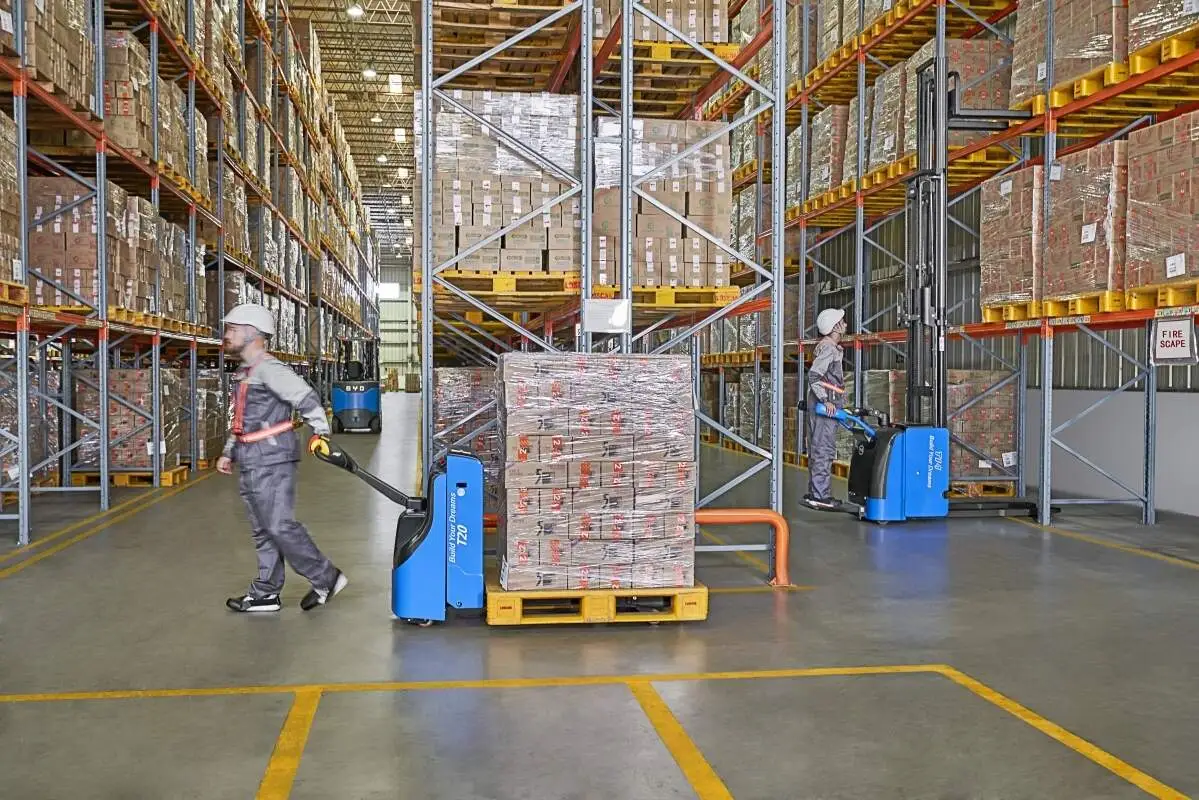
Reach lithium forklift is one of the core equipment for loading, unloading and handling goods in narrow aisles. Reasonable selection can directly improve the efficiency of warehousing operations and reduce operating costs. The following analysis is carried out from the dimensions of adaptability, core parameters, maintenance costs, etc., with basic selection ideas for supporting warehousing equipment.
The suitability of the storage environment is the first prerequisite for purchasing. First of all, it is necessary to confirm the ground conditions of the operation area, including the load-bearing grade and flatness of the ground. The load-bearing grade needs to match the total weight of the forklift when it is fully loaded and the weight of the goods. Insufficient ground flatness may affect the driving stability and lifting accuracy, and even lead to safety hazards. Secondly, the width of the working channel. The advantage of the forward-moving lithium-ion forklift is the narrow channel operation. It needs to reserve a reasonable space according to the minimum right-angle stacking channel width designed by itself and the warehouse planning to avoid wasting storage area due to the narrow channel. Finally, pay attention to the lifting height of the goods. It is necessary to choose equipment with a lifting height slightly higher than the highest shelf layer, and reserve a safety margin to adapt to different stacking methods.
The core parameters and configuration are the key to the performance of the equipment. In terms of batteries, the appropriate battery capacity should be selected in combination with the average daily operating hours and operating frequency. Priority should be given to the cycle life, charging speed and safety of the battery. Batteries with long cycle life can reduce long-term replacement costs, and the fast charging function can flexibly respond to sudden operation increments. Stability and safety configurations need to be considered, such as the stability device for the tilt of the gantry, anti-rollover protection, the speed limit of the goods falling, charging protection, etc. These configurations can effectively reduce the risk during the operation. In terms of space utilization, equipment with compact gantry structure and lightweight body design can be selected to further improve the efficiency of warehouse space.
Maintenance costs and supporting services cannot be ignored either. Reach-moving lithium-ion forklifts are maintained less frequently than internal combustion forklifts, but still need to pay attention to the price of daily wearing parts, the convenience of replacement, and whether timely technical support and maintenance services can be obtained. In terms of supporting storage equipment, appropriate pallets and shelves can be selected according to the type of goods. The pallet size needs to match the forklift fork, and the shelf design needs to be coordinated with the working parameters of the forklift to jointly build an efficient storage operation system.


