
 简体中文
简体中文 繁体中文
繁体中文 Deutsch
 日本語
日本語 한국어
한국어 Tiếng Việt
 Русский
 ไทย
ไทย Bahasa Indonesia
 Bahasa Melayu
 Filipino
 لالعربية
 Français

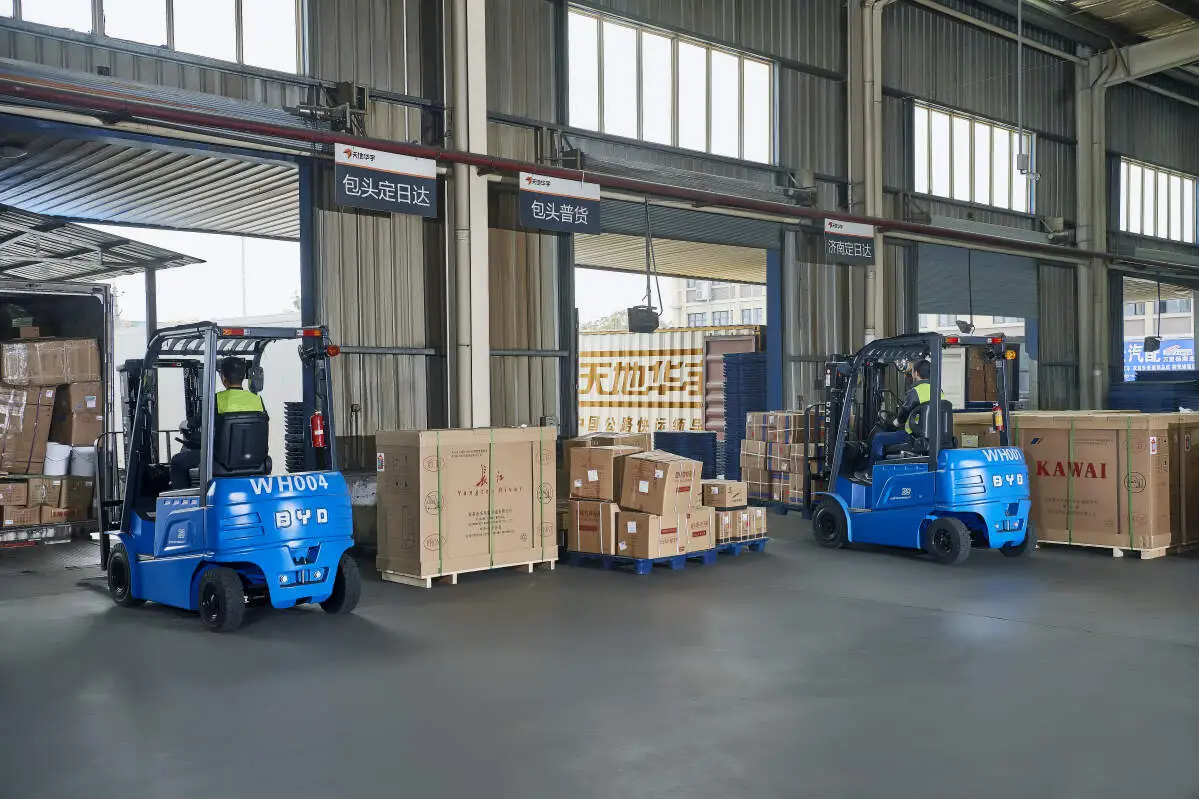
With the steady development of overseas cross-border e-commerce and modern warehousing and logistics, the demand for reach lithium-ion forklifts in foreign trade markets has gradually increased due to their flexible operation, clean energy and convenient maintenance. There are differences in warehousing structures, operating habits, regulations and standards in different countries and regions. Reasonable planning and allocation before export can help to improve the adaptability and practicality of products.
First of all, we must pay attention to the adaptation configuration of the warehousing scene. The door frame is one of the core adaptations. It is necessary to confirm the headroom height and shelf layer of the target market warehousing in advance, and choose two or three-level fully free door frames. Among them, the three-level fully free door frames are more suitable for low headroom scenarios or high-rise shelf operations, and some structures can be simplified and adjusted, which is convenient for subsequent packaging and transportation. The matching of the minimum operating channel width is also crucial. According to the working space of the target customer, models with different steering capabilities can be selected. The side shifter is a commonly used option for overseas warehousing or an adaptation configuration for some models. It can assist in accurate alignment of goods and improve operation efficiency.
Secondly, the compliance configuration of the power system. There are differences in grid voltage and frequency in different overseas regions, so it needs to be adapted in advance to ensure that the supporting charger can be used normally. As the core power source, lithium battery capacity needs to be selected in combination with the average operating time, average lifting height and single lifting weight to avoid cost waste caused by excessive configuration or low configuration affecting operation continuity. Some customers may have requirements for fast charging function. You can know the adaptation of fast charging protocol in advance.
The third is the improvement of safety and compliance configuration. Overseas markets have clear safety standards for industrial vehicles. Reversing buzzers, front and rear warning lights, and rearview mirrors on both sides are common basic and necessary configurations. In some areas, there may be mandatory requirements for safety seats, seat belts, lifting limits, door frame anti-tilt devices, etc., which need to be confirmed after consulting the specific regulations of the target market in advance.
Finally, the transportation adaptation configuration. The size of the whole vehicle needs to be able to adapt to standard shipping containers, and the packaging needs to be moisture-proof and collision-proof to meet the transportation requirements of long-distance shipping.


