
 简体中文
简体中文 繁体中文
繁体中文 Deutsch
 日本語
日本語 한국어
한국어 Tiếng Việt
 Русский
 ไทย
ไทย Bahasa Indonesia
 Bahasa Melayu
 Filipino
 لالعربية
 Français

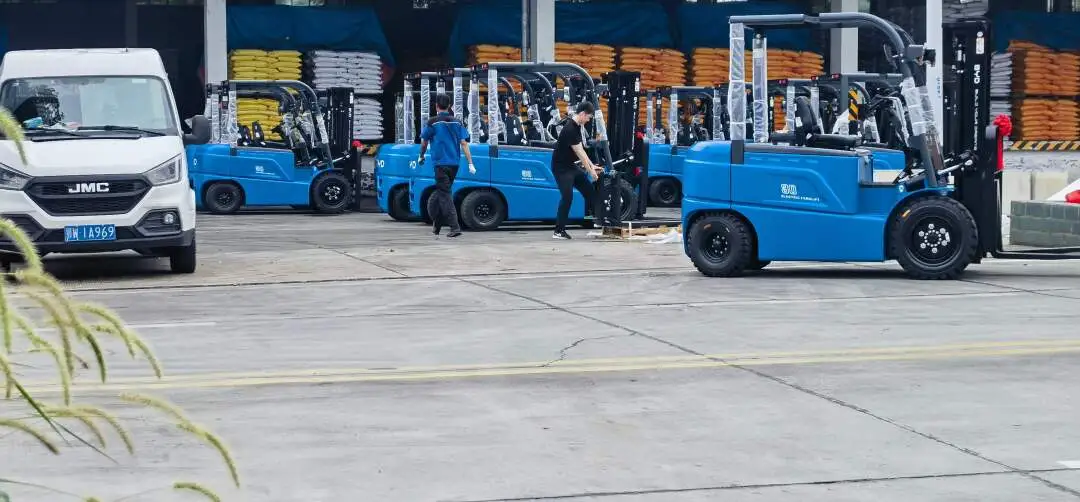
As one of the core equipment of modern warehousing operations, selecting the right model can effectively improve operation efficiency and reduce operating costs. When selecting a model, you must first combine the specific working conditions of your own warehousing, and you cannot blindly follow the trend. It is necessary to comprehensively consider several key dimensions.
The first thing to pay attention to is the channel width of the warehouse. This is one of the core elements that determine the type of ride-on lithium forklift. The channel width of the ordinary beam-type shelf warehouse is usually more than three meters. In such scenarios, a ride-on lithium forklift with conventional steering can be selected. The vehicle operation flexibility is sufficient and the cost is relatively controllable. If it is a dense storage channel with drive-in racks and shuttle racks, or an ordinary warehouse that needs more efficient use of space, the channel width may be compressed to 2.5 meters or even narrower. At this time, it is recommended to consider a ride-on lithium forklift with in-place steering or a smaller turning radius. This kind of equipment can complete the steering, picking and unloading actions in a limited space to avoid scratching the shelves or goods.
The second is to determine the required rated load and lifting height. The rated load needs to be determined according to the average weight and peak weight of the goods handled by the warehouse in a single time, and a certain safety margin should be reserved to avoid long-term overload affecting the life of the vehicle. The lifting height should match the height of the highest layer of the shelf to ensure that the goods on the highest layer can be picked and placed smoothly. In some scenarios where long-distance horizontal handling is required after lifting, attention should also be paid to the stability of the vehicle in the lifting state, and the model with better stability design is preferred.
Finally, there are considerations related to battery life and charging. Long battery life is suitable for three shifts or warehousing with long single operation time and limited charging conditions. For such scenarios, you can choose a ride-on lithium forklift with a large battery capacity. If the warehouse has a fixed charging position or can quickly replenish energy between operations, then a model with moderate battery capacity but supports fast charging is also a good choice, which can reduce equipment waiting time and improve operation continuity.


