
 简体中文
简体中文 繁体中文
繁体中文 Deutsch
 日本語
日本語 한국어
한국어 Tiếng Việt
 Русский
 ไทย
ไทย Bahasa Indonesia
 Bahasa Melayu
 Filipino
 لالعربية
 Français

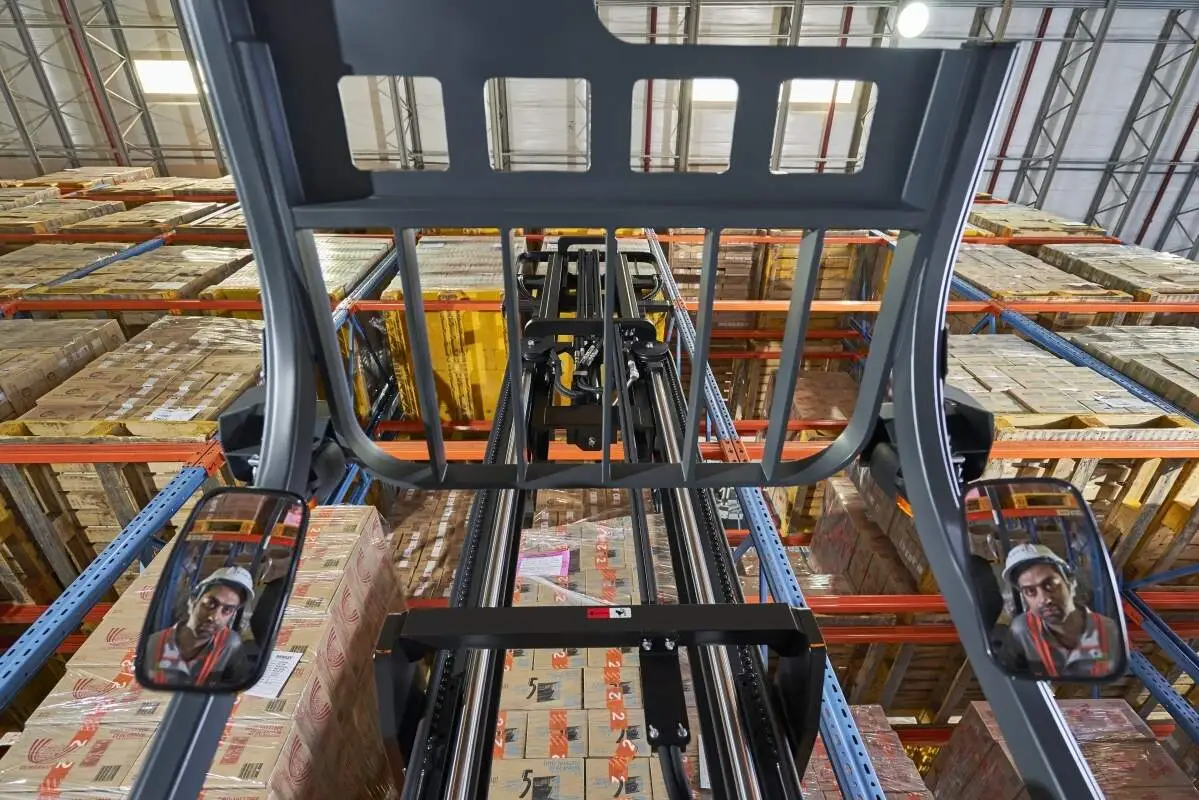
In modern warehousing and logistics operations, ride-on reach trucks have become one of the core equipment for improving warehousing efficiency due to their flexible steering and efficient stacking capabilities. Among them, RTR16 and RTR20 models are often considered by enterprises when selecting models. There are obvious differences in load capacity and working condition adaptability between the two. Reasonable distinction can help enterprises accurately match demand and optimize operating costs.
Core differences in load parameters
Load characteristics of RTR16
The RTR16 has a rated load of 1.6 tons, which is more lightweight. In design, its body weight is relatively light, the turning radius is smaller, and it can be nimble in narrow passages. It is suitable for handling the handling and stacking of small and medium-sized goods, such as cartons and small turnover boxes. At the same time, the lower load limit also makes it more energy consumption. In high-frequency and light-load operation scenarios, the battery life advantage is more obvious.
Load characteristics of RTR20
The RTR20 has a rated load of 2.0 tons and is designed for medium and heavy duty operations. Its body structure is stronger, the chassis is more stable, and it can carry heavier cargo, such as metal components, large pallet cargo, etc. In terms of stacking height, although the maximum lifting height of the two models is similar, the RTR20 has better stability under full load, which can ensure the safety of heavy cargo when stacking at higher heights.
Adaptation Differentiation of Working Condition Scenarios
RTR16-adapted operating conditions
RTR16 is more suitable for scenarios such as small storage spaces, e-commerce sorting centers, and convenience store distribution warehouses. Such scenarios usually have narrow passages, light weight of a single piece of goods, high operation frequency and frequent steering and shuttling. For example, in an e-commerce sorting warehouse, workers need to quickly move different types of goods to designated areas. The flexibility and low energy consumption of RTR16 can well adapt to this high-frequency and light-load operation mode, improving the overall sorting efficiency.
RTR20-adapted operating conditions
The RTR20 is more suitable for scenarios such as large warehousing and logistics centers, manufacturing raw material warehouses, and large cargo storage areas. In these scenarios, the weight of a single piece of goods is large, the stacking height is required to be high, and a stable bearing capacity is required during the operation. For example, in the manufacturing raw material warehouse, the handling of metal molds and heavy parts requires sufficient load support. The RTR20's sturdy structure and 2.0-ton load capacity can ensure the safe handling and stacking of such goods, reducing safety hazards during operation.
When choosing these two models, enterprises need to consider factors such as the size of their own storage space, the weight of a single piece of goods, and the frequency of operations. If light load, high frequency, and narrow channel operations are the main ones, the RTR16 is a more suitable choice; if it involves medium and heavy cargo handling and large space heavy-duty operations, the RTR20 can better meet the needs. Reasonable selection can not only improve operation efficiency, but also prolong the service life of equipment and reduce long-term operating costs.


