
 简体中文
简体中文 繁体中文
繁体中文 Deutsch
 日本語
日本語 한국어
한국어 Tiếng Việt
 Русский
 ไทย
ไทย Bahasa Indonesia
 Bahasa Melayu
 Filipino
 لالعربية
 Français

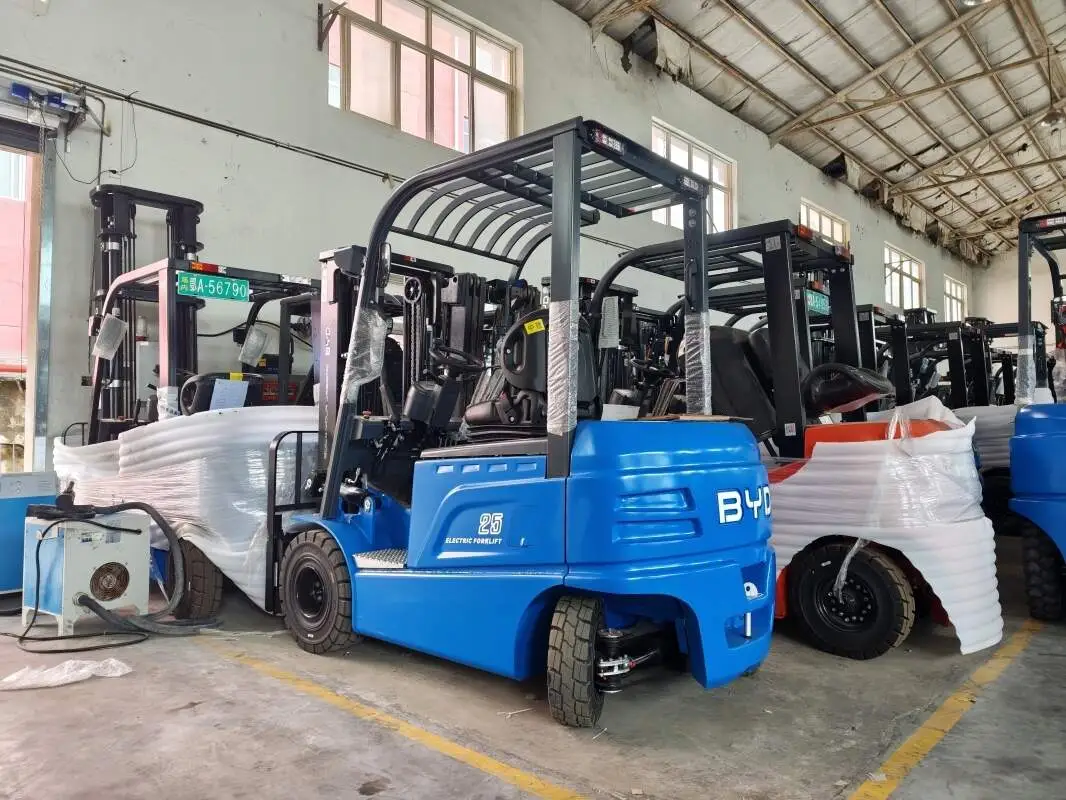
In the warehousing and logistics scene, forward forklifts have become the core operating equipment of many warehouses due to their flexibility and lifting capacity. Faced with two popular 1.6-ton forward forklifts, many users will be torn on how to choose. The following provides you with selection reference from multiple dimensions.
Adapt to storage space layout
If the warehouse shelf spacing is narrow, the storage density of goods is high, and the capacity of forklifts in narrow spaces is more important, priority can be given to the style with a smaller turning radius and a forward distance of the door frame to adapt to the narrow shelf, which can complete the storage of goods in a limited space and reduce space waste. If the warehouse space is more open and the channel width is sufficient, the stable operation performance of the other one can play a better advantage, and the operation is more stable during long-distance transshipment, which is suitable for the flow of goods in large-area warehouses.
Match job efficiency requirements
For high-frequency operation scenarios, such as the situation where the e-commerce warehouse has a large order volume and needs to quickly access the goods, you can pay attention to the power response and operation speed of the forklift. Some styles of power systems respond faster, with balanced lifting and driving speeds, which can adapt to high-frequency cargo transshipment and reduce operation waiting time. If the warehouse needs to frequently complete accurate access on high shelves, the positioning accuracy of the other one is more advantageous, which can reduce errors in the process of goods access and improve operation accuracy.
Combined load and working condition adaptation
Although both are 1.6-ton forward forklifts, their adaptability varies under different working conditions. If the warehouse often handles goods with a higher center of gravity or needs to operate on higher shelves, a more reasonable style with a counterweight design can be given priority, which is more stable in high lift conditions and can effectively reduce the risk of rollover. If the center of gravity of the goods is low and the shelf height is moderate, the flexibility of the other one is better adapted to such working conditions and is lighter to operate.
Consider maintenance costs and budgets
When selecting a model, it is also necessary to consider the maintenance capacity and budget of the warehouse. Some styles of battery management systems are more mature, with longer battery life and simple daily maintenance procedures, which can reduce maintenance investment in long-term use. The other component design is more concise, and the procurement and replacement costs of wearing parts are relatively low, which is suitable for small warehouses with limited maintenance resources.
Overall, the selection of these two forward forklifts requires a combination of factors such as the warehouse's spatial layout, operating frequency, cargo characteristics, and maintenance budget to select the most suitable equipment, thereby enhancing the overall efficiency of warehousing operations.


