
 简体中文
简体中文 繁体中文
繁体中文 Deutsch
 日本語
日本語 한국어
한국어 Tiếng Việt
 Русский
 ไทย
ไทย Bahasa Indonesia
 Bahasa Melayu
 Filipino
 لالعربية
 Français

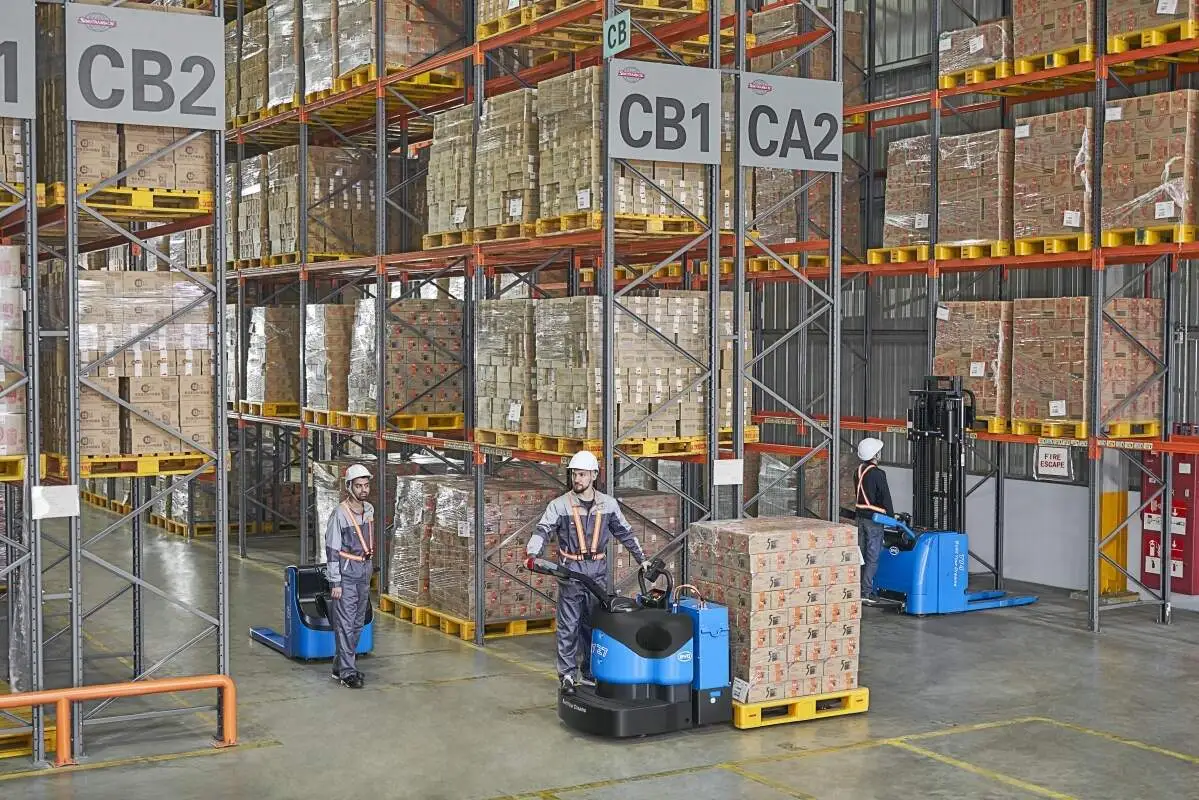
The low temperature warehouse has a special impact on the operating performance and service life of the lithium battery forklift due to the low ambient temperature and high humidity. In order to ensure the safety of the operation and the stable operation of the equipment, specific precautions must be strictly followed.
Comprehensive inspection and preparation before work
Battery status special project check
In a low temperature environment, the activity of the lithium battery will be reduced. Before operation, it is necessary to confirm that the battery power is in a reasonable range to avoid starting the device in a low power state. At the same time, check whether the appearance of the battery is abnormal such as bulging and leakage, and whether the battery connection port is clean and rust-free to ensure the stability of the power supply system.
Equipment parts pre-start troubleshooting
Turn on the preheating function of the equipment in advance (if any), so that the hydraulic system and walking system can gradually adapt to the low temperature environment. Check whether the hydraulic oil level is normal and whether the hydraulic pipeline is damaged and leaking; check whether the tire pressure meets the standard. Low temperature can easily lead to a drop in air pressure, and it is necessary to supplement and adjust it in time; confirm that the braking system and steering system are responsive and free of jamming.
Operator protection preparation
Operators in low temperature environments need to wear protective equipment such as cold-proof gloves and non-slip shoes to ensure flexible hands and safe walking during operation. At the same time, familiarize yourself with the channel layout and goods stacking area in the warehouse in advance to avoid operation errors caused by limited sight or unfamiliar environment.
Standardized operation and monitoring in operations
Smooth driving and loading and unloading operations
Keep low speed and smooth during driving, avoid sudden acceleration and sudden braking, and prevent the battery from deteriorating due to high current discharge. When loading and unloading goods, ensure that the fork is smoothly inserted into the bottom of the tray, slowly lift and lower the goods, and avoid shaking or falling the goods due to the slow response of the hydraulic system at low temperatures.
Real-time monitoring of battery life and energy consumption
The battery life will be shortened in a low temperature environment. During the operation, you need to pay attention to the power display on the dashboard at any time, plan the operation route and task volume reasonably, and avoid stagnation due to insufficient power. If there is an abnormal situation of rapid decline in power, the operation should be stopped in time and transferred to a suitable area for inspection.
Environmental adaptation adjustment
If there is ice or water accumulation in the warehouse, it is necessary to bypass or take anti-skid measures before passing to prevent the vehicle from slipping out of control. The equipment can be properly idled during the operation gap to maintain the system temperature and avoid difficulty in starting again after a long shutdown.
Maintenance and storage points after operation
Low temperature storage management of batteries
After the operation, replenish the battery power to a reasonable proportion before storing to avoid long-term low power standing. The storage area should be kept dry and ventilated, and the temperature should be controlled in a suitable range as much as possible to avoid direct exposure to extreme low temperature environments.
Equipment parts cleaning and inspection
Clean up the frost and dust on the surface of the equipment in time, check whether the hydraulic pipeline and brake parts are frozen, and if necessary, perform de-icing treatment. Check whether the forks, door frames and other structural components are deformed or worn, make records and maintain them in time.
periodic performance calibration
In response to changes in equipment performance in low-temperature environments, the braking system, steering system, and battery management system are regularly calibrated to ensure that all parameters meet the operating requirements and improve the reliability of the equipment in low-temperature environments.


