
 简体中文
简体中文 繁体中文
繁体中文 Deutsch
 日本語
日本語 한국어
한국어 Tiếng Việt
 Русский
 ไทย
ไทย Bahasa Indonesia
 Bahasa Melayu
 Filipino
 لالعربية
 Français

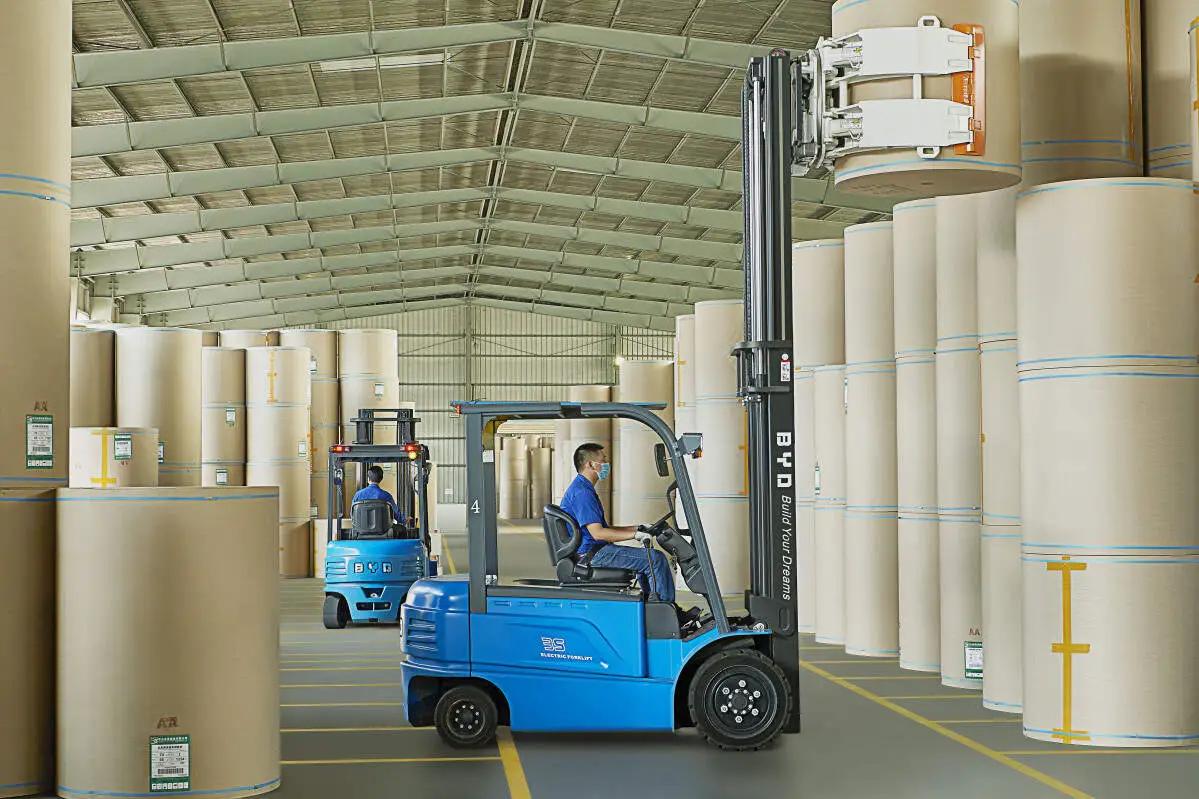
When buying a second-hand front-moving lithium battery forklift, you can start from four aspects: the appearance frame, battery status, core components, and trial opening experience. The appearance frame is the foundation of the equipment, and the integrity needs to be checked. First look at the main body of the frame, whether there are obvious deformation, welding marks or paint areas. The position covered by the paint may have collided. You need to pay more attention to the force points, such as the door frame connecting seat and near the drive wheel cover. Then check the door frame, whether the sliding up and down is smooth, whether there is any abnormal noise of the card, whether the tightness of the chain is consistent, and whether there are traces of rust or excessive wear on the chain. Finally, check whether the pattern of the tires, drive wheels and load-bearing wheels is clear, whether the degree of wear exceeds the safety line, and whether the wheel hub is deformed or loose.
Battery status is the core value of a second-hand reach lithium battery forklift, which directly affects the subsequent use cost and battery life. First ask the seller about the remaining service life of the battery. Generally, the life of industrial lithium batteries is about four to six years, but it depends on the frequency of use and maintenance. Secondly, check the battery nameplate information to confirm whether the production date and capacity are consistent with the seller's description, and whether the nameplate has any traces of alteration. If possible, you can use professional equipment to measure the actual capacity of the battery. The actual capacity should not be less than 70% of the rated capacity. Finally check the connecting cable of the battery pack for damage, aging or oxidation, whether the battery box is well sealed, and whether there are any signs of water seepage or deformation.
The condition of the core components determines the reliability of the equipment. The main inspection is the drive motor, hydraulic system and controller. When the drive motor is running, there is no abnormal noise or vibration, and whether the shell temperature is too high. The hydraulic system needs to check whether the lifting cylinder and tilting cylinder have oil leakage, whether the lift and tilt of the fork are smooth, and whether the response speed is normal. The controller is the brain of the equipment. It needs to observe whether the indicator light is on normally, whether there is a fault code display, and whether the functions of the operating handle are sensitive.
The test opening experience can intuitively feel the overall performance of the equipment. It is recommended to carry out it on a flat storage road or simulated site. First test the basic operations such as forward and backward, steering, braking, etc., whether the operation is flexible, and whether the braking is sensitive and effective. Then test the lifting and tilting of the gantry. The on-load test can better reflect the real performance. It can be tested with goods similar to the rated load weight to observe whether the gantry is shaking and whether the equipment is running stably. Finally test the battery life. Operate continuously for a period of time to observe whether the power drop is uniform and whether there is a sudden power failure.


