
 简体中文
简体中文 繁体中文
繁体中文 Deutsch
 日本語
日本語 한국어
한국어 Tiếng Việt
 Русский
 ไทย
ไทย Bahasa Indonesia
 Bahasa Melayu
 Filipino
 لالعربية
 Français

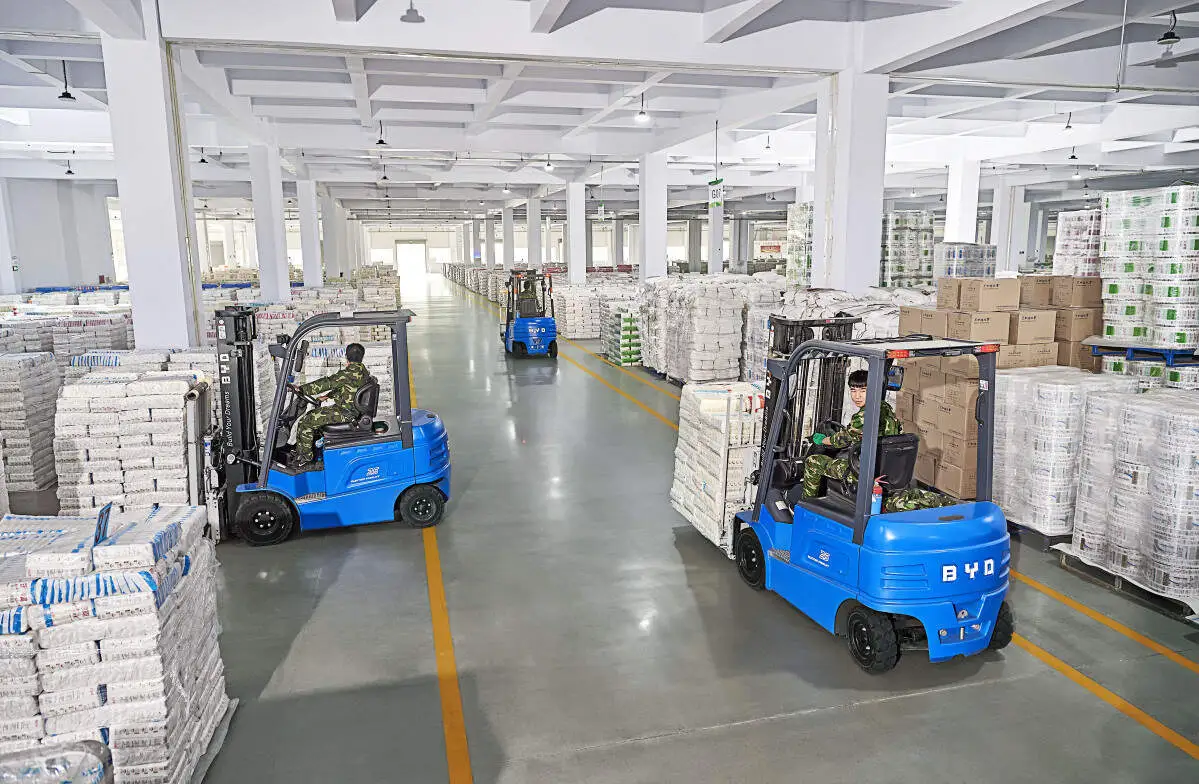
Hazardous chemical storage scenarios pose special safety risks such as flammability, explosion, and corrosion. Forklift trucks, as the core handling equipment, should be selected in accordance with the safety operation specifications of the workshop to avoid potential safety hazards at the root.
Priority is given to explosion-proof performance
The explosion-proof performance of hazardous chemical storage forklifts is the core premise of the selection. There are differences in the explosion-proof level requirements of different hazardous chemical storage areas, and the explosion-proof forklifts of the corresponding level need to be matched according to the dangerous characteristics of the medium. For example, in the Class A explosion-proof area, a forklift with the corresponding explosion-proof level needs to be selected to ensure that the core components such as the electrical system and power source are treated with explosion-proof treatment to prevent the risk of medium leakage or explosion caused by sparks and high temperature. At the same time, it is necessary to confirm that the explosion-proof parts of the forklift meet the relevant national safety standards to ensure the safety of operation in closed or semi-closed storage spaces.
Match forklift truck type according to storage medium
Different hazardous chemical media have different requirements for the material and sealing performance of forklifts. For highly corrosive media, the forks and body frames of forklifts need to be made of corrosion-resistant alloys to avoid structural damage and corrosion after long-term contact. For flammable and explosive gas or liquid storage areas, spark-free power forklifts should be selected to reduce potential sources of ignition during operation. In addition, the shape of the storage medium will also affect the selection. For example, barrels of hazardous chemicals need to be equipped with a forklift with a special clamp device to improve the stability during handling and prevent the medium from overturning and leaking.
Enhanced operational security configuration
In order to meet the requirements of safe operation in the workshop, forklifts need to be equipped with complete safety protection configurations. Emergency braking devices need to be sensitive and reliable, capable of responding quickly and stopping operations in emergencies; anti-collision buffering devices should be installed on the body to avoid collisions with storage shelves and storage tanks that cause medium leakage; protective linkage devices for operators are also indispensable, such as seat induction systems, to ensure that the operator can start the forklift in a standard sitting position, effectively reducing the risk of misoperation.
Focus on compliance and maintenance adaptation
When selecting a model, it is necessary to confirm that the forklift meets the relevant national safety standards for hazardous chemicals operations to avoid safety accidents caused by the use of non-compliant equipment. At the same time, the convenience of follow-up maintenance should be considered. Vulnerable parts should be easy to replace, and the daily maintenance process should be simple and standardized to avoid the performance of the forklift due to improper maintenance and affect the safety of the operation. Regular safety testing compatibility should also be taken into account in the selection to ensure that the forklift can continue to meet the long-term operation requirements of hazardous chemicals storage.


