
 简体中文
简体中文 繁体中文
繁体中文 Deutsch
 日本語
日本語 한국어
한국어 Tiếng Việt
 Русский
 ไทย
ไทย Bahasa Indonesia
 Bahasa Melayu
 Filipino
 لالعربية
 Français

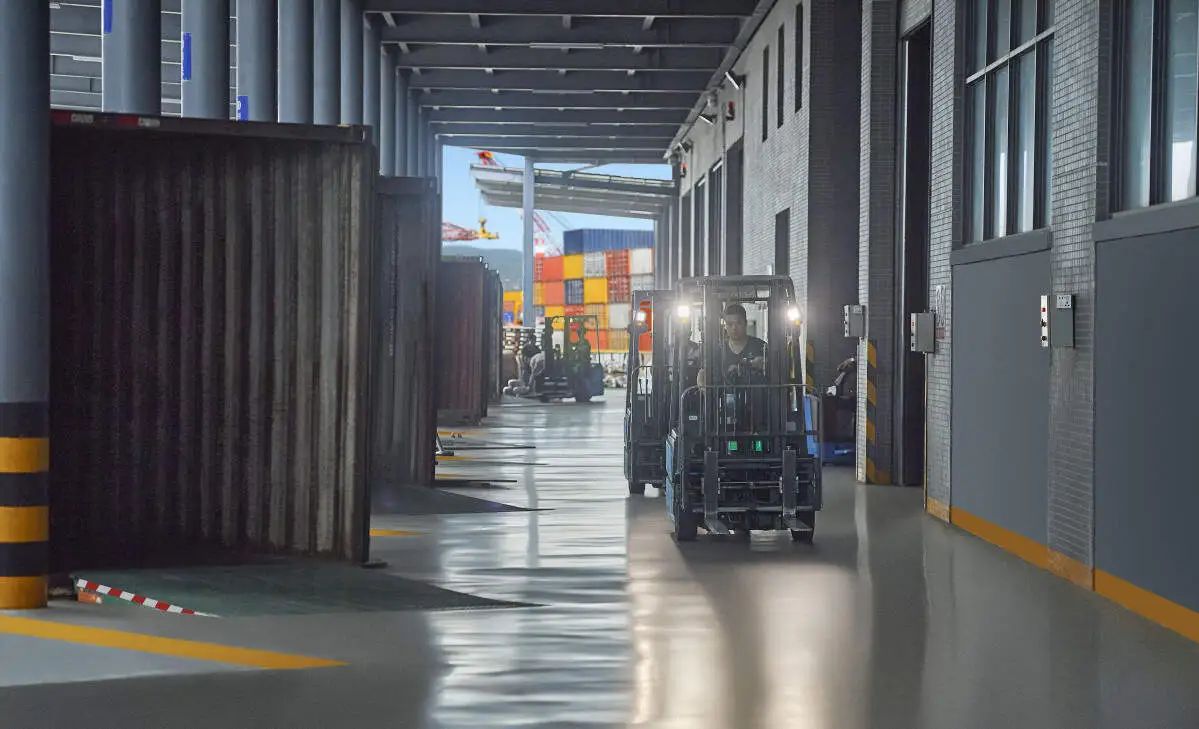
In scenarios such as warehousing and logistics, factory handling, etc., electric forklifts are the core equipment for improving operating efficiency, and batteries, as a power source, directly affect the forklift's operating capacity and operating costs. Many companies lack a clear basis for choosing lithium-ion or lead-acid electric forklifts. In fact, matching the battery type with their own operating shifts is an efficient selection idea.
Clarify the selection requirements according to the work shift
The core requirements of a single shift
Single shift operation usually refers to the daily operation time of about 8 hours, the operation rhythm is relatively stable, and there is sufficient rest time in the middle for battery charging. In such scenarios, companies pay more attention to the initial investment cost, and the demand for quick battery replenishment is low, as long as the battery life can cover the single-day operation time.
Core requirements for double-shift and multi-shift operations
The single-day operation time of double shift and multi-shift operation can reach more than 12 hours, and even continuous operation is required. In such scenarios, operation efficiency is the core consideration, requiring the battery to have long battery life, fast charging speed, and can be replenished in a short time to reduce forklift downtime, while reducing the labor cost caused by battery replacement and maintenance.
The core differences between lithium-ion and lead-acid electric forklifts
Differences in battery life and charging efficiency
The battery energy density of lithium-ion electric forklifts is higher, the range is longer, and it supports fast charging. Usually, about 80% of the power can be replenished in 1-2 hours, without the need to wait for a long time. The battery energy density of lead-acid electric forklifts is low, the battery life is relatively limited, and the charging time generally takes 8-10 hours, which cannot meet the demand for fast replenishment.
Cost and maintenance variances
The initial procurement cost of lead-acid electric forklifts is lower, but the later maintenance cost is higher, the electrolyte level needs to be checked regularly and distilled water is replenished, and the battery life is relatively short; the initial investment of lithium-ion electric forklifts is higher, but the maintenance process is simple, no frequent electrolyte maintenance is required, the service life is longer, and the comprehensive cost of long-term operation is more advantageous.
Match the corresponding battery type according to the work shift
Single shift operation is suitable for lead-acid electric forklift
For single-shift operation scenarios, the battery life of lead-acid electric forklifts is sufficient to cover the single-day operation time. The advantage of low initial procurement cost can help enterprises control the upfront investment, which is suitable for small and medium-sized enterprises with limited operation intensity and limited budget. As long as sufficient time is reserved for charging after the operation, it can meet the needs of the next day's operation.
Double shift and multi-shift operation suitable for lithium battery electric forklift
For double-shift and multi-shift continuous operation scenarios, the fast charging capability of lithium-ion electric forklifts can greatly shorten the replenishment time, eliminating the need for additional spare batteries, reducing the labor consumption and time cost of battery replacement. At the same time, the long life and low maintenance requirements of lithium-ion batteries can reduce maintenance expenses in long-term operations, making them more suitable for high-intensity enterprises.
Overall, when choosing a lithium-ion or lead-acid electric forklift, companies don't need to follow the trend blindly. They only need to combine the needs of their own operating shifts and compare the core differences in battery life, charging, and cost between the two to choose the most suitable equipment and achieve a balance between operating efficiency and operating costs.


