
 简体中文
简体中文 繁体中文
繁体中文 Deutsch
 日本語
日本語 한국어
한국어 Tiếng Việt
 Русский
 ไทย
ไทย Bahasa Indonesia
 Bahasa Melayu
 Filipino
 لالعربية
 Français

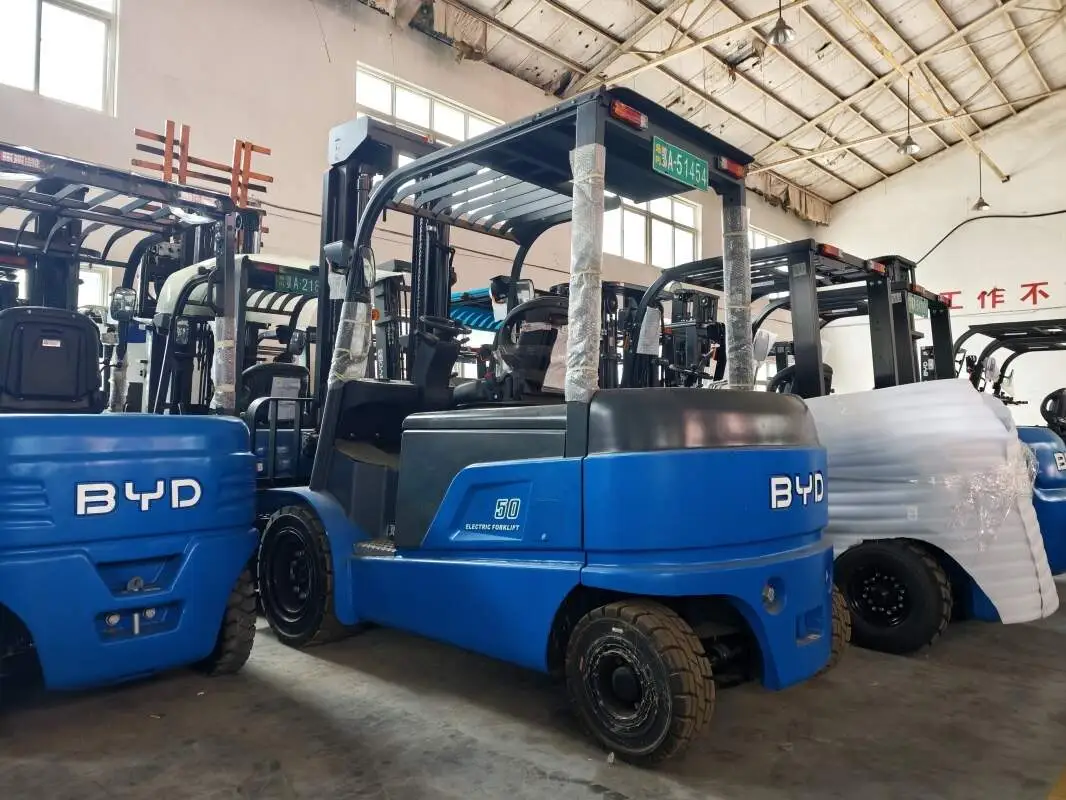
In the multi-shift warehouse operation mode, the electric forklift needs to run continuously for a long time, and the battery selection and battery life configuration directly affect the warehouse operation efficiency. Reasonable matching of batteries can not only reduce operating costs, but also avoid operation interruption caused by insufficient battery life, which is a key link in warehouse Facility Management.
Key points of battery selection
Selection of battery types suitable for operation scenarios. There are differences in the characteristics of different types of batteries, which need to be judged in combination with warehouse operation requirements. Lead-acid batteries have lower cost and mature maintenance methods, making them suitable for multi-shift scenarios with moderate operation intensity and limited budget. Lithium batteries have higher energy density, faster charging speed and longer cycle life, making them more suitable for warehouses with high load and high frequency continuous operation. When selecting models, factors such as operation frequency and charging conditions need to be comprehensively considered to avoid blind selection.
Combine the work intensity to match the battery capacity. The battery capacity directly determines the forklift's endurance and needs to be estimated according to the actual operation of the forklift. In a multi-shift warehouse, the forklift's single continuous operation time, average load weight, and the slope of the operation route will all affect the battery energy consumption. If the forklift is often fully loaded or driving in the ramp area, a larger capacity battery needs to be selected to meet the continuous operation requirements.
Consider charging and power exchange compatibility. Multi-shift manufacturing industries usually need to replenish power quickly, so batteries need to be adapted to warehouse charging facilities. Some warehouses use power exchange mode, and it is necessary to ensure that the battery size and interface are compatible with forklifts and power exchange equipment; if fast charging mode is used, it is necessary to choose a battery type that supports fast charging, while taking into account the balance between battery life and charging efficiency.
Calculation method of battery life configuration
Collect basic operating parameters. First of all, it is necessary to clarify the rated voltage and rated working current of the forklift, as well as the average current during actual operation, which can be obtained through forklift operation records or actual tests. In addition, it is also necessary to count the working time of a single shift, the daily working shift, and the average load rate of the operation in the warehouse. These parameters are the basis for calculating battery life.
Apply the battery life calculation formula to estimate the demand. The basic calculation formula of battery life is: battery life = battery capacity (ampere hours) ÷ operating average current (ampere). According to the total operating time of the multi-shift system, the total battery capacity required can be inverted. For example, if the operation time of a single shift is 8 hours, and the average operating current of 3 shifts per day is 50 amperes, the theoretical required battery capacity is 508 = 400 amperes. If the power exchange mode is used, the corresponding number of batteries needs to be equipped to ensure continuous operation.
Reserve a reasonable battery life allowance. In actual operation, the battery will fluctuate in energy consumption due to factors such as temperature changes, aging, and sudden operation requirements, so it is necessary to reserve 15% -20% of the battery life allowance. For example, a battery with a theoretical capacity of 400 ampere hours should be selected in practice. A battery with a capacity of 460-480 ampere hours should be selected to avoid insufficient battery life due to emergencies and ensure operation continuity.


