
 简体中文
简体中文 繁体中文
繁体中文 Deutsch
 日本語
日本語 한국어
한국어 Tiếng Việt
 Русский
 ไทย
ไทย Bahasa Indonesia
 Bahasa Melayu
 Filipino
 لالعربية
 Français

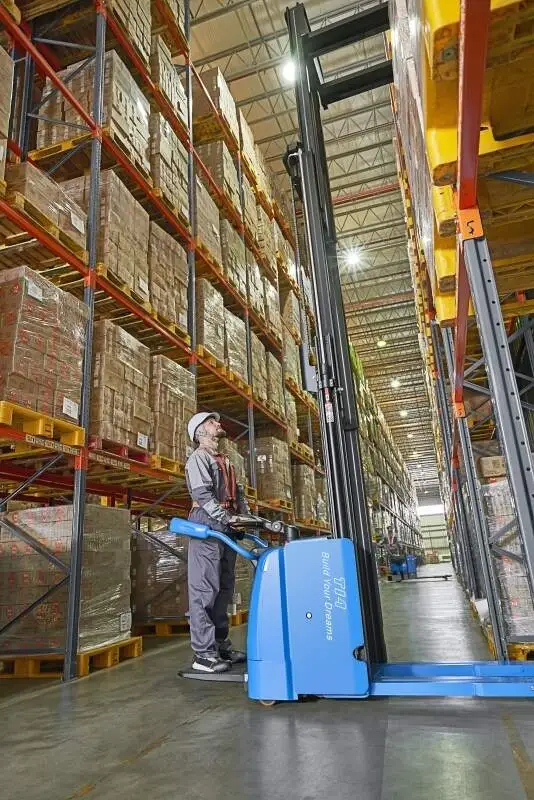
In modern logistics operation scenarios, electric forklifts have gradually become mainstream equipment due to their environmental protection, low noise, and other advantages. When purchasing, enterprises should not only focus on the purchase price, but also pay attention to the full-cycle cost of use, and consider comprehensive selection based on actual needs.
Full cycle cost analysis
The cost of the procurement stage is the initial part of the full-cycle cost, including not only the price of the electric forklift itself, but also the investment in supporting facilities, such as dedicated charging equipment, the renovation cost of the charging site, and the initial purchase cost of the battery. These expenses need to be included in the budget plan in advance.
Operation and maintenance costs are the core of long-term investment. The main expenditure of electric forklifts in daily operation is electricity, which is lower and more stable than the fuel cost of fuel forklifts. In addition, regular maintenance and replacement of batteries, as well as daily maintenance of motors, hydraulic systems and other components, are also routine costs in the operation stage. Reasonable maintenance can prolong the service life of equipment and reduce long-term investment.
The cost of residual value recovery cannot be ignored either. During the equipment scrapping stage, the core components of electric forklifts, such as batteries and motors, have a certain recovery value. The residual value of different types of batteries varies greatly. Therefore, companies can understand the recycling market of relevant components in advance when purchasing, and include the residual value in the calculation of the full-cycle cost.
Comprehensive considerations when selecting a model
Matching the actual operating conditions is the basis for selection. Enterprises need to choose according to the characteristics of their own operating scenarios. For example, for narrow warehouse operations, they should choose a model with a small turning radius, and for long-term continuous operations, they need to be equipped with a large-capacity battery or a model that supports fast charging. At the same time, combined with the requirements of cargo load and lifting height, the equipment can be adapted to the daily operation process.
The full-cycle cost calculation needs to be carried out through the selection process, and the cost of procurement, operation and maintenance, and residual value recovery should be comprehensively calculated to avoid ignoring the subsequent high maintenance or operating expenses due to the low purchase price. Therefore, the equipment with the full-cycle total cost is more advantageous.
Focusing on core performance parameters can ensure operational efficiency. In addition to cost, it is also necessary to pay attention to whether the cruising range of the electric forklift can meet the needs of single-day operation, whether the charging efficiency is suitable for the operation gap, and whether the load capacity meets the requirements of cargo handling. These parameters directly affect operational efficiency and long-term operational stability.
After-sales support capabilities can be taken into account to reduce downtime losses. Reliable after-sales support can reduce the impact of equipment failures. When selecting a model, you can understand the supplier's maintenance response speed, parts supply capacity, etc., to ensure that equipment problems can be solved in a timely manner and maintain the continuity of operations.


