
 简体中文
简体中文 繁体中文
繁体中文 Deutsch
 日本語
日本語 한국어
한국어 Tiếng Việt
 Русский
 ไทย
ไทย Bahasa Indonesia
 Bahasa Melayu
 Filipino
 لالعربية
 Français

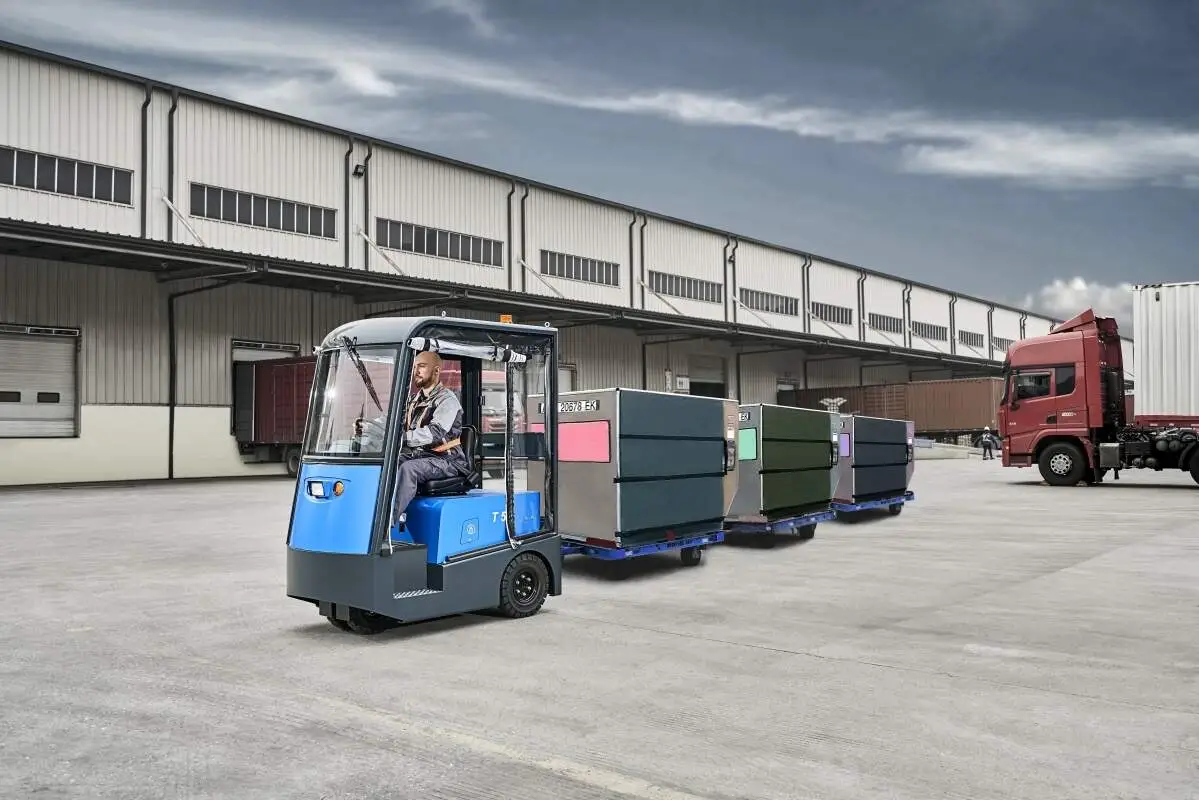
With the continuous improvement of industrial logistics efficiency requirements, lithium-ion forklifts have gradually become the main equipment for material handling in the workshop by virtue of their core advantages of environmental protection and high efficiency. Power exchange and fast charging are two mainstream energy replenishment modes, each adapted to different production rhythms. Enterprises need to consider their own operating scenarios when selecting models in order to achieve a balance between efficiency and cost.
The core advantage of the power replacement mode is that the replenishment speed is fast, and the whole power replacement process only takes a few minutes, and the forklift can quickly return to the working state. This mode is more suitable for continuous and high-intensity production rhythm, such as 24-hour uninterrupted operation of the assembly line, multi-shift rotation of large storage and transfer scenarios. In this kind of scenario, the forklift has almost no long rest time, and the power replacement mode can avoid interruption of operation due to supplementary energy to the greatest extent. However, the power replacement mode requires professional power station facilities and sufficient spare battery packs. The initial investment is relatively high, and a special power replacement area needs to be reserved, which requires certain site space.
The fast charging mode directly charges the forklift battery through a high-power charging pile, and the charging time usually ranges from 30 minutes to 1 hour. No additional spare batteries are required, only a suitable charging pile can be set up, and the initial investment cost is lower. This mode is more suitable for production scenarios with intermittent operations, such as small and medium-sized warehouses operating in a single shift, and workshops with fixed breaks or gap periods during the production process. Enterprises can use the work gap to complete the replenishment, which can not only meet the needs of daily operations, but also avoid unnecessary equipment investment, which is more cost-effective.
Enterprises need to grasp several core considerations when selecting the lithium-battery forklift energy replenishment mode. First, it is necessary to clarify the intensity and continuity of the production rhythm: if there is no obvious gap in the production operation and the forklift needs to run continuously, the power exchange mode can ensure the maximum efficiency of the operation; if the operation has a fixed rest or gap period, the fast charging mode is more cost-effective. Secondly, it is necessary to evaluate the site conditions: if the workshop or warehouse space is sufficient, the layout of the power exchange station can be considered; if the space is limited, the flexibility of the fast charging charging pile is higher, and there is no need to occupy an additional large area of space. Finally, it is necessary to combine the cost budget: the long-term efficiency advantage of the power exchange mode is obvious, but the early investment is large; the early investment of the fast charging mode is small,
Overall, lithium-ion forklifts have their own advantages and disadvantages, and there is no absolute difference between good and bad. The key lies in matching with the company's own production rhythm, site conditions, and cost budget in order to give full play to the efficiency of lithium-ion forklifts and improve the overall efficiency of logistics operations.


