
 简体中文
简体中文 繁体中文
繁体中文 Deutsch
 日本語
日本語 한국어
한국어 Tiếng Việt
 Русский
 ไทย
ไทย Bahasa Indonesia
 Bahasa Melayu
 Filipino
 لالعربية
 Français

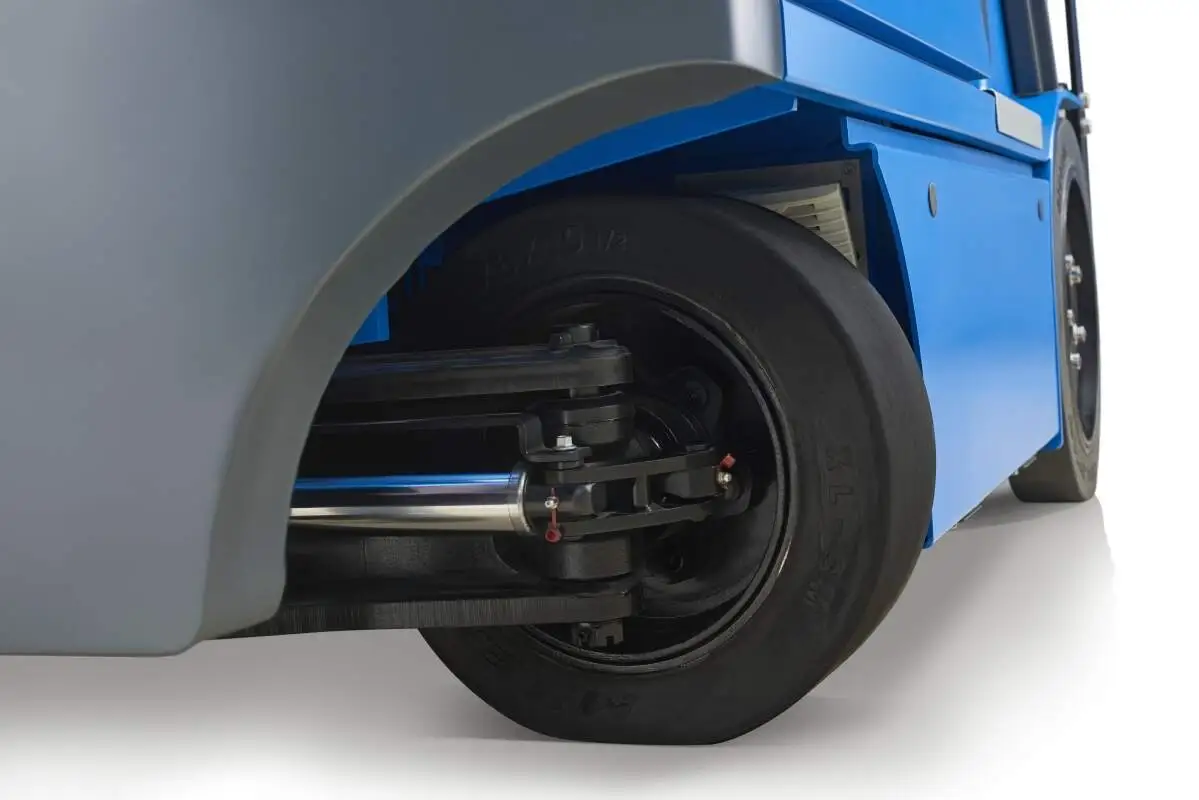
In the operation, maintenance and selection of small lithium-ion forklifts, the choice of tire type directly affects the operation efficiency and equipment life. Solid tires and inflatable tires are two common choices, each adapted to different operating scenarios.
Applicable scenarios for solid tires
The solid tire is made of high-strength rubber, which is wear-resistant, puncture-resistant, and requires no frequent maintenance. It is more suitable for the following scenarios:
Plant hardened pavement operations: In cement, asphalt, and other flat hardened plant pavements, the wear resistance advantages of solid tires can be fully realized, and long-term high-frequency round-trip driving is not prone to wear and deformation, which can reduce the frequency of tire replacement and reduce operation and maintenance costs.
Heavy-duty frequent handling scenarios: In the loading and unloading areas of warehousing and logistics, raw material stacking areas, and other scenarios that require frequent handling of heavy objects, solid tires have stronger load-bearing stability and are less susceptible to deformation due to load, which can ensure the driving stability of forklifts under heavy load and improve operational safety.
Outdoor complex road operations: In outdoor scenarios where there are sharp objects such as construction sites and gravel roads, solid tires do not need to worry about being punctured and leaking air, and can adapt to the driving needs of rough roads to avoid interruptions due to tire failures.
Applicable scenarios for inflatable tires
The inflatable tire is filled with gas, which has the characteristics of good shock absorption, low noise, and strong grip, making it more suitable for the following scenarios:
Indoor fine-grained operation: In indoor scenes with high environmental requirements, such as electronics factories and medical warehouses, the shock absorption performance of inflatable tires can reduce the vibration of forklifts, avoid damage to precision goods, and maintain a quiet working environment with low noise characteristics.
Long-distance transfer scenarios: In large parks, logistics parks, and other scenarios that require long-distance driving, the shock absorption effect of inflatable tires can reduce driver fatigue, improve the comfort of long-distance operations, and ensure stability during driving.
Wet and slippery road operations: In cold chain warehouses, wet workshops, and other scenarios where the ground is slippery, the tread design of inflatable tires can provide stronger grip, reduce the risk of skidding forklifts, and ensure the safety of personnel and goods during operation.
Overall, when selecting the type of tire for a small lithium-ion forklift, it is necessary to consider factors such as the operating environment, load requirements, and cargo characteristics in order to optimize the performance of the tire and improve the overall operating efficiency.


