
 简体中文
简体中文 繁体中文
繁体中文 Deutsch
 日本語
日本語 한국어
한국어 Tiếng Việt
 Русский
 ไทย
ไทย Bahasa Indonesia
 Bahasa Melayu
 Filipino
 لالعربية
 Français

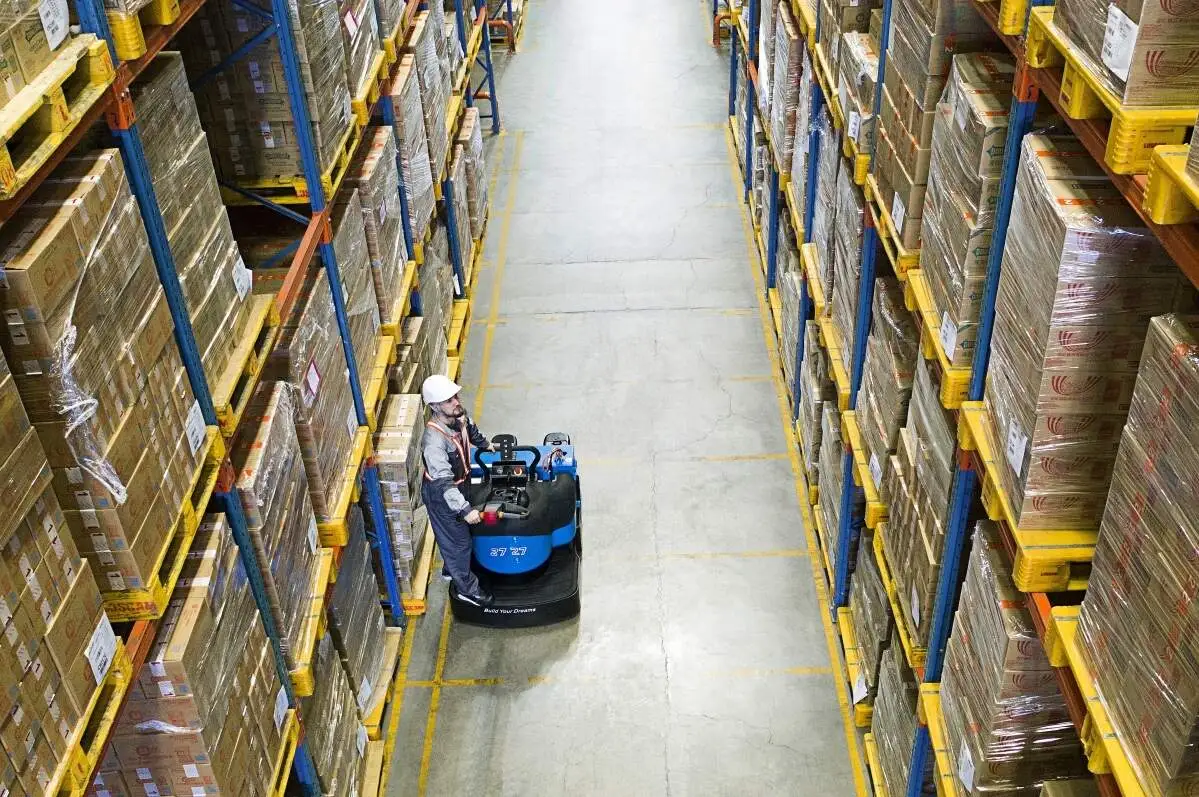
In a small confined space such as a basement for handling operations, ordinary forklifts are often difficult to adapt to the environment. Lithium-ion forklifts are the best choice because of their zero-emission and easy-to-handle characteristics, but they need to be selected according to the spatial characteristics and operation requirements.
Control the body size to fit the space
The width of the basement passage is limited, the turning area is narrow, and the body size is the core premise of selection. First, measure the channel width and minimum turning radius of the working area, and choose a model with a smaller turning radius to ensure a smooth turnaround at narrow corners; at the same time, pay attention to the overall width of the body, and reserve a certain safety margin to avoid scratching the wall or stacking goods when the forklift is running. In addition, pay attention to the vertical height of the forklift, adapt to the floor height limit of the basement, and avoid the situation that the low area cannot be passed through.
Preference is given to models with high handling flexibility
Small space operations require higher control accuracy for forklifts. Preference is given to models equipped with electric power steering systems, which are lighter and more labor-saving when steering, and the operator can accurately control the driving direction; models with in-situ steering function are more suitable for cramped spaces, and the steering action can be completed without a large U-turn area. In addition, the design of the operating handle is also very important. Ergonomic handles can reduce the fatigue of long-term operation and improve operation efficiency.
Matching power endurance with operational requirements
Basements usually have limited ventilation conditions, and the zero-emission characteristics of lithium-ion forklifts are just right for this kind of closed environment. When selecting, you need to choose a lithium battery with the corresponding capacity according to the daily operation time, handling frequency and cargo weight to ensure that the battery life can cover the needs of a single day of operation; at the same time, consider the convenience of charging. If there is a fixed charging area in the basement, you can give priority to models that support fast charging function to shorten the charging waiting time and ensure the continuity of operation.
Strengthen safety configuration to ensure operation safety
The basement is dimly lit, and there may be moisture or debris on the ground, so the safety configuration cannot be ignored. Choose a vehicle equipped with front and rear cushioning anti-collision devices to reduce damage in the event of accidental collisions; a complete lighting system, including headlamps, warning lights and turn signals, can improve visibility during operation and avoid accidents caused by blind spots; forklifts with emergency braking function can quickly stop in unexpected situations to ensure the safety of personnel and goods; anti-skid tires can improve grip on wet ground and reduce the risk of skidding.
Selecting a lithium-ion forklift based on the above points can not only adapt to the working environment of a small basement space, but also improve handling efficiency and operation safety, providing reliable support for material handling in a confined space.


