
 简体中文
简体中文 繁体中文
繁体中文 Deutsch
 日本語
日本語 한국어
한국어 Tiếng Việt
 Русский
 ไทย
ไทย Bahasa Indonesia
 Bahasa Melayu
 Filipino
 لالعربية
 Français

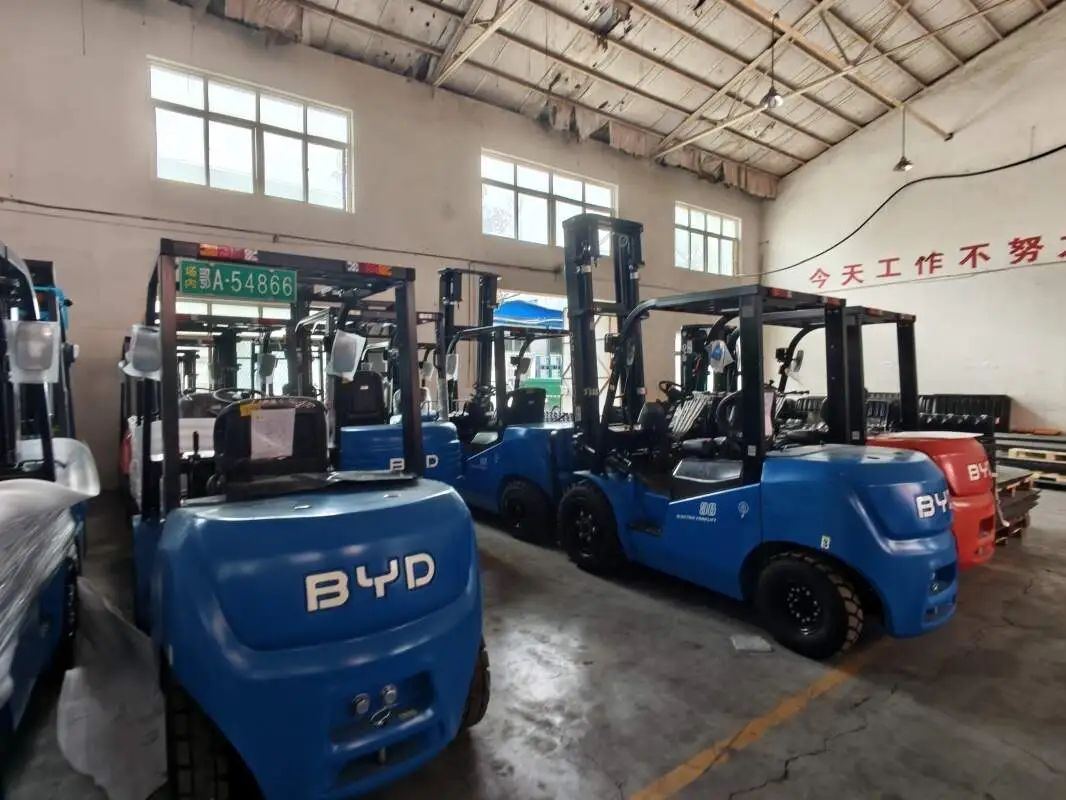
Due to the dense production process and compact storage area in the food workshop, narrow-channel lithium-ion forklifts have become the key equipment to improve operation efficiency. Due to the strict hygiene and safety requirements of food production, the use specifications and material selection of forklifts must meet industry standards to avoid affecting food quality and production environment.
In terms of usage specifications, it is first necessary to pay attention to the key points of pre-operation inspection. Before each operation, a comprehensive inspection of the lithium battery forklift is required. First confirm that the battery power is sufficient to avoid power failure in the middle of the operation affecting the production progress; check the sensitivity of the braking system and the flexibility of the steering device to ensure that the operation process is stable and controllable; at the same time check whether the surface of the vehicle is damaged or the parts are loose to prevent the risk of parts falling off and contaminating the food during the operation.
The second is the narrow channel operation specification. When operating in a narrow channel, it is necessary to strictly control the driving speed to avoid colliding with shelves or production equipment due to excessive speed, causing material damage or environmental pollution. When turning, anticipate the channel width in advance, slowly operate the steering device, and if necessary, use auxiliary observation equipment to confirm that there are no obstacles and staff around. During the operation, always pay attention to the surrounding dynamics and actively avoid personnel to ensure the safety of personnel and equipment.
Daily cleaning and maintenance are also aspects that cannot be ignored. After the operation, it is necessary to clean the surface of the forklift in time, especially the contact area of the fork and tray, to remove residual food debris or stains, and prevent the growth of bacteria from affecting the workshop hygiene environment. Regular professional testing of the battery to check whether there is any leakage. Maintenance operations need to be carried out in the designated non-production area to avoid oil, debris and other pollutants generated during maintenance from entering the production workshop.
In terms of material requirements, the body body needs to be made of corrosion-resistant and easy-to-clean materials. The humidity in the food workshop is high, and cleaners are often used for environmental disinfection and sterilization. Ordinary steel is easy to rust and not easy to clean. Preference is given to stainless steel, which has good corrosion resistance, smooth surface and easy to wipe. It can adapt to the special environment of the workshop and reduce the difficulty of daily cleaning.
Components that come into direct contact with food or food packaging, such as forks, clamps, etc., must be made of materials that meet food contact safety standards. Such materials must have the characteristics of no harmful substances precipitation and wear resistance, so as to avoid food contamination due to material wear or precipitation during operation and ensure food safety.
In addition, the seals of the battery compartment, circuit interface and other parts of the lithium battery forklift need to be made of oil-resistant and detergent-resistant materials to prevent moisture and detergent in the workshop from penetrating into the equipment and causing circuit failures to affect the operation. At the same time, good sealing performance can also avoid battery liquid leakage and eliminate the risk of food contamination from the source.


