
 简体中文
简体中文 繁体中文
繁体中文 Deutsch
 日本語
日本語 한국어
한국어 Tiếng Việt
 Русский
 ไทย
ไทย Bahasa Indonesia
 Bahasa Melayu
 Filipino
 لالعربية
 Français

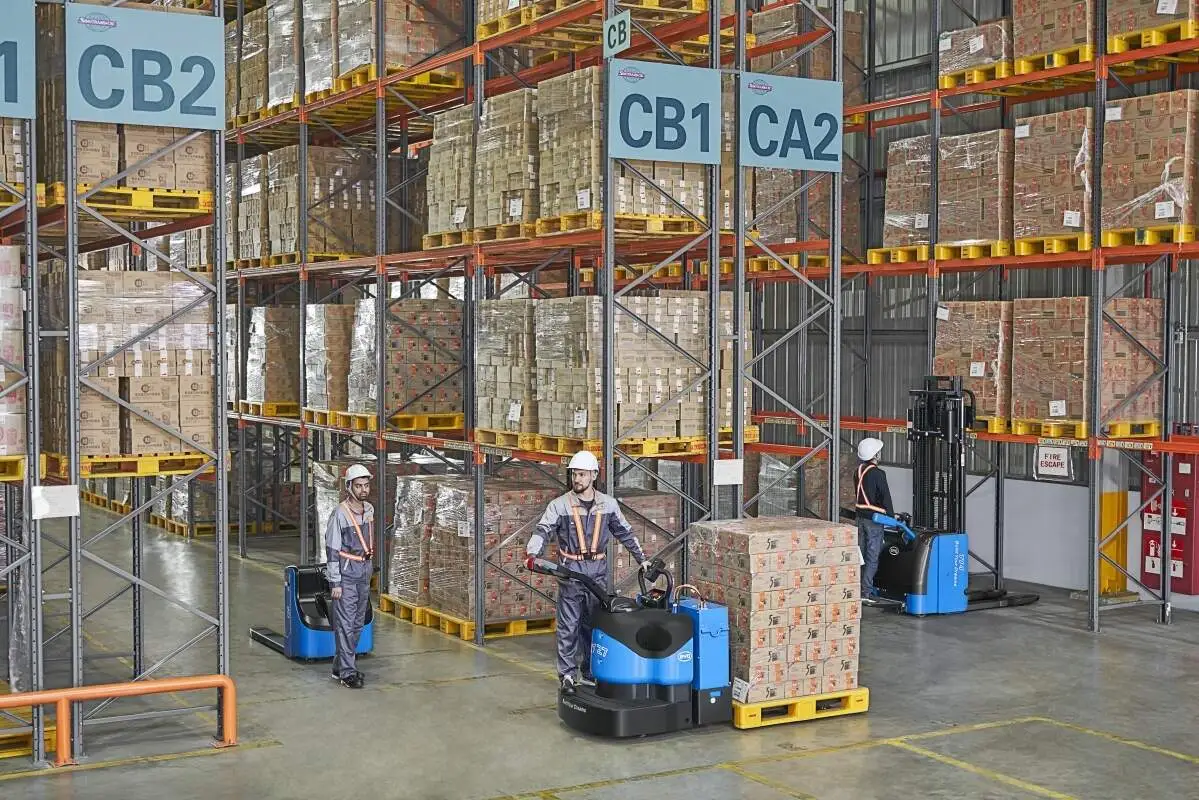
In modern warehousing operations, small warehouses have higher requirements for the flexibility of forklifts due to their compact space and high cargo density. The turning radius is one of the core indicators to measure whether the forklift can adapt to such scenarios. Reasonable matching of the turning radius of the forklift with the width of the warehouse passage can not only improve the operation efficiency, but also reduce the risk of collision between equipment and shelves and goods, and reduce operating costs.
Different types of electric reach forklifts have different turning radii, and the corresponding adaptation scenarios are also different.
Small tonnage electric reach forklifts, the turning radius is usually between 1.5 meters and 2 meters. This type of forklift is compact and flexible, and is suitable for small warehouses with a channel width of 2.5 meters to 3 meters, such as e-commerce small storage points and back-end warehouses of retail stores. Such warehouses often have narrow shelf spacing and dense stacking of goods. Forklifts with small turning radii can easily complete U-turns, steering and other operations in a limited space to meet the high-frequency handling needs of small goods.
Medium-tonnage electric reach forklifts generally have a turning radius within the range of 2 meters to 2.5 meters. Its load-bearing capacity is stronger, and it is suitable for medium-sized warehouses with a channel width of 3 meters to 3.5 meters, such as industrial raw material storage warehouses and regional distribution centers. This type of warehouse has a medium turnover of goods. Although the channel has a certain width, it still requires forklifts to have better flexibility. Medium-tonnage models can not only carry heavier goods, but also operate smoothly in relatively narrow spaces, balancing load-bearing and maneuverability.
Large tonnage electric forward forklifts have a turning radius of between 2.5 meters and 3 meters. This type of forklift is designed for heavy cargo and is suitable for large warehouses with a channel width of 3.5 meters to 4 meters, such as large logistics warehousing centers and finished manufacturing warehouses. Although the turning radius is large, this type of warehouse channel is relatively spacious and the weight of the goods is high. The load-bearing capacity of large tonnage forklifts can meet the handling needs of bulk goods, and at the same time, the channel width is reasonably planned, which can still ensure the smooth operation.
In addition to the turning radius, other factors need to be considered in the adaptation of narrow warehouses. For example, the lift height of the forklift needs to match the height of the warehouse shelves; the convenience of operation, such as whether it is equipped with steering power, the accuracy of small-scale operation; and the battery life to ensure that it can meet the needs of long-term warehouse operations. In addition, the shelf layout and the way the goods are placed in the warehouse will also affect the traffic efficiency of the forklift. It is recommended to measure the channel width and shelf spacing before the selection, and combine the type of goods and the handling frequency to comprehensively select the appropriate forklift model.


