
 简体中文
简体中文 繁体中文
繁体中文 Deutsch
 日本語
日本語 한국어
한국어 Tiếng Việt
 Русский
 ไทย
ไทย Bahasa Indonesia
 Bahasa Melayu
 Filipino
 لالعربية
 Français

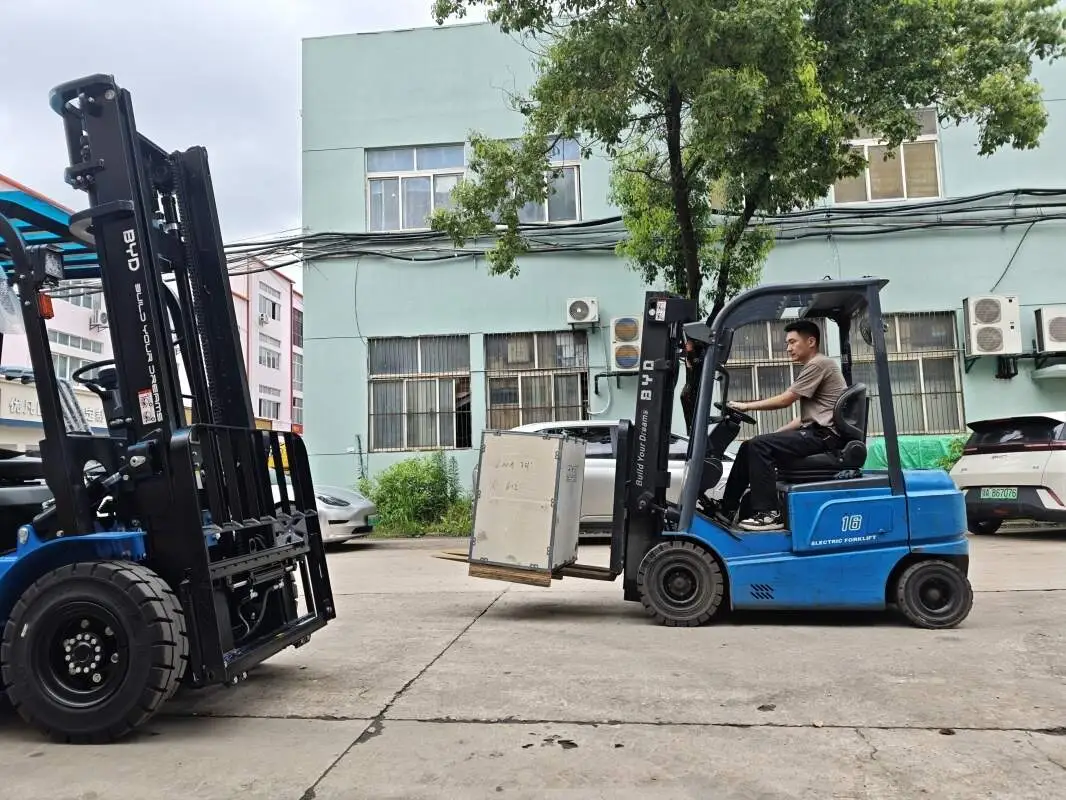
Lithium battery storage forklifts have become common equipment in the field of warehousing and logistics due to their high efficiency and environmental protection. Regular maintenance is the key to ensuring their stable operation and prolonging their service life. Here are the basic items included in regular maintenance.
Battery system maintenance
Daily appearance and condition inspection is the basic link. Before and after each use, it is necessary to check whether the battery shell is damaged or leaking, check whether the terminals are loose or oxidized, and clean the corroded debris on the surface of the terminals in time. At the same time, pay attention to the remaining battery power to avoid excessive discharge affecting the battery life. Regular deep maintenance requires balanced charging of the battery according to the standard cycle to ensure that the battery pack has the same power. It is also necessary to clean the dust and stains on the battery surface, and check whether the ventilation of the battery cooling system is smooth to prevent the battery performance from declining due to poor heat dissipation.
Brake system maintenance
Brake parts inspection needs to be carried out regularly to check the degree of wear of the brake pads. If the wear reaches the specified threshold, it needs to be replaced in time; check whether the brake fluid level is within the normal range, and supplement the brake fluid that meets the specifications when it is insufficient; at the same time, check the brake pipeline for leakage and damage to ensure that the pipeline is well sealed. Brake performance testing is also essential. Test the braking distance and sensitivity of the forklift under no-load and full-load conditions in an open and safe field to confirm that the braking process is smooth and free of abnormal phenomena such as deviation and slowness to ensure driving safety.
Walking system maintenance
The tire condition inspection is the key point, check the tire for cracks, bulging, excessive wear, etc., clean up the debris in the tire pattern in time to ensure the normal grip of the tire; at the same time check the tire pressure, keep it within the range specified by the equipment, and avoid driving instability caused by too high or too low pressure. In terms of driving components, regularly check the running status of the drive motor and reducer, listen for abnormal noise and vibration, and check the fastening of the connecting parts to prevent mechanical failure caused by loosening.
Maintenance of hydraulic and electrical auxiliary systems
The hydraulic system needs to regularly check the level and quality of the hydraulic oil. If the oil is turbid or deteriorated, it needs to be replaced in time. At the same time, check whether the hydraulic pipeline is leaking and whether the joints are loose to ensure the stable operation of the hydraulic system. For electrical auxiliary systems, check whether the lights and warning devices of the forklift are working normally, check whether the lines are damaged or aging, clean the dust on the surface of the controller and sensor, and ensure the smooth transmission of electrical signals to avoid electrical failures affecting the operation of the equipment.
Doing these basic maintenance projects well can effectively reduce the failure rate of lithium-ion storage forklifts, improve the safety and efficiency of equipment operation, and provide reliable equipment support for warehousing and logistics operations.


