
 简体中文
简体中文 繁体中文
繁体中文 Deutsch
 日本語
日本語 한국어
한국어 Tiếng Việt
 Русский
 ไทย
ไทย Bahasa Indonesia
 Bahasa Melayu
 Filipino
 لالعربية
 Français

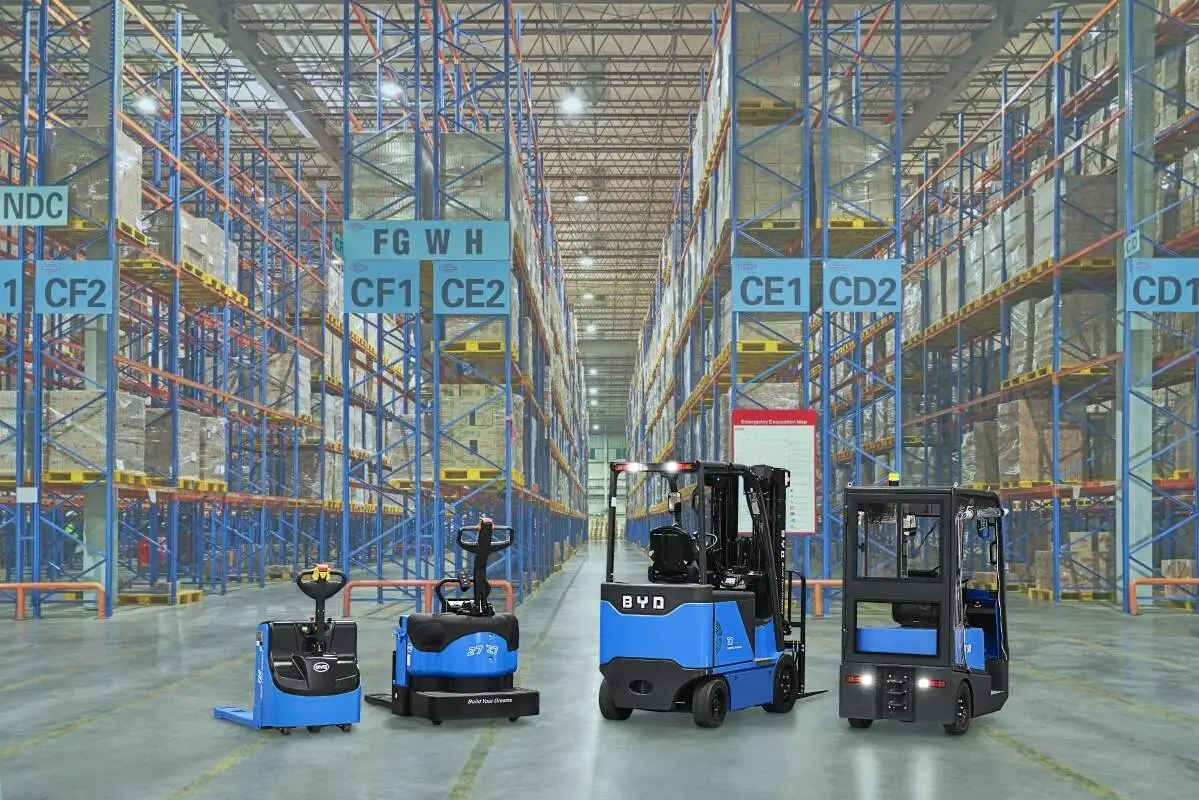
In modern workshop operation scenarios, electric forklifts have become the core equipment for material handling, among which lithium-ion forklifts and lead-acid electric forklifts are the two mainstream types, and there are obvious differences between the two in many dimensions.
Differences in battery life and charging efficiency
The lithium battery carried by the lithium battery forklift has a higher energy density. Under the same battery capacity, the battery life is more stable, and there will be no obvious battery life attenuation with the increase of the number of uses. In terms of charging, the lithium battery forklift supports fast charging, usually 1-2 hours to complete 80% power replenishment, to meet the needs of continuous operation of multiple shifts. The energy density of the lead-acid electric forklift is low, and the battery life will gradually decrease with the aging of the battery. The charging time generally takes 8-10 hours, and a certain floating charge time needs to be reserved, which is difficult to adapt to high-frequency operation scenarios.
Differences in maintenance costs and service life
The battery structure of the lithium battery forklift is relatively closed, and there is no need to regularly add electrolyte, adjust electrolyte density and other maintenance operations. Daily maintenance only needs to keep the battery surface clean, and the maintenance cost is low. At the same time, the cycle life of the lithium battery can reach more than 2,000 times, and the overall service life is longer. Lead-acid electric forklifts need regular maintenance work such as battery replenishment and terminal cleaning. In the long run, the maintenance cost is higher, and the battery cycle life is generally about 500-1000 times, and the replacement frequency is higher.
Differences in performance and environmental adaptability
The power response speed of the lithium battery forklift is faster, and the starting, acceleration and climbing performance are better, which can better adapt to the complex material handling needs in the workshop. In the low temperature environment, the performance attenuation of the lithium battery is small, and it can still maintain a stable power output. The power response of the lead-acid electric forklift is relatively slow, and the battery activity will be greatly reduced in the low temperature environment. Not only will the battery life be shortened, but the power will also be significantly reduced. It is more suitable for use in the workshop environment with low operating intensity at room temperature.
Application scenario difference
For large workshops with high work intensity and continuous operation of multiple shifts, such as automated production workshops, e-commerce warehouses, etc., the fast charging capacity, long battery life and low maintenance characteristics of lithium-ion forklifts can better match the demand. For small workshops with low operation frequency and single shift operation, the initial purchase cost of lead-acid electric forklifts is lower, which can meet the basic material handling needs and is a more economical choice.


