
 简体中文
简体中文 繁体中文
繁体中文 Deutsch
 日本語
日本語 한국어
한국어 Tiếng Việt
 Русский
 ไทย
ไทย Bahasa Indonesia
 Bahasa Melayu
 Filipino
 لالعربية
 Français

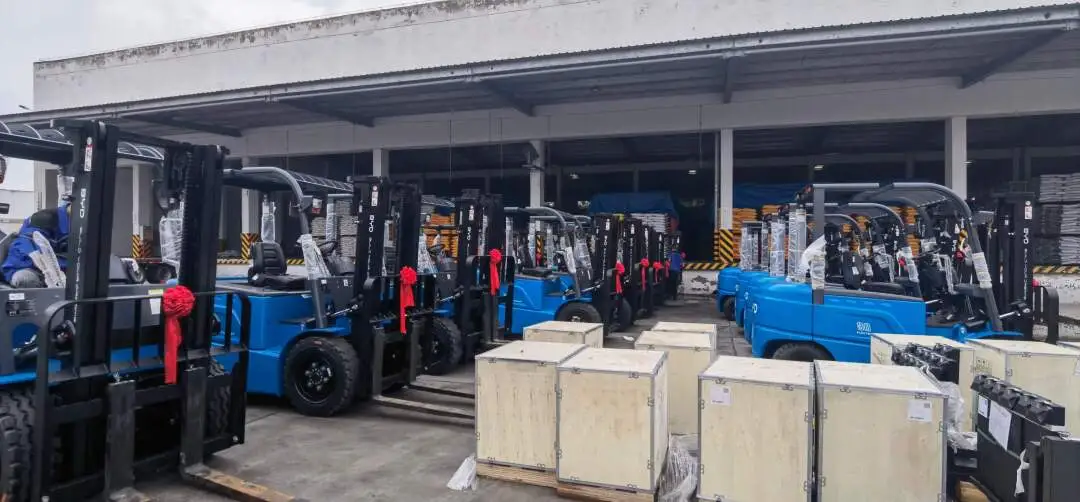
The cold chain storage environment has the characteristics of low temperature and high humidity, which puts forward special requirements for the performance of lithium-ion forklifts. Before purchasing, enterprises need to combine their own storage needs and focus on confirming the following types of core configurations to ensure that forklifts can be stably adapted to cold chain scenarios.
Basic configuration for low temperature environments
First of all, it is necessary to confirm the low temperature adaptability configuration of the battery. The temperature of the cold chain warehouse is usually below 0 ° C. The capacity of ordinary lithium batteries decays rapidly at low temperatures. It is necessary to choose a battery configuration with low temperature protection design to ensure that stable discharge performance can still be maintained in low temperature environments. Secondly, pay attention to the sealing configuration of the forklift. High humidity in the cold chain environment can easily lead to component rust. It is necessary to confirm whether the electrical system and control components of the forklift have good sealing performance to avoid water vapor intrusion and affect the life of the equipment.
Key configuration to ensure operational efficiency
The first is the fork and lifting configuration. It is necessary to confirm whether the length, bearing capacity and lifting height of the fork match according to the height of the storage shelf and the weight of the goods. For example, for warehouses storing heavy cold chain goods, it is necessary to choose a fork configuration with a large load capacity; for high-rise shelf storage, it is necessary to correspond to sufficient lifting height. Secondly, pay attention to the steering and walking configuration of the forklift. The cold chain warehouse channel is usually narrow, and it is necessary to confirm the steering flexibility of the forklift, whether it has a small turning radius design, and improve the working efficiency in the channel.
Safety protection configuration for cold chain scenarios
The first is the anti-skid braking configuration. The ground in a low temperature environment is easy to freeze or frost. It is necessary to confirm whether the braking system of the forklift has an anti-skid design, which can brake quickly and smoothly on the slippery ground to avoid operation accidents. Secondly, pay attention to the auxiliary configuration of the field of vision. There is often fog in the cold chain warehouse, which affects the driver's field of vision. It is necessary to confirm whether the forklift is equipped with anti-fog lighting, wide-angle rearview mirrors and other configurations to improve visibility during operation.
Battery life and charging configuration suitable for storage needs
It is necessary to confirm whether the battery capacity meets the battery life requirements according to the daily operation time and warehouse charging conditions. At the same time, it is necessary to pay attention to whether the charging configuration supports the fast charging function. If the warehouse operation is intense, the fast charging configuration can shorten the downtime and ensure the continuity of the operation. In addition, it is necessary to confirm whether the charging system is suitable for the low temperature environment to avoid low charging efficiency or failure to charge normally at low temperature.
After confirming the above types of configurations, enterprises can purchase lithium-ion forklifts that are suitable for their own cold chain storage needs, while ensuring operational stability, improving storage operation efficiency and reducing long-term use costs.


