
 简体中文
简体中文 繁体中文
繁体中文 Deutsch
 日本語
日本語 한국어
한국어 Tiếng Việt
 Русский
 ไทย
ไทย Bahasa Indonesia
 Bahasa Melayu
 Filipino
 لالعربية
 Français

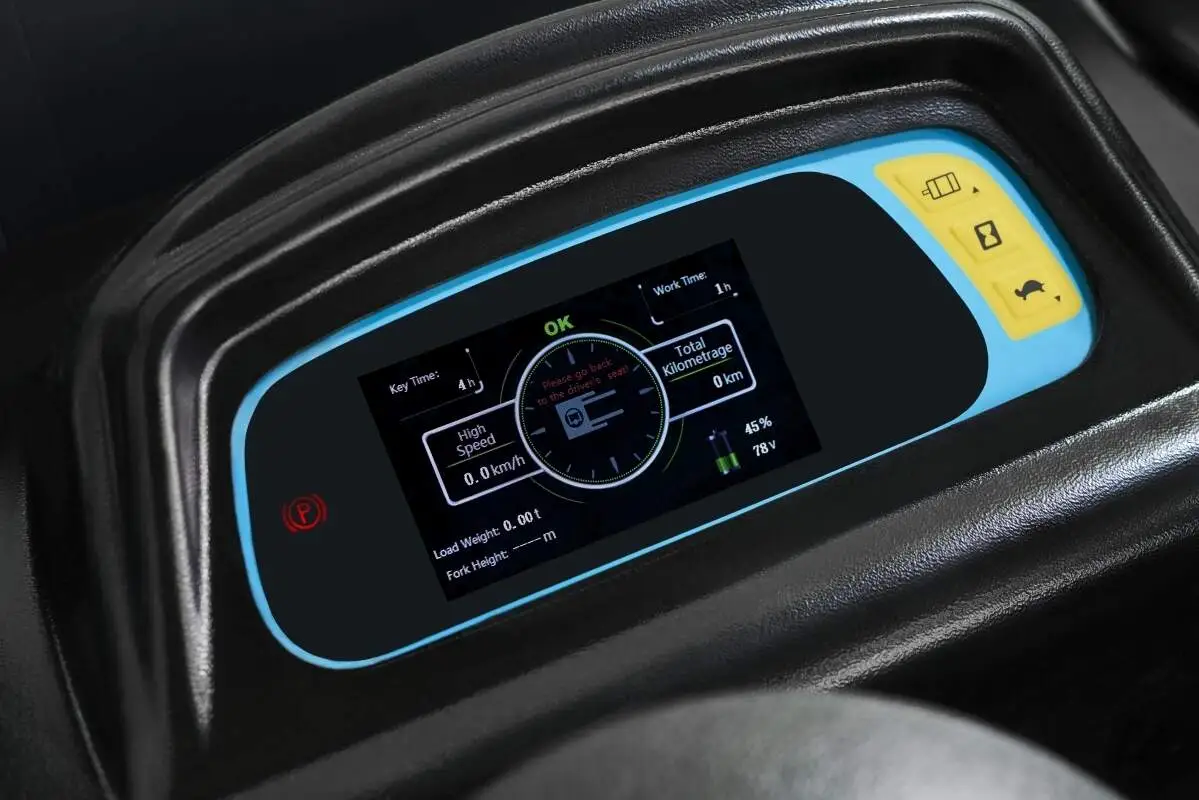
In the modern workshop logistics operation, continuous and stable material transfer is the core premise to ensure production efficiency. As the core transfer equipment in the workshop, the lithium battery forklift has a direct impact on the continuity of the operation, and the application of fast charging design is becoming an important direction to solve this key problem.
The pain points of continuous operation in the workshop are significant. Traditional lithium-ion forklifts mostly use conventional charging mode, and the charging time often takes several hours. In high-intensity, multi-shift continuous operation scenarios, the long-term idleness of the forklift due to charging will disrupt the established production rhythm, and even affect the material supply rhythm of the entire production line. Especially during peak order periods, limited forklift capacity is interrupted due to supplementary energy, which can easily cause problems such as material accumulation and workstation waiting for materials, which brings unnecessary efficiency losses to workshop production.
In response to the needs of workshop operations, the fast charging design of lithium-ion forklifts is specifically optimized around the characteristics of lithium batteries. This type of design greatly shortens the charging time under the premise of strictly ensuring the safety and service life of the battery by adjusting the charging current and voltage parameters. At the same time, the fast charging design is usually adapted to the special fast charging facilities in the workshop, which can replenish enough power for the forklift to support subsequent operations in a short time to meet the temporary replenishment demand. Some fast charging designs also combine the real-time operation data of the forklift to intelligently adjust the replenishment strategy to avoid damage to the battery due to problems such as overcharging.
The fast charging design helps the continuous operation of lithium-ion forklifts in the workshop in many ways. The first is to significantly shorten the waiting time for replenishment. During the short operation gap of the forklift, such as workers changing shifts and material sorting, the fast charging design can replenish enough power for the battery to support the subsequent operation for several hours, so that the forklift does not need to be shut down for a long time to charge, which fundamentally guarantees the continuity of the operation. The second is to optimize the capacity scheduling. The workshop does not need to reserve a large number of spare forklifts to deal with the replenishment vacancy, and can flexibly arrange the replenishment period of existing forklifts according to the operation needs, reducing equipment investment and management costs. In addition, the fast charging design can also be perfectly adapted to the multi-shift operation mode, completing the replenishment during the short connection period between different shifts, ensuring that the forklift can maintain sufficient capacity during each operation period.
Of course, the efficient application of fast charging design also needs to be combined with the actual scene of the workshop. For example, rationally planning the location of the fast charging site, ensuring the convenient connection between the charging facility and the operation area, and at the same time doing a good job in the daily maintenance and testing of the battery, in order to maximize the support role of the fast charging design for continuous operation. Overall, the fast charging design of lithium electric forklifts provides a reliable guarantee for the continuous operation of the workshop by improving the energy replenishment efficiency, and has become an important means of logistics optimization in the modern workshop.


