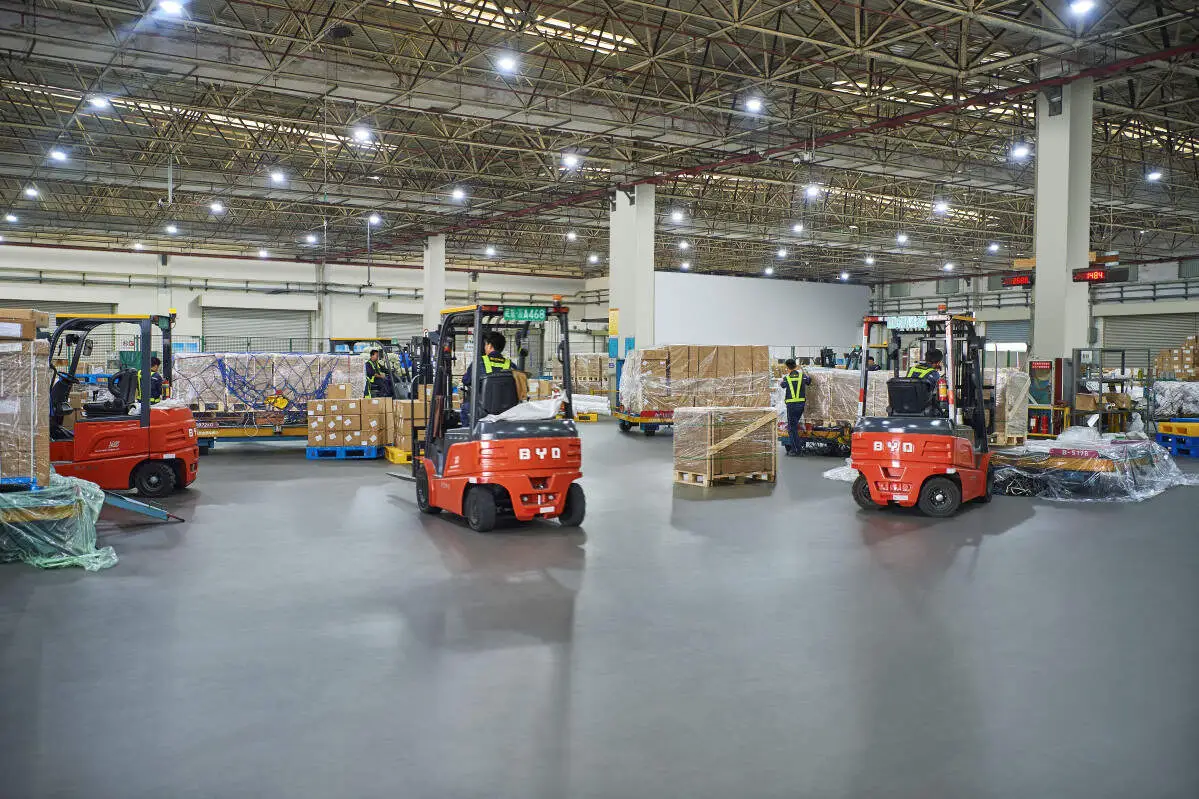
For warehouse managers and site planners, selecting the right material handling equipment is crucial to optimizing operations and ensuring workplace safety. The 12K reach forklift, designed for medium to heavy-duty storage tasks, balances robust load capacity with versatile reach capabilities, making it a reliable choice for distribution centers and industrial facilities. Understanding its core specifications and performance attributes is essential for designing a site layout that maximizes space utilization and workflow efficiency.
At its core, the 12K reach forklift has a rated load capacity of 12,000 pounds, suitable for handling standard pallets and heavy cargo loads in indoor and covered outdoor settings. Key dimensional specifications include an overall length (with extended forks) ranging from 12 to 14 feet, and a width between 4 to 5 feet, which directly impacts the minimum aisle width required for safe navigation. Its maximum lift height typically falls between 20 to 30 feet, allowing access to upper storage racks and vertical space that might otherwise go unused. The turning radius, averaging 8 to 10 feet, is a critical metric for maneuvering in narrow aisles and tight storage zones.
Performance-wise, electric-powered 12K reach forklifts offer quiet operation and zero tailpipe emissions, making them ideal for enclosed warehouse environments. Battery life varies based on usage intensity, with most models providing 8 to 12 hours of continuous operation on a single charge. Fast-charging options are available to minimize downtime, allowing operators to replenish battery levels during scheduled breaks. The reach mechanism is a standout feature: it enables operators to extend forks forward without moving the entire vehicle, reducing the need for wide turning spaces and optimizing storage density in racking systems.
When incorporating a 12K reach forklift into site planning, several factors should be prioritized. Aisle widths should be set at least 1.5 times the forklift’s turning radius to ensure safe and efficient movement, preventing collisions with racks or other equipment. Storage rack heights should align with the forklift’s maximum lift capacity to avoid overloading or underutilizing vertical space. Additionally, placing charging stations near high-traffic work zones can streamline battery swaps or charging, reducing travel time and enhancing operational productivity.
In summary, the 12K reach forklift’s specifications and performance characteristics play a vital role in effective site planning. By carefully evaluating load capacity, dimensions, maneuverability, and power efficiency, planners can create a warehouse layout that supports seamless operations, reduces bottlenecks, and enhances overall productivity. Taking these factors into account ensures that the forklift operates at its full potential while maintaining a safe working environment for all personnel.