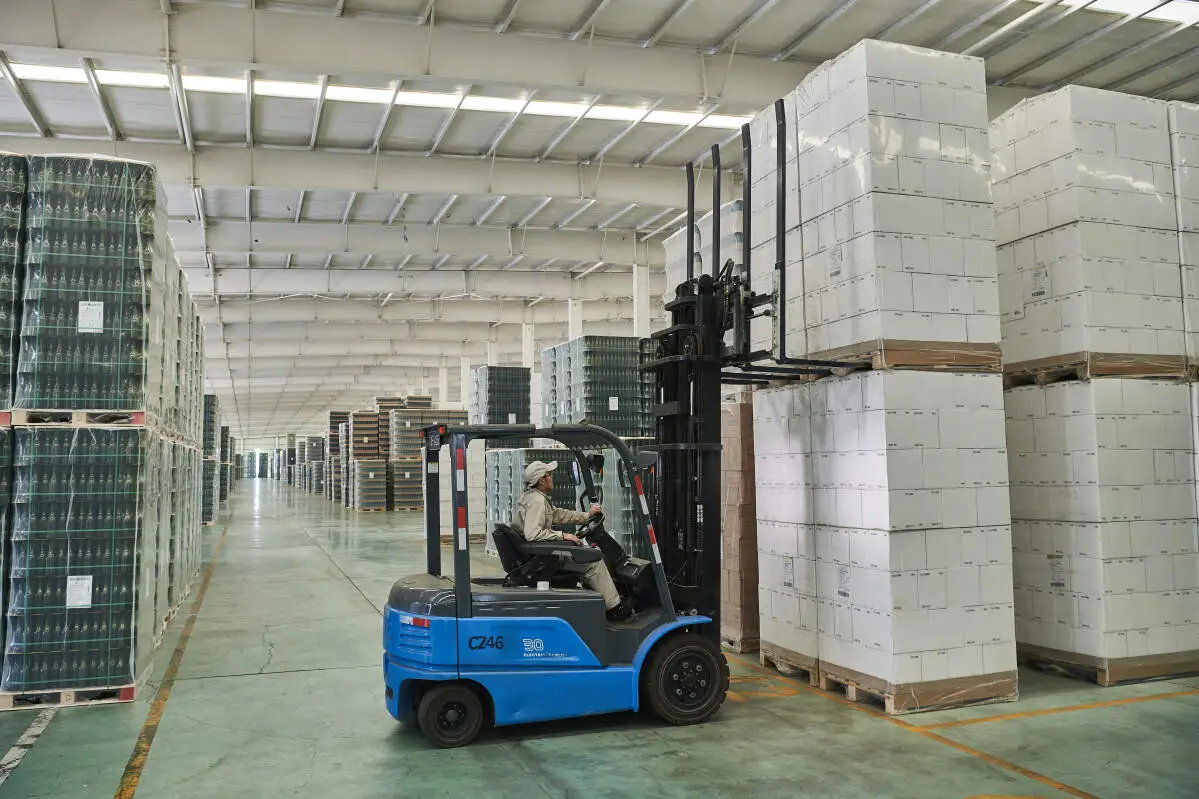
In industrial material handling environments where heavy-shift operations are the norm, reliable power sources are critical to maintaining uninterrupted productivity. Forklifts, as the workhorses of warehouses, distribution centers, and manufacturing facilities, depend on batteries that can keep up with long, demanding work cycles without frequent replacements or downtime.
Traditional lead-acid batteries, once the standard for forklifts, often struggle to meet the demands of heavy-shift operations. Their cycle life is limited, requiring regular maintenance and frequent replacements to sustain performance over extended workdays. This not only adds to operational costs but also disrupts workflow when batteries need to be swapped or charged for extended periods.
Enter the 48-volt lithium forklift battery, engineered to address these pain points by delivering extended cycle life tailored for heavy-shift site operations. Unlike lead-acid alternatives, lithium batteries boast a significantly higher number of charge-discharge cycles, often doubling or tripling the lifespan of traditional options. This extended cycle life translates to fewer battery replacements, reducing long-term operational expenses and minimizing workflow interruptions.
One key factor contributing to the extended cycle life of 48-volt lithium batteries is their robust chemistry. Designed to withstand deep discharges and rapid charging without compromising performance, these batteries are built to handle the rigorous demands of back-to-back shifts. Unlike lead-acid batteries, which can suffer from sulfation and capacity loss with frequent deep cycles, lithium batteries maintain consistent power output throughout their lifespan.
For heavy-shift operations, this consistency is invaluable. Forklift operators can rely on a steady power supply from start to finish, eliminating the need for mid-shift battery swaps or lengthy charging breaks. Additionally, 48-volt lithium batteries support fast charging capabilities, allowing operators to top up the battery during short breaks and keep the forklift in operation for longer stretches. This flexibility ensures that material handling tasks stay on schedule, even during peak operational hours.
Another benefit of 48-volt lithium forklift batteries is their low maintenance requirement. Unlike lead-acid batteries, which need regular water top-ups, cleaning, and equalization charges, lithium batteries are virtually maintenance-free. This reduces the time and labor spent on battery upkeep, freeing up staff to focus on core operational tasks. Over time, the combination of extended cycle life and low maintenance creates a more efficient and cost-effective power solution for heavy-shift sites.
In conclusion, 48-volt lithium forklift batteries represent a significant advancement in material handling power solutions. Their extended cycle life, robust performance, and low maintenance make them an ideal choice for heavy-shift site operations, where reliability and productivity are non-negotiable. By investing in these batteries, industrial facilities can reduce operational costs, minimize downtime, and ensure that their forklift fleets keep pace with the demands of continuous, high-volume work cycles.