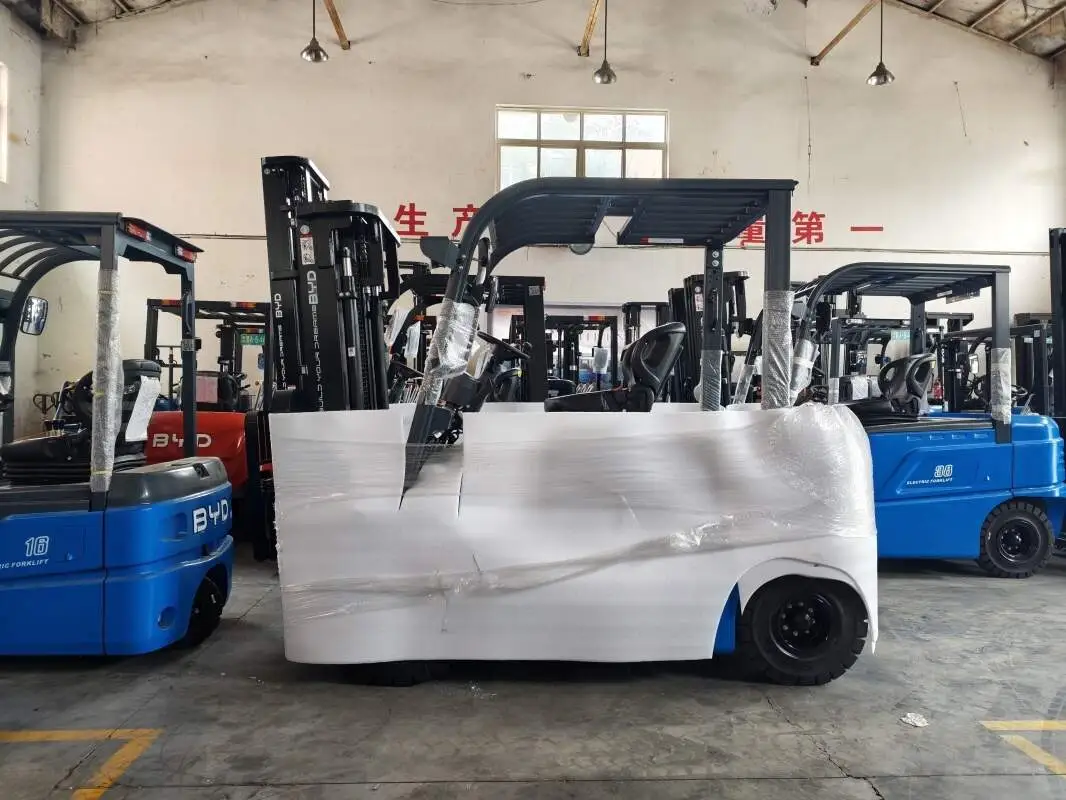
In modern logistics, dense warehouse storage has become a core strategy to maximize limited floor space, yet it brings distinct challenges for material handling equipment. electric forklifts have emerged as a targeted solution, with tailored practical performance that directly addresses the constraints of compact storage environments.
A standout strength of electric forklifts in dense warehouses is their exceptional narrow aisle navigation. Unlike traditional internal combustion models, electric variants feature a streamlined, compact design with a tight turning radius, enabling them to maneuver through aisles as narrow as 1.8 meters. This agility allows operators to access storage racks positioned closely together, eliminating wasted space between rows and boosting overall storage capacity. Responsive steering and smooth acceleration further enhance maneuverability, lowering the risk of collisions with racks or inventory during daily operations.
Precise load handling is another critical practical performance attribute for dense warehouse settings. Electric forklifts are equipped with advanced lift systems that deliver consistent lifting power and accurate positioning capabilities. Operators can safely lift pallets to heights of up to 8 meters, accessing upper storage racks that are often underutilized in dense layouts. Integrated load-sensing technology ensures stable handling of varying load weights, minimizing the chance of load shifts or drops that could damage inventory or disrupt workflows. This precision is particularly valuable when handling fragile or high-value goods, where minor errors can lead to significant losses.
Energy efficiency and sustainability also add to the practical value of electric forklifts in dense warehouses. Powered by batteries, these forklifts produce zero emissions, making them ideal for enclosed warehouse spaces where air quality is a priority. They generate far less noise than fuel-powered alternatives, creating a quieter, more comfortable working environment for staff. Modern lithium-ion batteries offer extended runtimes, allowing forklifts to operate through full shifts without frequent recharging. Additionally, regenerative braking systems capture energy during deceleration, further improving energy efficiency and reducing long-term operational costs.
Operational reliability and low maintenance requirements are equally vital for sustaining continuous workflow in dense warehouses. Electric forklifts have fewer moving parts than internal combustion models, reducing the risk of mechanical failures. Routine maintenance primarily involves battery checks and minor component inspections, cutting down on downtime and repair expenses. This reliability ensures material handling operations can proceed smoothly, even during peak periods when warehouse activity is at its highest.
In conclusion, the practical performance of electric forklifts makes them an ideal fit for dense warehouse storage operations. Their narrow aisle agility, precise load handling, energy efficiency, and consistent reliability directly tackle the key challenges of compact storage environments, helping businesses optimize space utilization, reduce operational costs, and enhance overall logistics efficiency.