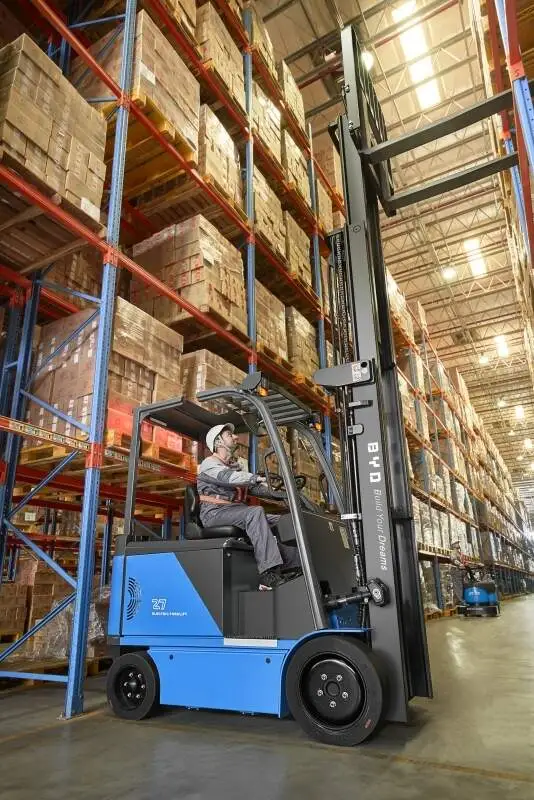
The largest forklift ever built represents a significant advancement in heavy-duty material handling engineering, designed to tackle loads that standard forklifts cannot approach. Its robust construction and high load capacity make it indispensable in industries where moving oversized, heavy items is a daily requirement. Below are key real-world application cases that demonstrate its practical value across diverse sectors.
In major coastal ports, this massive forklift plays a critical role in handling oversized cargo such as heavy machinery components, large shipping containers, and industrial equipment modules. Unlike standard forklifts limited to lighter containers, it can lift loads weighing several tens of tons with precision. Operating in open storage yards, it loads and unloads cargo onto bulk carriers and flatbed trucks, reducing reliance on cranes for certain heavy loads and improving operational efficiency. Port operators note it cuts down turnaround time for specific cargo types, as it maneuvers in tighter spaces than large cranes, adding versatility to port logistics fleets.
Within heavy manufacturing facilities—such as those producing power generation equipment or large-scale industrial machinery—the forklift moves bulky components during production. For example, it transports large turbine rotors, generator frames, and heavy steel structures between assembly stations. These components often weigh too much for standard material handling equipment, and the forklift’s ability to lift and move them safely minimizes risk of damage to expensive parts. Its stable base and advanced lifting mechanisms secure even irregularly shaped loads, enabling seamless integration into manufacturing workflows.
On large-scale construction projects like skyscraper builds or infrastructure developments, the forklift handles heavy building materials. It lifts and positions precast concrete panels, steel I-beams, and large construction modules with ease. In remote sites where cranes struggle to set up due to terrain constraints, it offers a flexible solution. Its rugged tires and powerful engine navigate uneven ground, suiting both urban and rural construction environments. Construction teams rely on it to streamline material delivery, ensuring critical components reach the right location quickly to keep project timelines on track.
In scrapyards and recycling facilities processing large industrial equipment, the forklift handles heavy scrap items such as decommissioned trucks, construction machinery, and large metal structures. It lifts and moves these items to processing areas for shredding or dismantling. Its strength handles even the bulkiest scrap, reducing need for multiple pieces of equipment and improving overall efficiency. Its durable construction withstands harsh scrapyard conditions—including rust, debris, and heavy impacts—making it a long-lasting asset for these operations.
Across these sectors, the largest forklift addresses unique material handling challenges standard equipment cannot overcome. Its ability to handle extreme loads with precision and flexibility makes it a vital tool for industries relying on large-scale, heavy-duty operations. As global demand for handling oversized cargo grows, its role in real-world applications will only become more prominent.