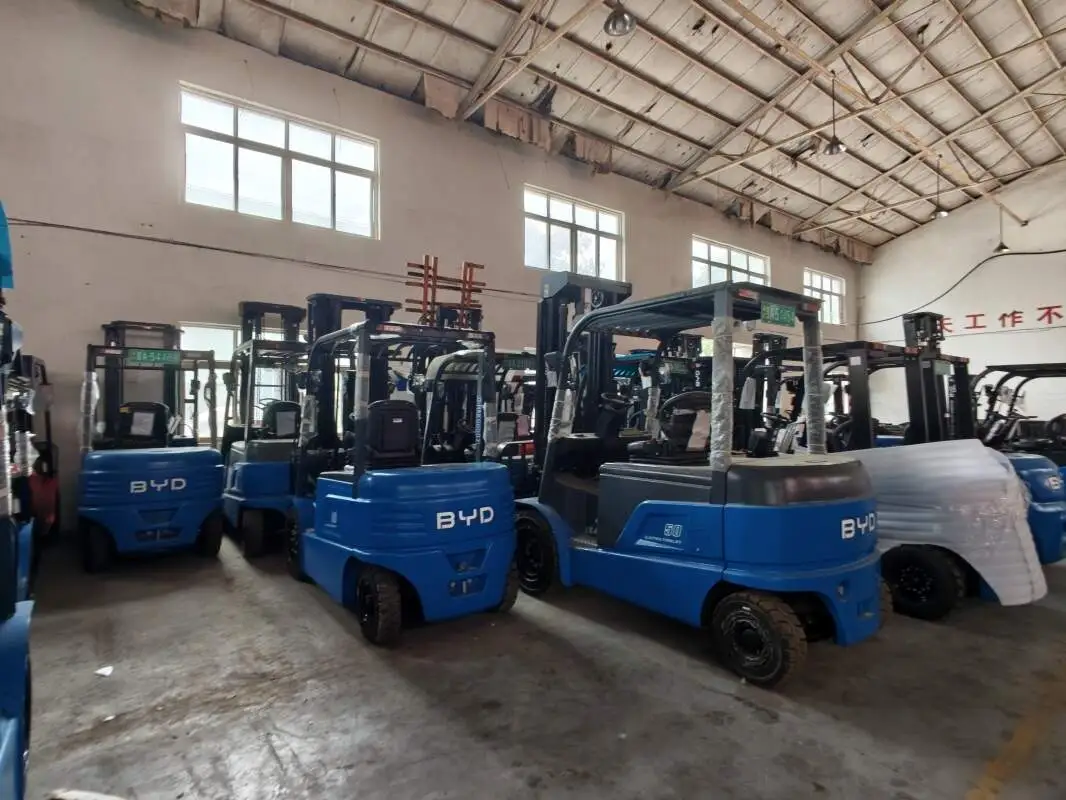
In today’s fast-paced logistics landscape, businesses constantly seek equipment that balances efficiency, flexibility, and cost-effectiveness. Portable self-loading electric forklifts have emerged as a practical solution, addressing many pain points in material handling operations across warehouses, distribution centers, and last-mile delivery hubs.
One of the primary advantages lies in their exceptional space adaptability. Unlike traditional heavy-duty forklifts that require wide aisles and ample maneuvering room, these compact units can operate in narrow spaces, such as small retail backrooms, cramped warehouse corners, or multi-level storage facilities. Their slim design allows them to navigate tight corridors and access areas that larger equipment cannot reach, ensuring no storage space goes unused and streamlining inventory retrieval processes.
Ease of operation is another key benefit. Designed with user-friendliness in mind, these forklifts typically feature intuitive control panels and lightweight steering systems. Many models do not require specialized certification or extensive training, enabling warehouse staff to master basic operations in a short period. This reduces the time and resources spent on training, allowing teams to deploy the equipment quickly and maintain consistent workflow efficiency, even during peak demand periods.
Cost efficiency is also a significant draw for logistics businesses. Portable self-loading electric forklifts have lower upfront costs compared to heavy-duty alternatives, making them accessible to small and medium-sized enterprises. Additionally, their electric power source reduces fuel expenses and emits zero tailpipe emissions, aligning with sustainability goals and minimizing environmental impact. Maintenance requirements are relatively simple, with fewer moving parts than internal combustion forklifts, leading to lower long-term operational costs and less downtime for repairs.
Flexibility in deployment further enhances their value. These forklifts are lightweight and often equipped with wheels that allow for easy transportation between different work sites. For businesses with multiple distribution points or mobile logistics operations, this means a single unit can be moved to where it is needed most, eliminating the need to invest in multiple pieces of equipment. This adaptability is particularly useful for last-mile delivery services, where loading and unloading cargo at various locations requires a versatile, easy-to-transport solution.
As logistics operations continue to evolve with increasing demands for speed and adaptability, portable self-loading electric forklifts offer a reliable way to optimize material handling processes. Their space-saving design, ease of use, cost efficiency, and flexible deployment make them a valuable asset for businesses looking to enhance operational performance and stay competitive in the dynamic logistics industry.