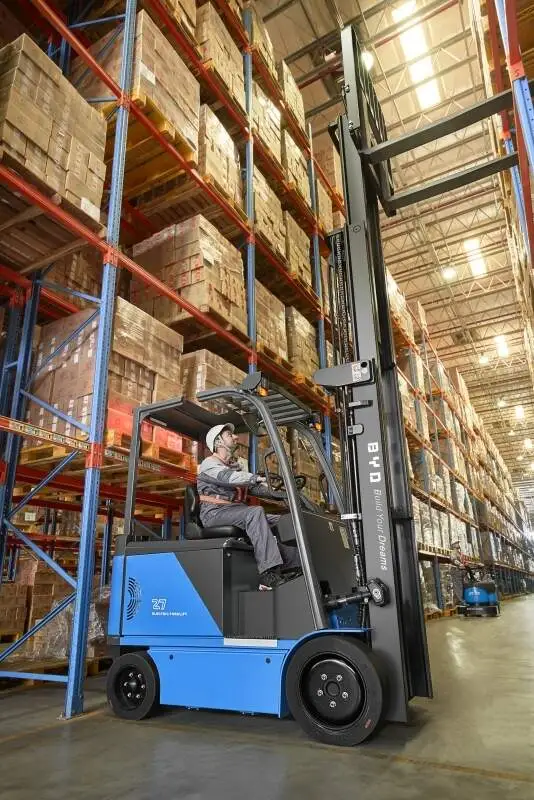
48 x 4 forklift forks are widely utilized in industrial material handling due to their balanced combination of load capacity and maneuverability. Designed to fit standard forklift models, these forks play a pivotal role in streamlining operations across warehouses, construction sites, and manufacturing facilities.
In terms of applications, these forks are ideal for handling palletized goods, including stacked boxes, crates, and bulk containers that fall within their specified load rating. They are commonly employed in warehouse inventory management, where efficient loading and unloading of delivery trucks, as well as stacking items on high racks, are daily tasks. On construction sites, 48 x 4 forks facilitate the movement of building materials such as lumber, pipes, and prefabricated components, contributing to smooth workflow coordination. Additionally, they serve well in manufacturing plants for transferring raw materials to production lines and finished products to storage areas.
When using 48 x 4 forklift forks, proper pre-operation checks are essential. Operators should inspect the forks for signs of wear, such as cracks, bending, or excessive corrosion, before each use. Ensuring the forks are securely attached to the forklift carriage and that the locking mechanisms are fully engaged prevents accidental detachment during operation. It is crucial to match the fork size to the load dimensions; overloading the forks beyond their capacity can lead to structural failure or loss of control, posing significant risks to personnel and property.
Safety notes extend beyond pre-use inspections. Operators must maintain a clear line of sight when maneuvering the forklift, especially when carrying tall or bulky loads that may obstruct visibility. Slow and deliberate movements are recommended, particularly when turning, lifting, or lowering loads, to avoid tipping or load displacement. When stacking items, ensure the load is centered on the forks to distribute weight evenly, reducing the risk of imbalance. Additionally, operators should avoid traveling with loads raised to excessive heights, as this increases the forklift’s center of gravity and instability.
Regular maintenance of 48 x 4 forklift forks is also a critical aspect of safe operation. Periodic inspections by qualified personnel should be conducted to assess fork integrity, including checking for any deformation or wear that may compromise performance. Lubricating the fork attachment points helps maintain smooth operation and prevents premature wear. Any damaged forks should be removed from service immediately and repaired or replaced to avoid potential accidents.
By adhering to these application guidelines and safety notes, operators can maximize the efficiency of 48 x 4 forklift forks while minimizing the risk of workplace incidents. Proper training for operators, combined with consistent maintenance and adherence to load capacity limits, ensures that these essential material handling tools perform reliably in various industrial environments.