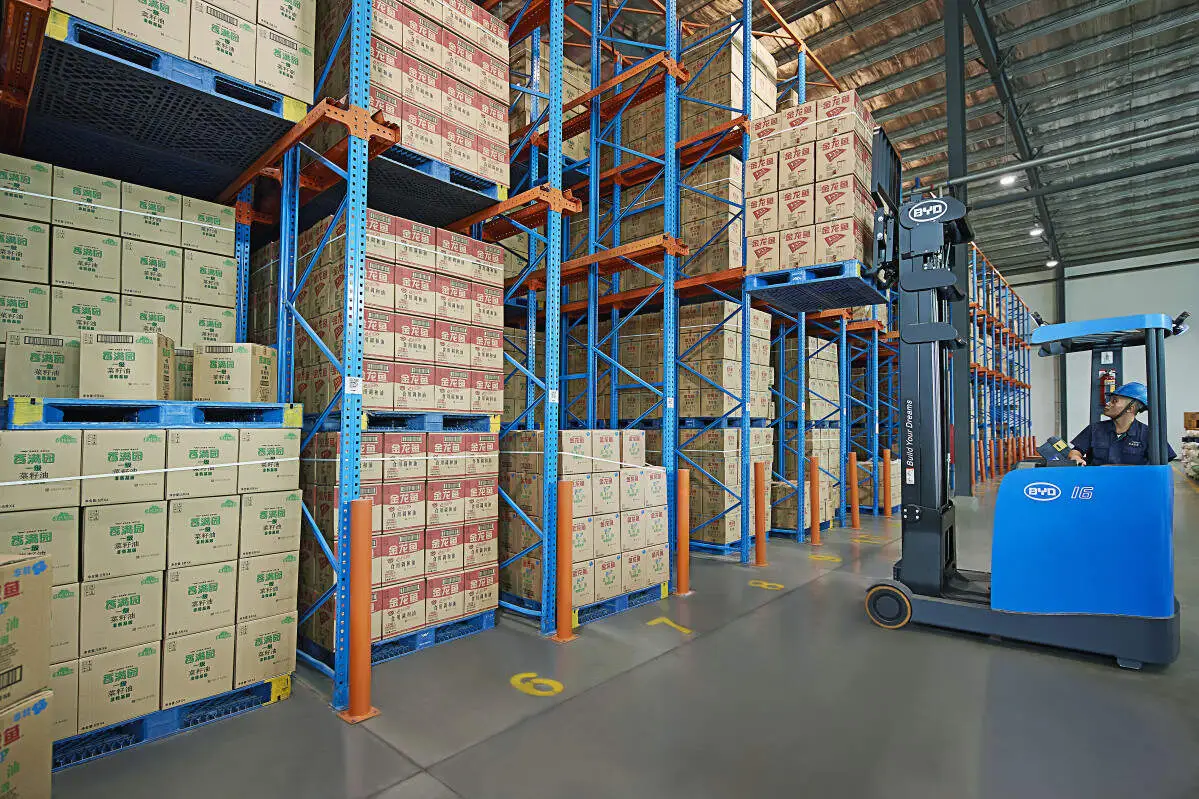
For new forklift operators, transitioning from driving passenger vehicles to operating a forklift can feel like learning an entirely new skill. While both are motorized vehicles, their design, purpose, and operational requirements differ dramatically. Understanding these key distinctions is critical to avoiding accidents, ensuring workplace safety, and mastering forklift operation efficiently.
Handling and maneuverability stand as one of the most pronounced gaps between the two vehicle types. Forklifts are engineered for heavy-load movement in tight, confined spaces such as warehouses or construction sites, so their handling logic contrasts sharply with passenger vehicles. Unlike cars or trucks that use front-wheel steering, most forklifts rely on rear-wheel steering. This design enables tighter turns but often feels counterintuitive to new operators accustomed to front-wheel control. Additionally, forklifts have a relatively large turning radius compared to their size, and their maximum speed is intentionally capped—usually between 10 to 15 miles per hour, a stark contrast to passenger vehicles that can easily exceed 60 mph. This slower speed is not a limitation but a safety feature, designed to maintain stability when carrying heavy loads and prevent tip-overs or sudden load shifts.
Visibility is another critical area where forklifts differ significantly. Passenger vehicles are built for all-around visibility to navigate open roads, but forklifts have inherent blind spots caused by their load-carrying structure. The mast and front forks can obstruct the operator’s view of the path ahead, especially when lifting loads to elevated heights. Forklift side mirrors are smaller and less comprehensive than those on cars, and operators often need to rely on backup cameras or designated spotters to avoid collisions with pedestrians, other equipment, or obstacles. Unlike driving a car, where glancing over a shoulder is straightforward, forklift operators must adjust their seating position and use specialized mirrors to monitor their surroundings effectively.
Weight distribution and load balance are perhaps the most vital distinctions for new operators to understand. Passenger vehicles have balanced weight distribution between front and rear axles, with the engine and passengers evenly spread out. Forklifts, however, are equipped with a rear counterweight to offset the heavy loads carried at the front. When a forklift lifts a load, its center of gravity shifts forward, increasing the risk of tipping if the load is too heavy, improperly positioned, or if the operator makes sudden turns or stops. This is a concern that rarely arises with passenger vehicles, which do not carry external heavy loads as part of their regular function. Operators must learn to calculate load capacity, ensure loads are centered on the forks, and maintain steady movements to preserve balance.
Safety protocols for forklifts are far more stringent than those for passenger vehicles, reflecting their role in industrial settings. While seatbelts are the primary safety requirement for most passenger vehicle scenarios, forklift operators must wear additional protective gear such as hard hats, steel-toe boots, and high-visibility vests. Forklifts also have strict operational limits: they cannot be driven on public roads without special permits, and operators must complete certified training before using them. Additionally, forklifts require pre-operation inspections of brakes, forks, and hydraulic systems—a step not mandatory for daily passenger vehicle use.
Finally, the control layout and response of forklifts differ vastly from passenger vehicles. Instead of the familiar steering wheel, accelerator, and brake pedal setup, forklifts use a combination of levers, pedals, and joysticks to control lifting, tilting, and fork movement. Accelerators and brakes may be positioned differently, and some forklifts use hand-operated throttles instead of foot pedals. The hydraulic systems that power fork movements also have slower response times compared to the immediate feedback of passenger vehicle controls. New operators need to practice using these controls to build muscle memory and avoid over-adjusting, which could lead to load damage or accidents.
For new forklift operators, recognizing these key differences is the first step toward safe and proficient operation. Taking the time to master handling, visibility, load balance, safety protocols, and control systems will help operators transition smoothly and reduce the risk of errors in the workplace. With proper training and a clear understanding of these distinctions, new operators can confidently operate forklifts while maintaining a safe environment for themselves and those around them.