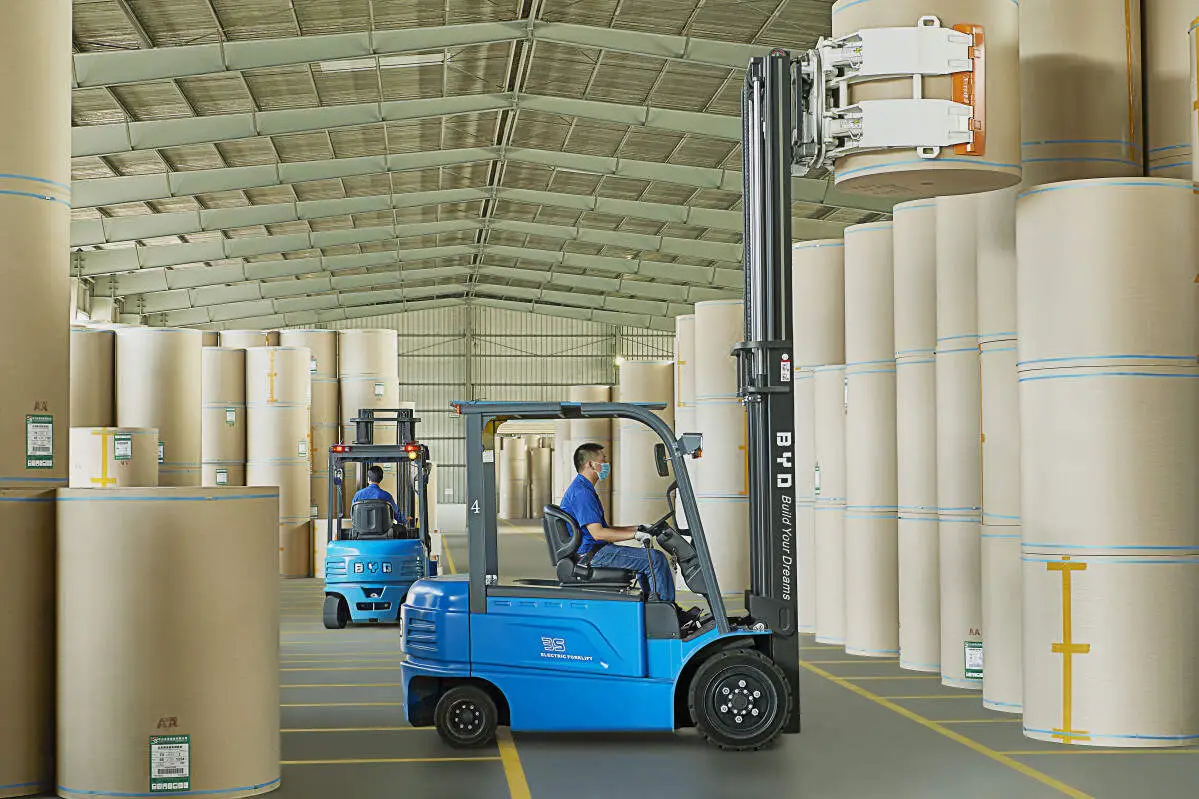
In modern warehouse operations, narrow aisle facilities have become increasingly common as businesses strive to maximize storage capacity within limited floor spaces. However, these environments present unique challenges for material handling equipment—traditional forklifts often struggle to maneuver through tight corridors, leading to reduced operational efficiency and underutilized storage potential. This is where multi-directional forklifts emerge as a tailored solution, addressing the constraints of narrow aisle warehouses while enhancing overall productivity.
Multi-directional forklifts are specialized material handling vehicles designed with advanced steering systems that allow them to move not only forward and backward but also sideways and rotate in tight spaces. Unlike standard forklifts, which require wide turning radii, these models feature compact chassis and specialized tires that enable smooth navigation through aisles as narrow as 1.5 meters. Their versatile movement capabilities make them well-suited for navigating complex storage layouts where space is at a premium.
One of the primary applications of multi-directional forklifts in narrow aisle warehouses is high-density storage management. These forklifts can access pallet racks positioned close together, allowing warehouses to utilize both vertical and horizontal space more effectively. By eliminating the need for wide turning aisles, businesses can increase their storage capacity significantly without expanding their facility footprint. This is particularly beneficial for industries with high-volume inventory, such as retail, logistics, and manufacturing.
Order picking is another critical area where multi-directional forklifts excel. In narrow aisle warehouses, order pickers often face challenges reaching items stored in hard-to-access areas. Multi-directional forklifts can navigate tight pathways with precision, enabling operators to reach specific pallets or shelves without compromising speed or safety. This reduces travel time between storage zones, leading to faster order fulfillment and improved customer satisfaction.
Additionally, multi-directional forklifts play a key role in inventory management and cross-docking operations. Their ability to move seamlessly between different storage areas helps streamline inventory counts and transfer processes, minimizing the risk of product damage caused by awkward maneuvering. In cross-docking scenarios, where goods are transferred directly from incoming trucks to outgoing shipments, these forklifts can efficiently navigate the limited space between loading docks and storage racks, reducing handling time and improving supply chain agility.
Beyond their functional applications, multi-directional forklifts offer several tangible benefits for narrow aisle warehouses. By optimizing space utilization, businesses can reduce the need for additional warehouse space, lowering long-term operational costs. Their precise movement also minimizes the risk of collisions with racks, walls, or other equipment, reducing maintenance expenses and ensuring a safer working environment for operators.
As warehouse operations continue to evolve with increasing demands for space efficiency, multi-directional forklifts will remain a vital tool for businesses looking to maximize their storage capacity and operational efficiency. Their versatility and adaptability make them an ideal choice for narrow aisle environments, providing a practical solution to the unique challenges of compact storage facilities.