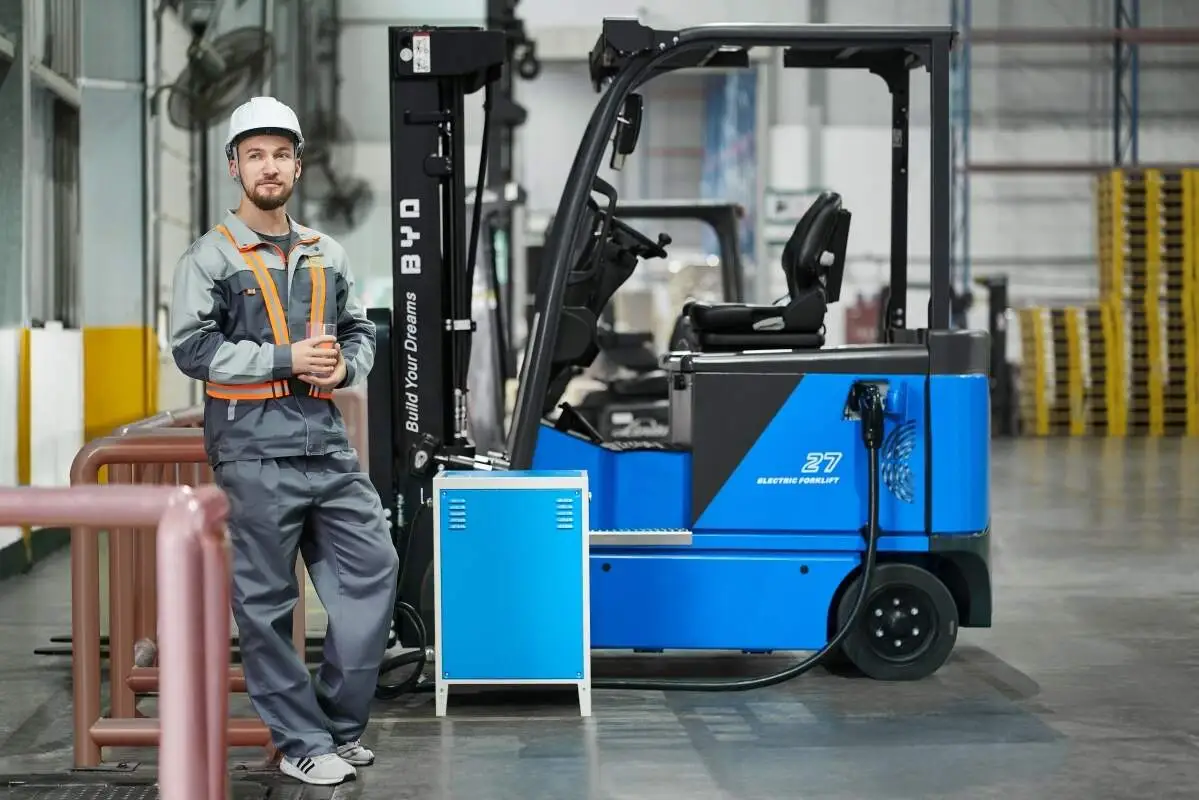
California’s warehouse industry operates at a fast pace, driven by e-commerce growth, retail distribution demands, and manufacturing logistics. For many facilities, Class 4 and Class 5 forklifts are reliable workhorses that handle diverse material handling tasks. Understanding their optimal application scenarios helps warehouse managers make informed equipment choices to boost operational efficiency.
Class 4 forklifts, equipped with solid rubber tires and internal combustion engines, thrive in indoor warehouse environments where heavy loads and high traffic are common. In large e-commerce fulfillment centers across Southern California, these forklifts efficiently move full pallets of goods from storage racks to loading docks. Their solid tires minimize floor damage, making them ideal for concrete warehouse floors that see constant vehicle movement. They also excel in handling heavy-duty inventory, such as bulk electronics or household appliances, with lifting capacities ranging from 5,000 to over 15,000 pounds. Additionally, Class 4 forklifts are well-suited for cross-docking operations, where quick transfers between incoming trucks and storage areas are essential to meet tight delivery deadlines for regional retail partners.
Class 5 forklifts feature pneumatic tires, designed for outdoor and rough-terrain use, making them a staple in Northern California’s manufacturing warehouses and distribution hubs. These forklifts navigate unpaved loading yards, gravel paths, and uneven surfaces with ease, supporting the movement of raw materials like steel beams or construction supplies from outdoor storage to production lines. In port-adjacent warehouses in Los Angeles and Oakland, Class 5 forklifts handle the unloading of shipping containers, lifting heavy crates and pallets onto warehouse floors with stable precision. Their robust engines provide the power needed for long hours of outdoor operation, and their pneumatic tires absorb shocks, ensuring consistent stability when transporting loads over irregular ground.
California’s strict emissions regulations mean that both Class 4 and Class 5 forklifts must meet state-approved standards for exhaust emissions. Warehouse operators often opt for low-emission engine models to comply with local air quality rules while maintaining operational efficiency. When selecting between the two classes, managers consider factors like work environment (indoor vs. outdoor), load weight, terrain type, and daily operational demands. For indoor-focused tasks with heavy, frequent load movements, Class 4 is the go-to choice, while Class 5 is better suited for outdoor and rough-terrain applications that require enhanced mobility.
In summary, Class 4 and Class 5 forklifts play critical roles in California’s warehouse ecosystem, addressing distinct material handling needs. By leveraging their unique features in the right scenarios, warehouse operations can enhance productivity, reduce downtime, and ensure compliance with state regulations, supporting the smooth flow of goods across the state’s busy supply chain.