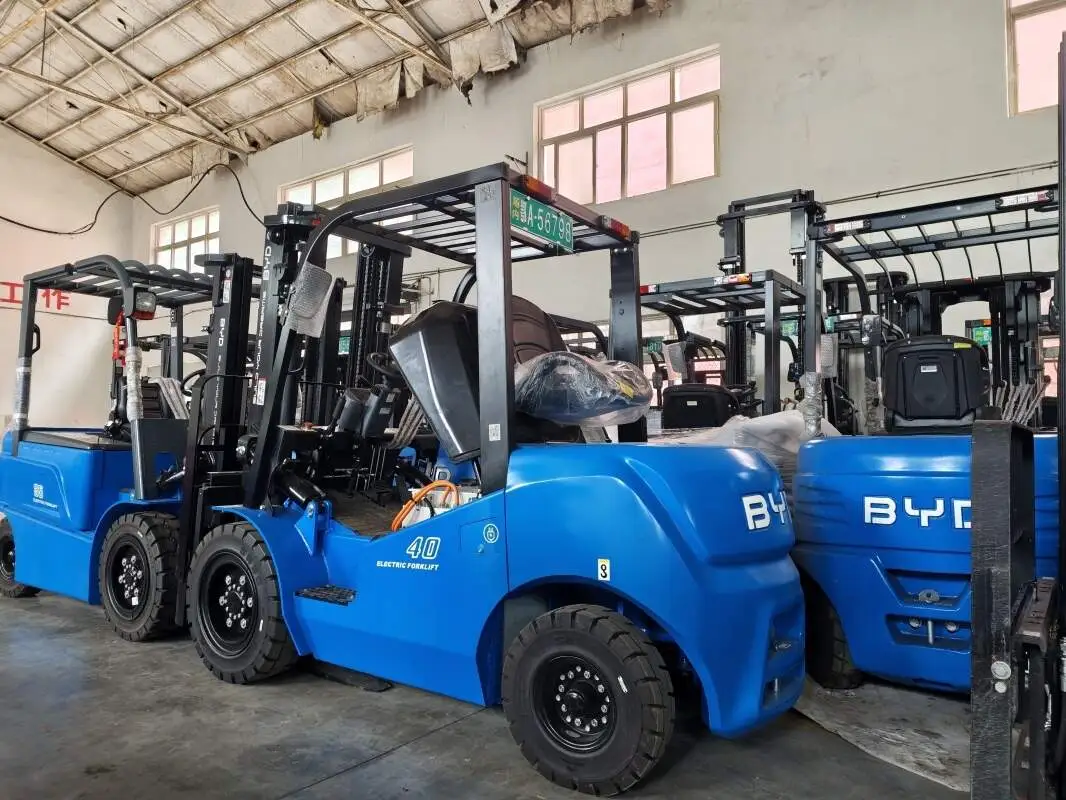
Traditional forklifts often struggle with the tight turns and limited maneuverability required in narrow warehouse aisles, leading to inefficient material handling, increased collision risks, and underutilized storage space. Omnidirectional forklifts, equipped with specialized wheel systems enabling movement in any direction—forward, backward, sideways, and 360-degree turns—have emerged as a targeted solution for these constrained environments.
In high-density storage warehouses, such as those supporting e-commerce and fast-moving consumer goods operations, aisles can be as narrow as 1.5 to 2 meters to maximize racking capacity. Omnidirectional forklifts thrive here, accessing palletized goods without needing extra room for turning. Operators can easily navigate between racks, slide sideways to align with pallets, and pick or place items with precision. This cuts down movement time and allows warehouses to utilize every inch of available storage, directly boosting inventory holding capacity.
Small-scale retail distribution centers, often located in compact urban spaces with limited and costly square footage, rely on narrow aisles to save space. Traditional forklifts require wider gaps to function, reducing usable storage, but omnidirectional forklifts eliminate this barrier. They efficiently transport goods from storage to loading docks even in aisles that barely accommodate their width, ensuring timely order fulfillment without sacrificing storage space.
Cold storage facilities face dual challenges: narrow aisles to maximize refrigerated storage, and the need to minimize door openings to maintain temperature consistency. Omnidirectional forklifts, built with components that perform reliably in low temperatures, navigate these aisles quickly and smoothly. Their multi-directional movement reduces trip counts for retrieving or storing goods, minimizing cold storage door open time and helping preserve perishable items.
Cleanroom environments for pharmaceuticals and electronics demand precise, contamination-free handling in constrained spaces. Narrow aisles here require gentle operations to avoid damaging sensitive products and disrupting sterile conditions. Omnidirectional forklifts’ smooth, controlled movements and zero-turn capabilities let them navigate tight spaces without bumping racks or equipment. Their enclosed designs also prevent dust spread, making them suitable for these highly regulated settings.
Multi-level mezzanine warehouses expand storage vertically, but connecting aisles and ramps are often narrow and winding. Traditional forklifts struggle with these layouts, but omnidirectional forklifts easily transition between levels, make tight turns on ramps, and navigate mezzanine aisles. This allows full utilization of vertical storage space without compromising material handling efficiency.
As warehouse space grows more valuable and storage demands rise, omnidirectional forklifts offer a practical solution for narrow aisle operations. By addressing the unique challenges of each scenario, they help businesses optimize storage utilization, improve operational efficiency, and reduce product or equipment damage, proving a valuable investment for modern warehousing logistics.