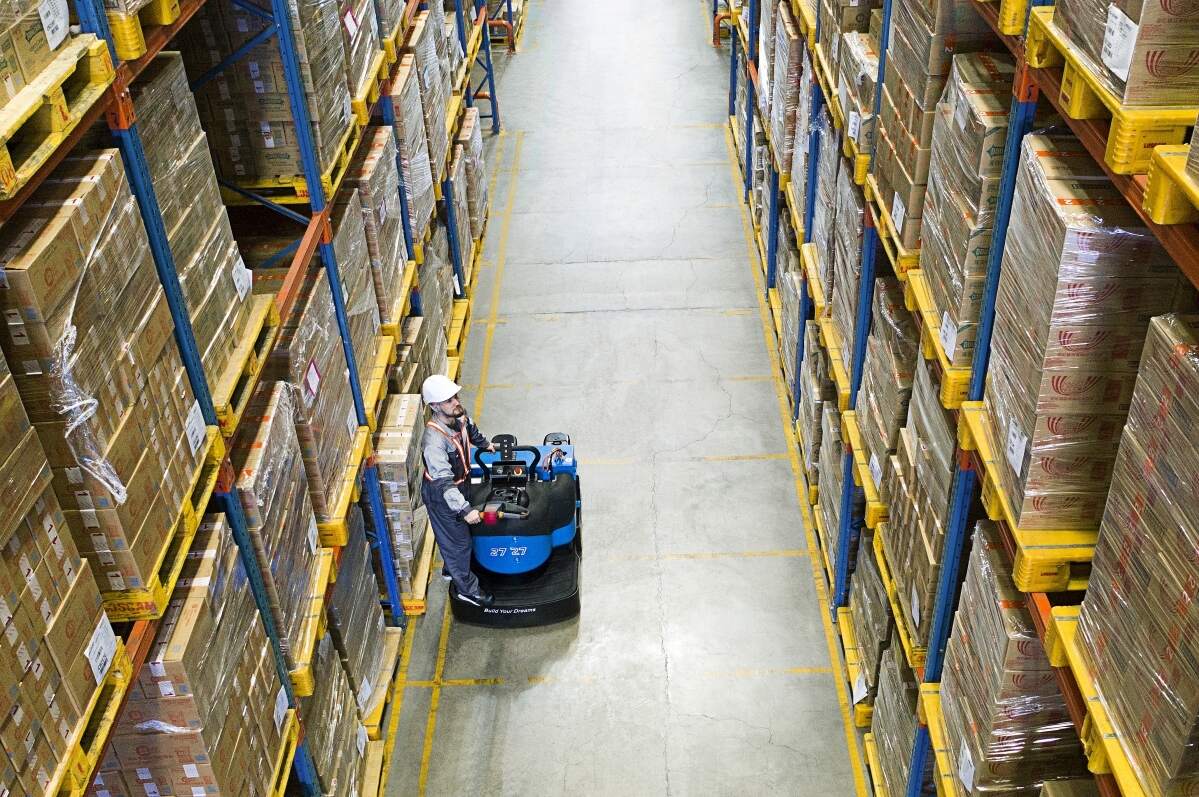
Light-duty handheld compact forklifts have emerged as practical tools for small-scale material handling, thanks to their compact size, lightweight design, and easy maneuverability. Unlike traditional forklifts, these units are tailored to handle light loads in spaces where larger equipment cannot operate efficiently, making them a go-to choice across various industries.
Small warehouses and distribution centers are primary application areas for these forklifts. In facilities with narrow aisles, low ceiling heights, and limited turning space, traditional forklifts often struggle to navigate. Handheld compact forklifts, however, can easily weave through tight spaces, allowing workers to retrieve and transport small batches of goods, such as boxes of electronics, small parts, or packaged food items. They are particularly useful for restocking mid-level shelves or moving items between storage zones without disrupting overall warehouse operations.
The retail sector also benefits significantly from light-duty handheld compact forklifts. In grocery stores, department stores, and convenience shops, these tools streamline inventory management tasks. Workers can use them to restock shelves with lightweight products, such as canned goods, personal care items, or small homeware pieces, without relying on manual lifting that may lead to fatigue or injury. Additionally, in backroom stockrooms with limited space, these forklifts make it easier to organize and move inventory quickly, ensuring shelves stay stocked during peak shopping hours.
Workshops and small manufacturing units are another key application area. In settings where precision and agility are essential, such as automotive repair shops, electronics assembly lines, or furniture workshops, these forklifts help transport small components, tools, and finished products. For example, in an electronics workshop, workers can use them to move boxes of circuit boards between assembly stations, eliminating the need for manual carting. Their compact size ensures they do not interfere with ongoing production processes, keeping workflows smooth and efficient.
Courier and parcel sorting stations also rely on light-duty handheld compact forklifts. In these fast-paced environments, workers need to move small parcels and packages between sorting bins and loading areas quickly. The forklifts’ lightweight design allows for quick operation, reducing the time spent on manual handling and increasing overall sorting efficiency. They are especially useful in indoor sorting facilities where space is limited and large equipment would hinder movement.
Finally, small construction sites and renovation projects find value in these forklifts. When moving lightweight building materials, such as bags of cement, tiles, or pipes, in narrow hallways or confined work areas, these tools provide a safe and efficient alternative to manual carrying. They help reduce physical strain on workers and speed up material transport, ensuring projects stay on schedule without compromising safety.
Overall, the application scope of light-duty handheld compact forklifts spans multiple industries, each benefiting from their unique combination of compactness, maneuverability, and suitability for light loads. As businesses continue to optimize small-scale material handling processes, these versatile tools are likely to become even more integral to daily operations.