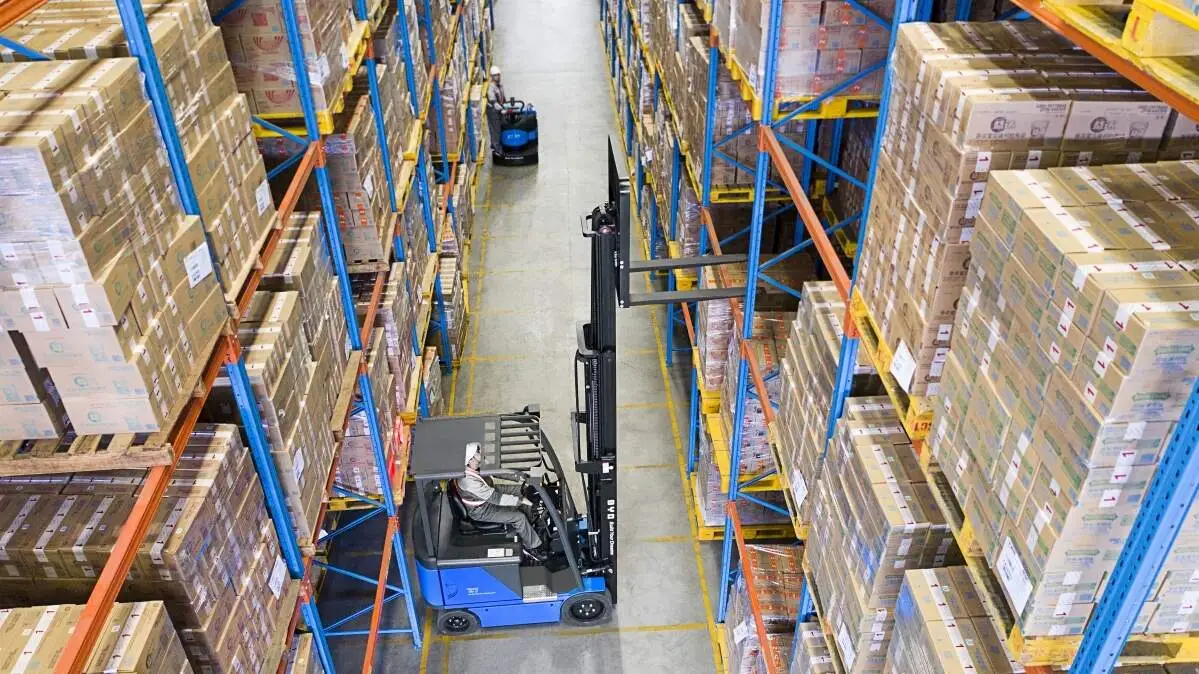
Telescopic zoom boom forklifts are versatile industrial lift equipment designed for flexible material handling in various settings, distinguishing themselves from standard forklifts with their extendable boom arm that allows vertical and horizontal reach.
At the core of this equipment lie several key components. The telescopic boom, the defining feature, consists of nested sections powered by hydraulic cylinders to extend or retract, enabling access to high or distant loads. The carriage and fork attachment secure materials, with adjustable settings to accommodate different load sizes. A robust hydraulic system drives all lifting and extending functions, ensuring smooth and controlled movements. The heavy-duty chassis provides stability, even when lifting heavy loads at full boom extension, while the enclosed operator cab offers ergonomic controls and clear visibility for safe operation.
Understanding operational fundamentals is critical for effective use. Before starting, operators must perform pre-operation checks, including inspecting hydraulic fluid levels, boom integrity, tire pressure, and brake functionality. During operation, the boom should be extended and retracted gradually to avoid sudden movements that could destabilize the forklift. Load capacity varies with boom reach—operators must refer to the load chart to ensure they do not exceed safe limits for each position. When navigating, slow speeds are recommended on uneven terrain, and sharp turns should be avoided while carrying loads.
Safety is a top priority when using telescopic zoom boom forklifts. All operators must complete formal training to understand equipment controls, load dynamics, and emergency procedures. Never operate the equipment under the influence of drugs or alcohol, and always wear appropriate personal protective equipment, including hard hats and steel-toe boots. In outdoor settings, be mindful of weather conditions—strong winds can affect stability, so avoid lifting loads in high wind. When not in use, lower the boom to the ground and engage the parking brake to prevent accidental movement.
These forklifts are widely used across industries. In warehouses, they facilitate stacking and retrieving goods from high storage racks. On construction sites, they handle building materials like steel beams and concrete blocks, reaching over obstacles to deliver loads to upper floors. In agricultural settings, they assist with moving hay bales and farm supplies, while in logistics centers, they streamline loading and unloading of cargo from trucks and containers. Their adaptability makes them a valuable asset for any operation requiring flexible, long-reach material handling.