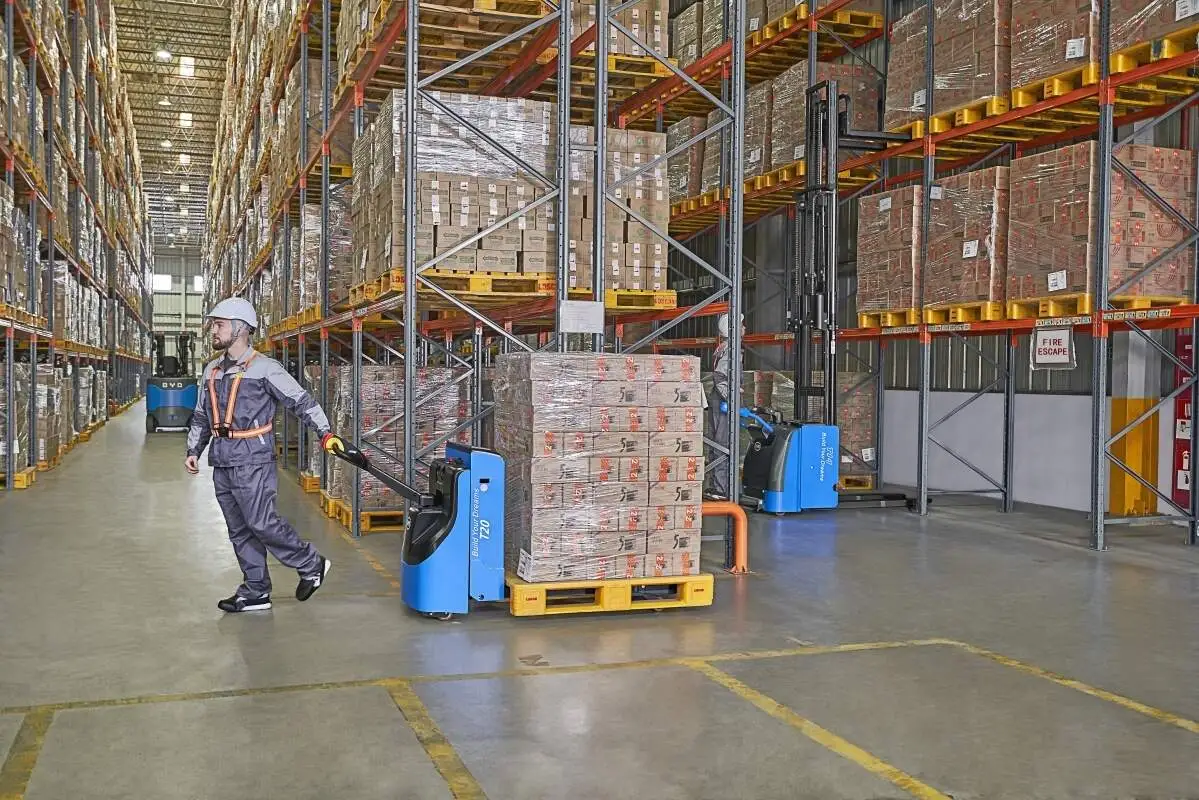
Small warehouses often face unique logistical challenges, from narrow aisles to limited storage space for equipment. When it comes to material handling, a 1-ton compact electric forklift stands out as a practical solution, offering agility and efficiency without the emissions of gas-powered alternatives. However, selecting the right model requires careful consideration of several key factors to ensure it aligns with your warehouse’s specific needs.
First, maneuverability should be your top priority. Small warehouses typically have tight aisles and limited turning space, so a forklift with a compact footprint and tight turning radius is essential. Look for models designed with shorter wheelbases and responsive steering systems, which allow operators to navigate around racks, pallets, and obstacles with ease. Avoid forklifts that are overly wide or long, as they may struggle to fit through standard small warehouse aisles, leading to reduced productivity and potential safety hazards.
Next, evaluate battery performance and charging options. electric forklifts rely on batteries for power, so understanding your daily operational needs is critical. Consider how many hours you’ll use the forklift each day and whether you have access to charging stations during shifts. Opt for batteries that offer sufficient runtime to cover your typical workload without frequent recharging. Additionally, look for flexible charging solutions—some models support fast charging for quick top-ups during breaks, while others may require longer overnight charging. Ensure your warehouse has the necessary electrical infrastructure to support the forklift’s charging requirements, such as dedicated outlets or charging stations.
Load capacity is another vital factor, even though you’re targeting a 1-ton model. Verify that the forklift’s rated load capacity matches your typical pallet weights and lifting needs. Keep in mind that load capacity can decrease when lifting to higher heights, so if your warehouse uses tall storage racks, confirm the forklift can safely handle your heaviest loads at maximum lift height. Overloading a forklift can lead to instability, accidents, and premature equipment wear, so always prioritize accurate load capacity matching.
Safety features should never be overlooked. Small warehouses often have high foot traffic and crowded work areas, so forklifts must be equipped with essential safety components. Look for features like anti-slip flooring on the operator’s platform, overhead guards to protect against falling objects, and audible warning alarms to alert nearby workers of the forklift’s presence. Some models also include rearview cameras or proximity sensors to help operators avoid collisions in tight spaces. Ensure the forklift meets industry safety standards and that your operators receive proper training to use all safety features effectively.
Finally, consider long-term maintenance and operational costs. Electric forklifts generally have lower maintenance costs than gas-powered models, as they have fewer moving parts and don’t require oil changes or fuel filters. However, you’ll need to account for battery replacement costs over time, so inquire about the expected lifespan of the battery and warranty coverage. Additionally, factor in energy costs for charging, which can vary based on local electricity rates. Choosing a model with energy-efficient components can help reduce long-term operational expenses and minimize your warehouse’s environmental impact.
By taking these factors into account—maneuverability, battery performance, load capacity, safety features, and maintenance costs—you can select a 1-ton compact electric forklift that enhances productivity, improves safety, and fits seamlessly into your small warehouse operations.