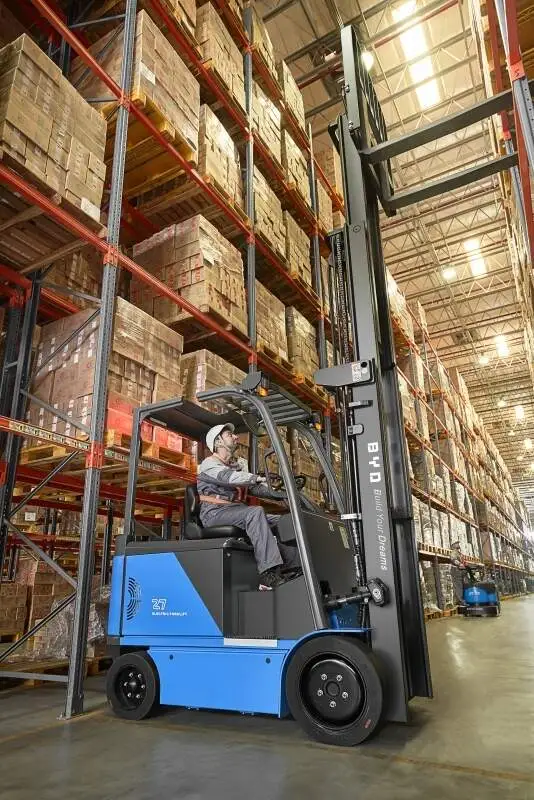
Pogo-stick-style electric forklift chargers are a staple in industrial and warehouse environments, valued for their durable, spring-loaded contact design that facilitates quick and reliable charging for busy electric forklift fleets. Achieving full compatibility between these chargers and your forklift equipment is essential to safeguard battery health, optimize charging efficiency, and minimize operational downtime. This reference breaks down the core considerations to evaluate compatibility and shares best practices for sustained performance.
First and foremost, aligning the charger’s voltage and current specifications with your forklift’s battery is non-negotiable. Electric forklift batteries are available in a range of voltage ratings, and using a charger with a mismatched voltage can lead to undercharging, overcharging, or irreversible battery damage. Similarly, the charger’s output current must match the battery’s recommended charging rate: an excessively high current can generate dangerous heat buildup, while a low current will unnecessarily extend charging cycles, disrupting workflow. Always consult your forklift and battery manufacturer’s official guidelines to confirm the exact voltage and current ranges required for your equipment before selecting or deploying a pogo-stick-style charger.
Next, verify the compatibility of the pogo-stick connector with your forklift’s charging port. The spring-loaded contact pins on these chargers must fit precisely into the corresponding receptacles on the forklift. Even minor variations in pin size, spacing, or alignment can result in poor electrical contact, leading to intermittent charging, sparking, or damage to both the charger pins and the forklift’s port. Prior to each use, inspect the connector pins for signs of wear, bending, or corrosion, and ensure they align seamlessly with the port to establish a secure, stable connection.
Battery chemistry is another critical factor in compatibility. Different battery types, such as lead-acid and lithium-ion, require distinct charging profiles to maintain optimal performance and longevity. Many pogo-stick-style chargers are engineered to support specific battery chemistries, so it is vital to confirm that the charger’s charging algorithm matches the needs of your forklift’s battery. For instance, lithium-ion batteries demand precise voltage regulation and controlled constant-current charging phases, while lead-acid batteries may require tailored float charging settings to prevent over-discharge. Using a charger not optimized for your battery type will gradually reduce battery capacity and increase the risk of safety hazards like leaks or overheating.
Finally, consider your operational context and implement regular maintenance to preserve compatibility. Pogo-stick-style chargers are often used in high-throughput settings where forklifts are charged multiple times daily, so ensuring the charger is rated for continuous use and can handle your facility’s workload is key. Additionally, routine cleaning and inspection of both the charger and forklift charging components are essential. Wipe down the pogo-stick pins and forklift port regularly to remove dirt, dust, or corrosive debris that can impede electrical contact. Inspect charger cables for fraying or insulation damage, and replace any worn parts promptly to maintain consistent compatibility and safe charging operations.
By prioritizing these compatibility factors and adhering to manufacturer recommendations, you can ensure your pogo-stick-style electric forklift charger works seamlessly with your equipment, protecting your investment and supporting efficient, uninterrupted warehouse operations.