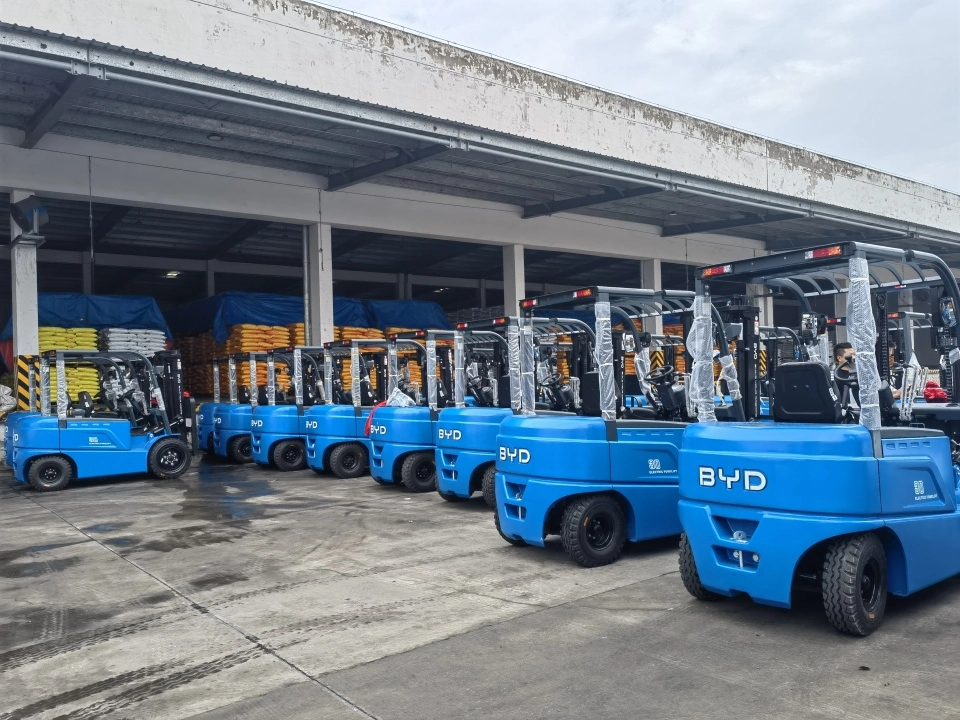
When it comes to material handling in narrow, confined warehouse spaces, swing mast forklifts have emerged as a versatile solution, and Drexel models are widely recognized for their specialized design. If you’re considering investing in a Drexel swing mast forklift, taking a structured approach to evaluate key aspects ensures you select a unit that aligns with your operational needs.
First, assess your typical load requirements to determine the appropriate load capacity and lift height. Drexel swing mast forklifts come in various configurations, each tailored to handle different weight ranges and vertical reach. Consider the heaviest pallets or materials you’ll regularly move, as well as the maximum height of your storage racks. Choosing a unit with a capacity that matches your peak needs prevents overloading, which can lead to mechanical strain and safety hazards, while sufficient lift height ensures you can access upper storage levels efficiently.
Maneuverability is a core advantage of swing mast forklifts, and it’s critical to verify how well a Drexel model fits your facility’s layout. Measure the width of your narrow aisles, turning radii at intersections, and clearance around obstacles like racks or support columns. The swing mast design allows the forks to rotate independently of the chassis, enabling tight turns and precise positioning in spaces where standard forklifts struggle. Reviewing spec sheets for turning radius and mast rotation range, or arranging a test drive, helps confirm the forklift can navigate your warehouse without compromising productivity.
Maintenance requirements directly impact your total cost of ownership, so it’s essential to evaluate the ease of servicing a Drexel swing mast forklift. Look for models with accessible components, such as easy-to-reach filters, hydraulic systems, and electrical parts, which simplify routine checks and repairs. Additionally, inquire about the availability of replacement parts and authorized service providers in your area. A forklift with a track record of reliable performance reduces downtime, ensuring your material handling operations run smoothly over time.
Operational efficiency goes beyond maneuverability; it includes factors like energy consumption (for electric models) and operator comfort. Electric Drexel swing mast forklifts offer quiet operation and zero emissions, making them ideal for indoor environments. Evaluate battery life and charging time to ensure they match your shift schedules. Also, consider the learning curve for operators—swing mast forklifts require specialized training due to their unique steering and mast rotation features. Ensuring your team has access to proper training programs minimizes the risk of accidents and maximizes the forklift’s utility.
Finally, balance upfront cost with total ownership value. While a Drexel swing mast forklift may have a higher initial price than standard forklifts, its ability to operate in narrow aisles can eliminate the need for expensive warehouse renovations. Calculate long-term costs including maintenance, energy, and training, and compare them to the productivity gains from improved space utilization. This holistic approach helps you make a financially sound decision that delivers long-term benefits.
By carefully evaluating these key factors—load capacity, maneuverability, maintenance, operational efficiency, and cost—you can select a Drexel swing mast forklift that enhances your material handling operations, improves safety, and provides a strong return on investment. Taking the time to assess your specific needs against the forklift’s capabilities ensures you make an informed choice that supports your business goals.