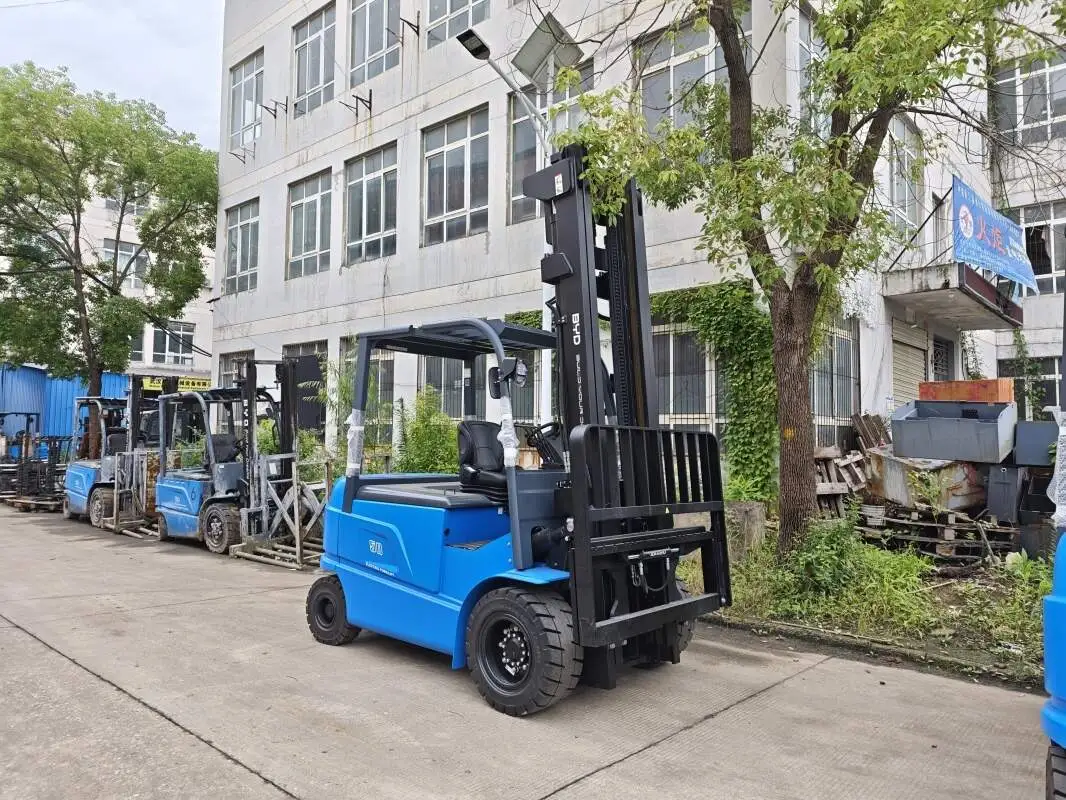
When operating in narrow warehouse aisles, tight loading docks, or compact storage facilities, a rear wheel steering electric forklift offers unmatched maneuverability compared to traditional front-steer models. If you’re considering a used unit to save costs while meeting your space-specific needs, following these targeted buying tips will help you make a wise investment.
First, prioritize a thorough inspection of the rear wheel steering system—the core component that enables precise movement in tight quarters. Start by testing the steering response: turn the wheel slowly and check for any stiffness, hesitation, or unusual noises, which could indicate worn hydraulic lines, faulty steering gears, or damaged linkages. Inspect the hydraulic fluid reservoir for leaks or low levels, as hydraulic issues can compromise steering accuracy. Examine the rear steering wheels and their mounting brackets for signs of excessive wear, since uneven or loose wheels can lead to unstable handling in narrow spaces.
Next, evaluate the health of the electric forklift’s battery, as it directly impacts operational uptime and long-term costs. Ask the seller for the battery’s age and charging cycle history; most lead-acid batteries have a lifespan of 3-5 years, depending on usage and maintenance. Conduct a voltage test using a multimeter to ensure the battery holds a consistent charge, and inspect the battery cells for bulging, corrosion, or fluid leaks. A well-maintained battery will not only provide reliable power for extended shifts but also reduce the need for immediate replacement after purchase.
Before finalizing your decision, assess the forklift’s maneuverability in a space similar to your work environment. If possible, arrange a test drive in a narrow aisle or compact area to gauge its turning radius and ability to navigate tight corners without scraping racks or walls. Pay attention to how easily the forklift transitions between forward and reverse, as frequent direction changes are common in narrow spaces. Also, check the visibility from the operator’s seat—clear sightlines are critical to avoiding collisions with obstacles or personnel in cramped areas.
Reviewing the forklift’s maintenance and service records is another essential step. Request detailed logs that document regular servicing, including steering system adjustments, battery maintenance, brake inspections, and any major repairs. A well-documented history indicates the previous owner took proper care of the equipment, reducing the risk of unexpected breakdowns. If records are incomplete or unavailable, consider hiring a certified technician to perform a pre-purchase inspection to identify hidden issues.
Finally, don’t overlook the overall condition of safety features, which are vital in narrow spaces where accidents are more likely. Test the brakes to ensure they respond quickly and smoothly, as sudden stops may be necessary to avoid collisions. Inspect the tires for tread wear and proper inflation—worn tires can reduce traction and stability on smooth warehouse floors. Check that all lights, horn, and warning alarms are functional, as these help alert nearby personnel to the forklift’s presence in low-visibility or crowded narrow areas.
By focusing on these key areas, you can select a used rear wheel steering electric forklift that meets your narrow space operational needs, delivers reliable performance, and offers long-term value without compromising on safety or efficiency.