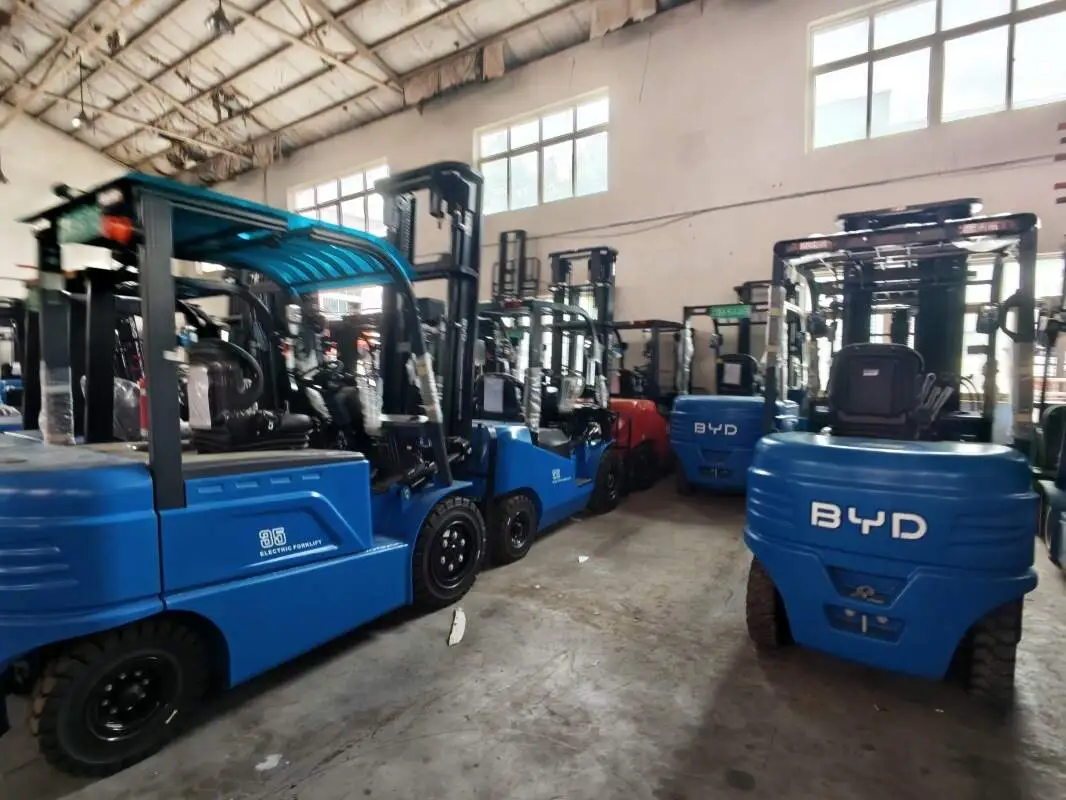
In the realm of industrial material handling, forklifts and hi-lo equipment are two commonly used tools, yet many people often confuse their functions and applications. Understanding the key differences between them is crucial for optimizing warehouse operations and choosing the right equipment for specific tasks.
First, their design and maneuverability vary significantly. Forklifts typically feature a full enclosed cab, four large wheels, and a wider turning radius, making them suitable for open spaces like outdoor yards or large warehouses. Hi-lo equipment, on the other hand, is more compact with a narrower body and smaller turning radius, engineered to navigate tight, narrow aisles in high-density storage facilities where space is limited.
Load capacity and lifting height are another set of distinguishing factors. Forklifts are built to handle heavier loads, often ranging from 1 to 10 tons or more, with lifting heights that can reach up to 15 meters, making them ideal for stacking goods in tall outdoor racks. Hi-lo equipment, by contrast, is designed for lighter to medium loads, usually between 1 to 3 tons, with lifting heights generally capped at around 8 meters, focusing on efficient storage and retrieval in indoor narrow-aisle systems.
The operational scope of each device also differs. Forklifts are versatile enough to operate both indoors and outdoors, handling tasks like loading and unloading trucks, transporting heavy materials across large areas. Hi-lo equipment is primarily intended for indoor use, specifically in warehouses with narrow aisles and racking systems optimized for high-density storage, where precision in tight spaces is paramount.
Finally, training requirements vary. Operating a forklift demands comprehensive certification due to its larger size, heavier load capacity, and the need to navigate diverse environments safely. While hi-lo equipment also requires proper training, the learning curve is relatively shorter as its operation is more focused on narrow-aisle navigation and lighter load handling.
In summary, knowing the differences between forklifts and hi-lo equipment helps businesses make informed decisions based on their warehouse layout, load requirements, and operational environment, ensuring efficient and safe material handling processes.