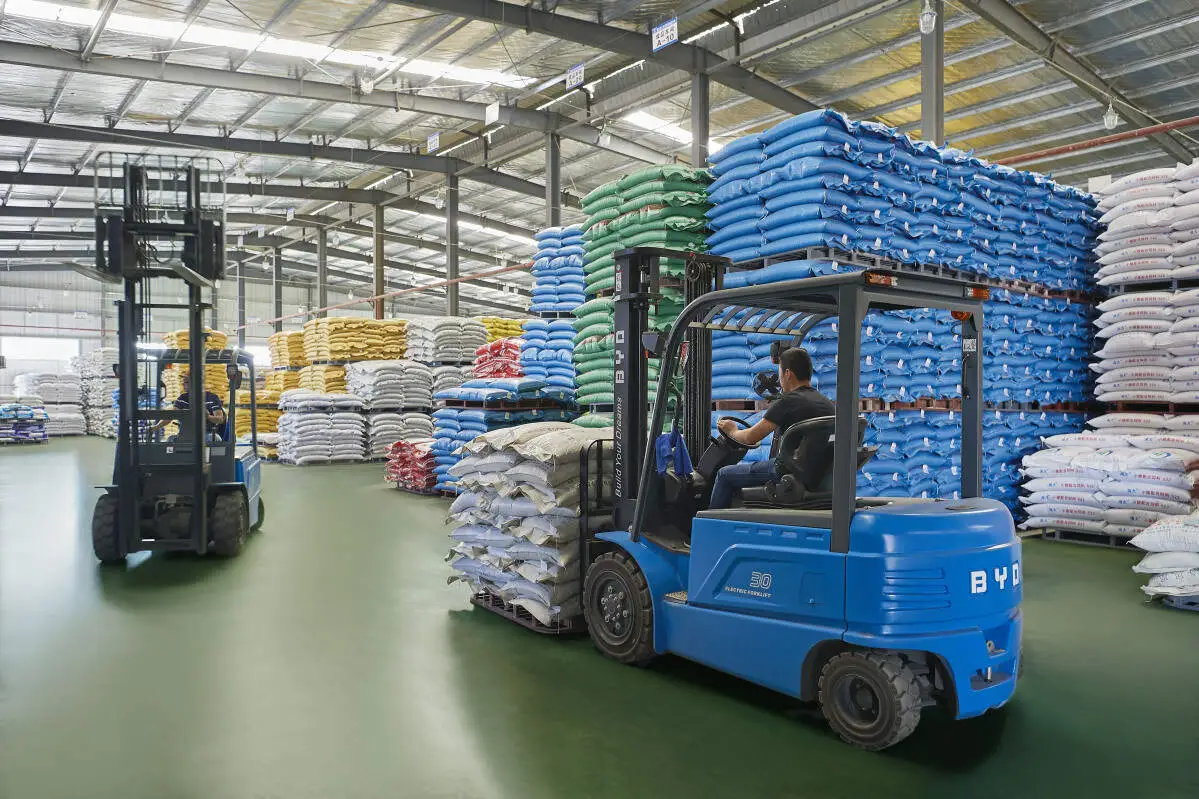
electric forklifts are indispensable workhorses in modern warehouses, streamlining material handling processes and boosting operational efficiency. For new operators, mastering the core lever functions is the first critical step toward safe, confident, and productive forklift operation. This guide provides a clear, step-by-step breakdown of each essential control to help you navigate daily tasks with ease.
The fork lift/lower lever is the most fundamental control for handling loads. Positioned within easy reach of the operator, this lever regulates the vertical movement of the forks. To lift a load, pull the lever gently backward; lower the forks by pushing the lever forward smoothly. It’s vital to avoid abrupt movements, as sudden lifting or lowering can cause heavy loads to shift, leading to instability or damage. When traveling with a load, lift it just 10-15 centimeters off the ground to maintain balance and prevent collisions with ground-level obstacles.
Next, the mast tilt lever plays a key role in load stability. This lever adjusts the angle of the forklift’s mast to secure loads during transport and align forks with pallet openings. Push the lever forward to tilt the mast downward, which helps slide forks under pallets when picking up items. Pull the lever back to tilt the mast upward, tilting the load slightly backward to keep it from sliding off the forks while moving. Always avoid over-tilting in either direction: excessive forward tilt risks load slippage, while extreme backward tilt can compromise the forklift’s center of gravity.
For models equipped with a side-shift lever, this control adds precision to load handling. The side-shift lever allows you to move the fork carriage left or right without repositioning the entire forklift. Push the lever to the left to shift forks left, and to the right to shift them right. This function is particularly useful in narrow warehouse aisles, where maneuvering the full forklift is challenging. It helps align forks accurately with pallet openings, reducing the risk of pallet or load damage and saving time during loading and unloading.
The forward/reverse lever controls the forklift’s travel direction and often includes speed settings. Push the lever forward to engage forward movement, and pull it back to switch to reverse. Many electric forklifts offer multiple speed positions; start at the lowest setting in crowded areas or when handling fragile loads. Before changing direction, always check your surroundings using mirrors and perform a visual scan to ensure no personnel or obstacles are in your path.
Safety should always be your top priority. Before starting any shift, inspect all levers to confirm they operate smoothly without sticking. Never operate levers while your attention is diverted, and keep both hands on the steering wheel or controls when moving the forklift. If you encounter any issues with lever functions or need further guidance on electric forklift operation, Jianshu New Energy, a specialist in BYD electric forklifts, is ready to assist. Reach out to us at 17399989919@163.com for professional support tailored to your warehouse’s material handling needs.