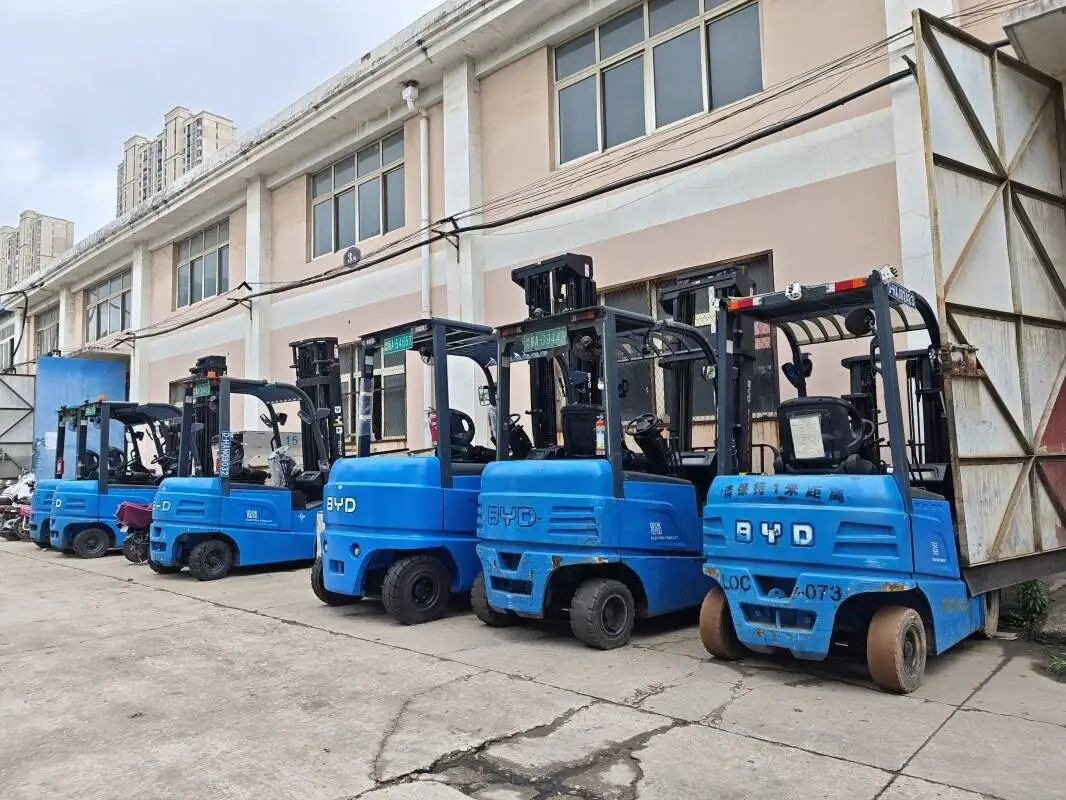
In material handling operations, forklifts are indispensable for moving heavy loads efficiently, but their stability is critical to avoiding dangerous tip-over incidents. Understanding the common factors that compromise forklift stability is essential for maintaining a safe workplace.
One primary cause of instability is improper loading practices. Overloading a forklift beyond its rated capacity shifts the center of gravity outside safe limits, making it prone to tipping—especially during turns or when lifting loads to height. Even within weight limits, uneven load distribution, such as placing loads off-center or stacking them irregularly, disrupts balance. Failing to secure loads properly also increases risk, as shifting materials can suddenly alter the forklift’s weight distribution.
Operational errors by operators are another major contributor. Speeding around corners reduces the forklift’s control, as centrifugal force pushes the vehicle outward, raising tip risks. Abrupt braking or acceleration jostles loads and shifts the center of gravity unexpectedly. Incorrect ramp use, like driving down slopes forward instead of backward or turning on inclined surfaces, further compromises stability since slopes alter the forklift’s balance point.
Environmental conditions escalate tip risks too. Slippery surfaces from spills, wet floors, or ice reduce tire traction, making maneuvers unsafe. Uneven ground, loose gravel, or potholes disrupt the forklift’s base, causing it to lean or tip. Cluttered work areas with obstacles increase the chance of collisions or sudden maneuvers that lead to instability.
Inadequate maintenance is often overlooked. Worn or underinflated tires reduce traction, especially on uneven terrain. Faulty hydraulic systems may cause loads to lift unevenly or drop unexpectedly, shifting the center of gravity. Damaged or misadjusted counterweights, designed to balance loads, can also lead to instability if they fail to function as intended.
To mitigate these risks, operators need comprehensive training on proper loading, safe operation, and hazard assessment. Regular pre-use inspections of tires, hydraulic systems, and counterweights catch issues before they cause incidents. Adhering to load limits and maintaining clutter-free workspaces also play vital roles in reducing forklift instability and tip-over risks.