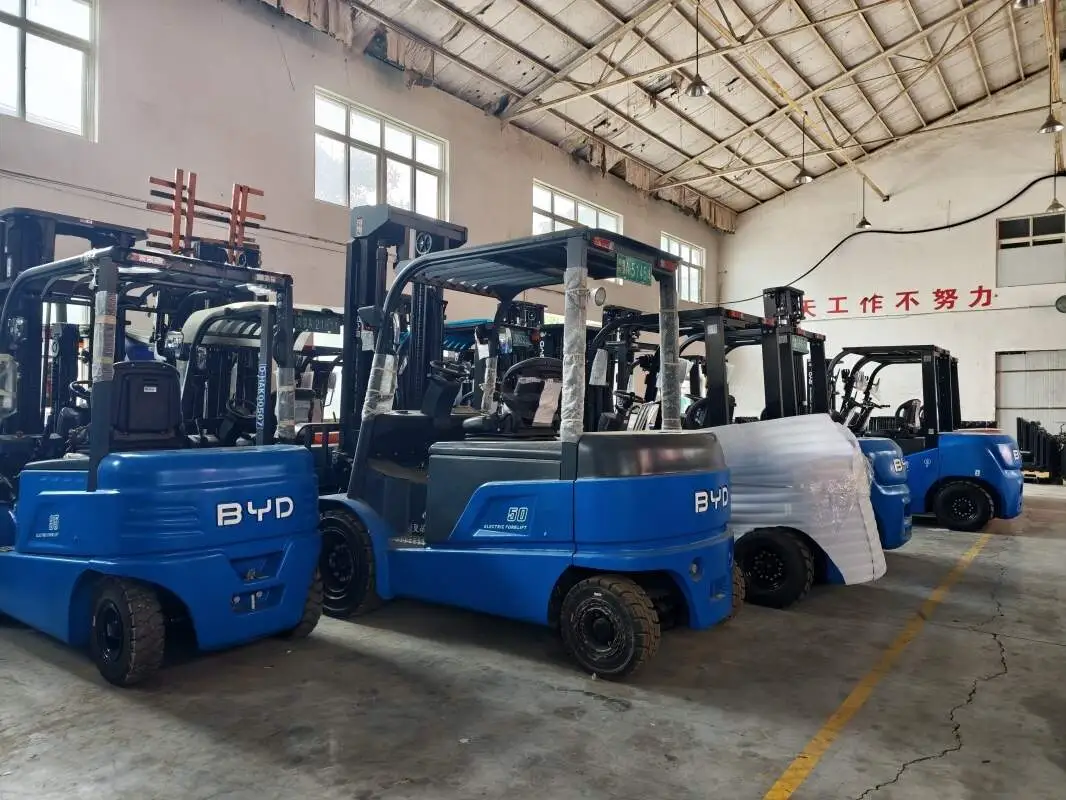
electric forklifts have become indispensable tools in modern industrial material handling, thanks to their efficiency, low emissions, and maneuverability. They adapt seamlessly to diverse operational environments, addressing unique material handling challenges across various sectors.
Warehouses are among the most prevalent settings for electric forklift material handling. In these facilities, electric forklifts excel at stacking pallets on high racks, retrieving inventory quickly, and navigating narrow aisles with precision. Their compact design allows them to operate efficiently in both small storage spaces and large distribution centers, supporting daily tasks like order picking, inventory restocking, and cross-docking operations. By streamlining these processes, electric forklifts help reduce manual labor costs and minimize the risk of product damage during handling.
Within manufacturing plants, electric forklifts play a critical role in maintaining smooth production workflows. They are used to transport raw materials from storage areas to production lines, move work-in-progress components between different stages of manufacturing, and transfer finished goods to packaging or shipping zones. Unlike internal combustion forklifts, electric models produce no exhaust fumes, making them ideal for indoor manufacturing environments where air quality is a priority. Their quiet operation also helps reduce noise pollution on the factory floor, creating a more comfortable working environment for employees.
Logistics and distribution hubs rely on electric forklifts to handle the constant influx and outflow of goods. These vehicles are essential for loading and unloading trucks, sorting packages, and moving pallets between storage areas and transportation vehicles. Electric forklifts can operate for extended periods on a single charge, ensuring uninterrupted productivity during peak shipping seasons. Their ability to handle heavy loads with stability makes them suitable for managing large volumes of cargo efficiently, helping logistics providers meet tight delivery schedules.
Cold storage facilities present unique challenges for material handling equipment, as low temperatures can affect performance. Electric forklifts are well-suited for these environments, as they are designed to operate reliably in sub-zero conditions. They are used to store and retrieve frozen or refrigerated goods, maintaining the integrity of temperature-sensitive products throughout the handling process. The absence of exhaust fumes is particularly important here, as it prevents contamination of perishable items and ensures compliance with food safety regulations.
Retail distribution centers use electric forklifts to manage inventory that will eventually be sent to stores. These forklifts handle tasks like unpacking incoming shipments, organizing products by category, and preparing pallets for delivery. Their maneuverability is key in these facilities, where space is often limited and quick turnaround times are essential. Electric forklifts help ensure that retail stores receive the right products at the right time, supporting efficient supply chain operations.
Across these diverse industrial scenarios, electric forklifts prove their value by enhancing operational efficiency, reducing environmental impact, and improving workplace safety. As industries continue to prioritize sustainable and efficient material handling solutions, the demand for electric forklifts in these applications is expected to grow steadily.