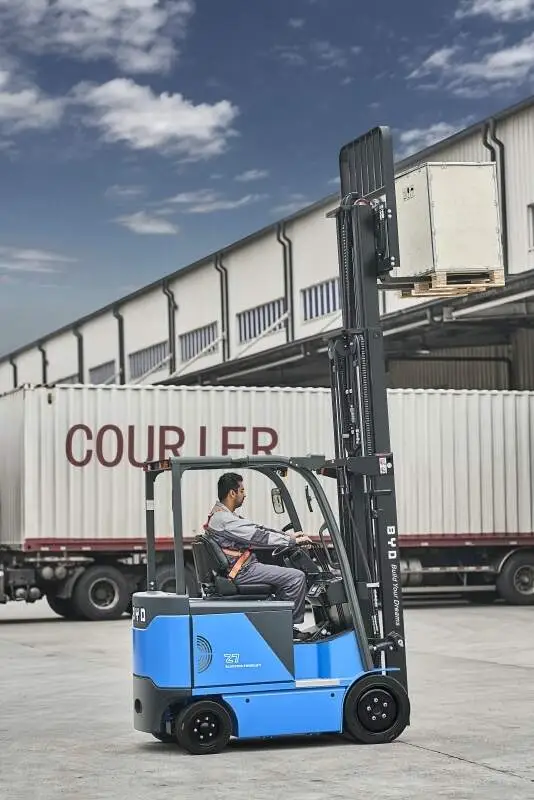
forklift trucks are indispensable workhorses in modern industrial operations, streamlining material handling tasks across diverse sectors. From heavy-duty lifting to precise pallet movement, these versatile machines enhance operational efficiency, reduce manual labor, and minimize workplace hazards. Among the various types, electric forklifts have gained traction in recent years for their eco-friendly nature and suitability for indoor environments.
Warehouses and logistics centers are the most prevalent settings for forklift use. In these facilities, forklifts play a critical role in loading and unloading trucks, organizing inventory on high storage racks, and transporting pallets between storage areas and shipping docks. Electric forklifts are particularly ideal here due to their zero-emission operation, which complies with indoor air quality standards. They maneuver smoothly through narrow aisles, allowing warehouses to maximize vertical storage space and optimize workflow. Daily tasks such as restocking shelves, retrieving orders, and preparing shipments rely heavily on forklifts to meet tight delivery deadlines.
The manufacturing industry also relies heavily on forklift trucks to maintain seamless production processes. Forklifts transport raw materials from storage to production lines, move partially finished products between workstations, and deliver final goods to packaging or storage areas. In manufacturing plants, forklifts must handle a wide range of materials, from heavy metal components to fragile assembly parts. Electric models are preferred in closed manufacturing spaces to avoid fume buildup, while diesel-powered forklifts may be used in outdoor loading zones for heavier loads. By ensuring timely material delivery, forklifts help reduce downtime and keep production schedules on track.
Construction sites are another key application area for forklift trucks. These rugged environments demand forklifts that can navigate uneven terrain, lift heavy construction materials like steel beams, concrete blocks, and scaffolding, and transport tools and equipment to different job sites. Forklifts here often feature robust tires and enhanced lifting capacities to handle the demands of outdoor construction work. They assist in unloading delivery trucks, placing materials in hard-to-reach areas, and clearing debris, contributing to faster project completion and improved site safety by reducing manual lifting of heavy items.
Retail and wholesale distribution centers also benefit from forklift operations. In large retail warehouses, forklifts manage the flow of goods from receiving docks to storage bins and eventually to order fulfillment areas. They enable staff to handle bulk inventory efficiently, ensuring that stores are restocked with products in a timely manner. For wholesale distributors, forklifts facilitate the loading of large quantities of goods onto delivery trucks, supporting the distribution of products to multiple retail locations. Electric forklifts are commonly used here to maintain a clean, safe working environment for employees.
Across all these industrial sectors, forklift trucks remain a cornerstone of efficient material handling. Their adaptability to different environments and tasks makes them essential for businesses looking to optimize operations, reduce costs, and improve workplace safety. As technology advances, electric forklifts are expected to become even more widespread, offering greater energy efficiency and sustainability for industrial applications.