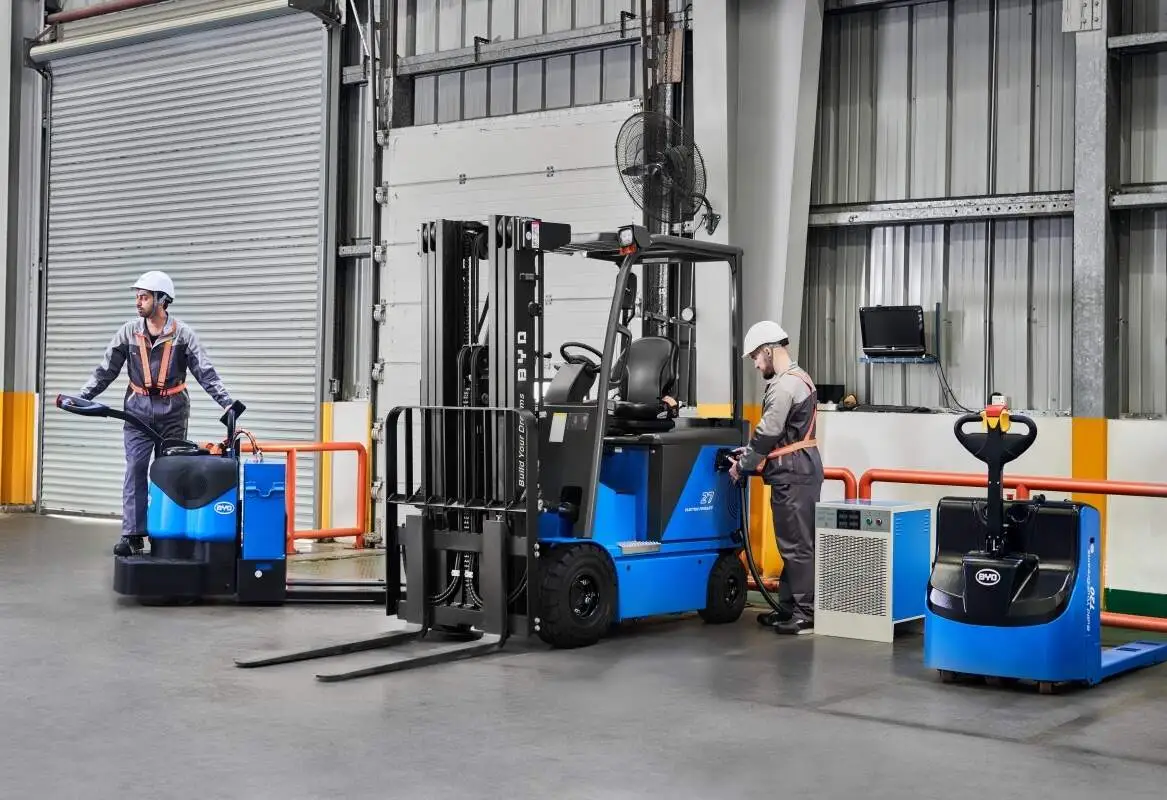
In the material handling industry, electric forklifts have become a core asset for efficient warehouse and logistics operations. When selecting an electric forklift, the battery type stands as a critical decision point, with lithium-battery and lead-acid options leading the market. Understanding their key differences helps businesses align their choice with operational demands and long-term strategic goals.
Lithium-battery electric forklifts excel in performance and efficiency. They deliver consistent power output throughout the entire discharge cycle, ensuring steady operation even as the battery’s charge depletes. Charging time is notably shorter—typically 1 to 2 hours for a full charge—compared to lead-acid forklifts, which require 8 to 10 hours of charging plus additional cooling time before reuse. Additionally, lithium batteries maintain better capacity in extreme temperatures, while lead-acid batteries often see reduced efficiency in very hot or cold environments, potentially disrupting workflow continuity.
Total cost of ownership is another key differentiator. Lead-acid forklifts generally have a lower upfront purchase price, making them a tempting option for businesses with tight initial budgets. However, when evaluating long-term costs, lithium-battery forklifts prove more economical. Lead-acid batteries need replacement every 2 to 3 years, whereas lithium batteries can last 5 to 8 years. Lithium batteries also boast higher energy efficiency, converting more stored energy into usable power, which reduces electricity costs over time.
Maintenance requirements vary significantly between the two. Lead-acid batteries demand regular upkeep, including checking water levels, cleaning terminals to prevent corrosion, and ensuring proper ventilation to avoid hazardous gas buildup. These tasks add to labor costs and operational downtime. In contrast, lithium-battery forklifts are virtually maintenance-free. They require no water refills or terminal cleaning, and their sealed design eliminates the risk of acid leaks, cutting down on ongoing maintenance efforts and associated expenses.
Environmental considerations are increasingly important for modern businesses. Lead-acid batteries contain toxic lead and sulfuric acid, which require careful handling during disposal and recycling to minimize environmental harm. While recycling programs exist, the process is complex and carries inherent risks. Lithium batteries, on the other hand, are more eco-friendly. They contain fewer toxic materials, and advanced recycling technologies enable efficient recovery of valuable components like lithium and cobalt. Their higher energy efficiency also reduces overall energy consumption, lowering the carbon footprint of operations.
Choosing between lithium-battery and lead-acid electric forklifts depends on factors such as operational intensity, budget constraints, and sustainability targets. For businesses prioritizing long-term cost savings, operational efficiency, and minimal maintenance, lithium-battery forklifts are an optimal choice. If short-term cost is the primary concern and operations are less intensive, lead-acid forklifts may suffice. For expert guidance and high-quality electric forklifts, turn to Jianshu New Energy, a specialist in electric forklifts. Reach out to us at 17399989919@163.com to find the right solution for your material handling needs.