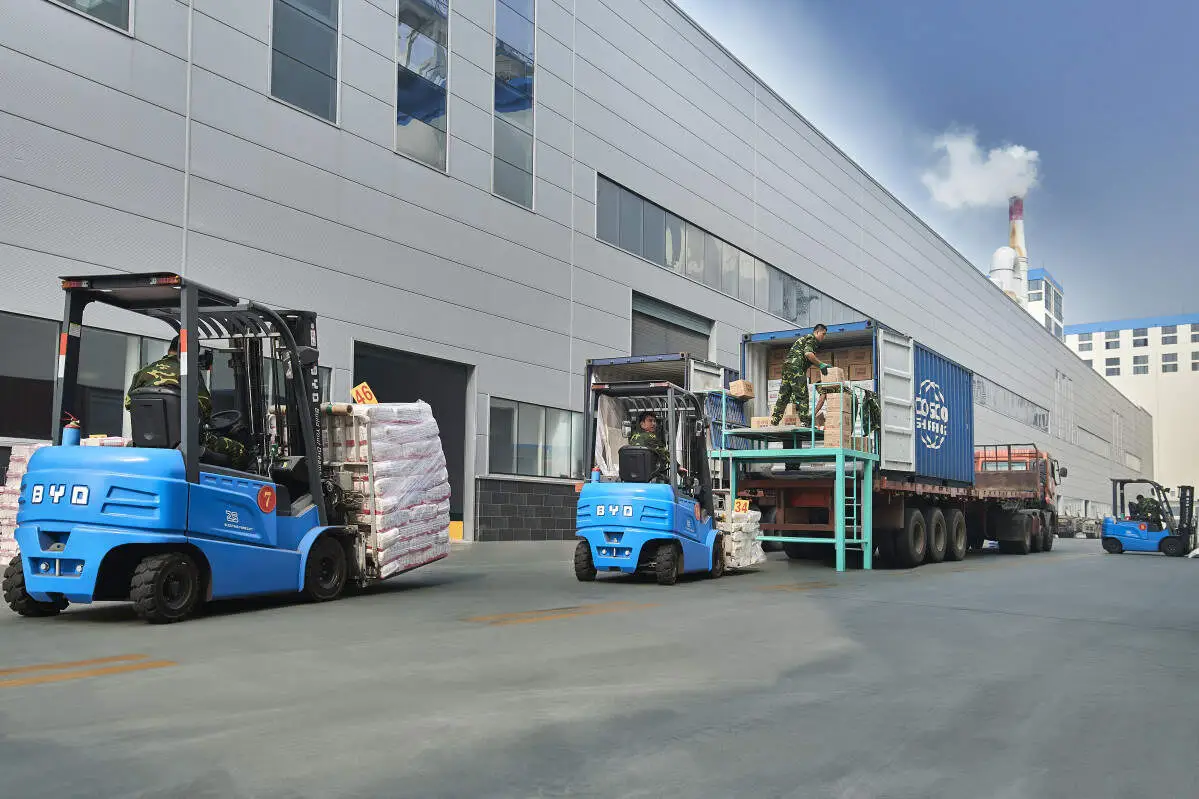
In modern warehouse and logistics operations, electric forklifts play a pivotal role in efficient material handling, with stacking capacity being a critical performance metric. Among the key factors shaping this capacity, mast height stands out as a fundamental element that directly influences how effectively an electric forklift can manage vertical storage tasks.
The most direct link between mast height and stacking capacity lies in the maximum vertical reach achievable. A taller mast enables the forklift to reach higher rack levels, allowing for more layers of goods to be stacked vertically. This is particularly beneficial in warehouses utilizing high-density storage systems, where maximizing vertical space translates to increased storage volume. Conversely, a shorter mast limits the forklift to lower rack heights, restricting the number of stacks and reducing overall storage efficiency. However, it’s important to note that maximum reach does not equate to unlimited stacking capacity at those heights; other factors come into play.
Load stability is another critical aspect affected by mast height. As the mast extends, the forklift’s center of gravity shifts upward, altering its balance. When handling heavy loads at elevated heights, this shift can compromise stability, potentially limiting the maximum weight the forklift can safely stack. For instance, a forklift with a tall mast may be able to reach a high rack, but it might only handle a reduced load weight to maintain safe operation. This means that while mast height determines the upper limit of reach, the actual stacking capacity at that height is often adjusted to ensure operational safety.
Warehouse space constraints also interact with mast height to influence stacking capacity. Warehouses with low ceiling heights or narrow vertical clearance require forklifts with shorter masts to navigate and operate without obstruction. Using a mast that’s too tall in such spaces not only prevents the forklift from reaching intended rack levels but also poses safety risks. On the other hand, warehouses with high racking systems demand forklifts with appropriately tall masts to fully utilize available vertical storage. Matching mast height to warehouse infrastructure ensures that the forklift’s stacking capacity is fully leveraged without unnecessary limitations.
Operational flexibility further ties into mast height’s impact on stacking capacity. Taller masts can make the forklift more cumbersome to maneuver, especially in narrow warehouse aisles. Reduced maneuverability may lead to slower stacking operations or difficulty positioning loads accurately, which indirectly affects the overall stacking efficiency. Shorter masts, by contrast, offer greater agility, allowing for quicker turns and precise load placement in tight spaces, which can enhance stacking productivity even if the maximum reach is lower.
When selecting an electric forklift, evaluating mast height in line with your warehouse’s storage needs, load characteristics, and space layout is essential. At Jianshu New Energy, we specialize in BYD electric forklifts, offering a range of models with varying mast heights to suit diverse operational requirements. Our team can provide professional guidance to help you choose the right forklift that optimizes stacking capacity while ensuring safety and efficiency. For more information, feel free to contact us at 17399989919@163.com.