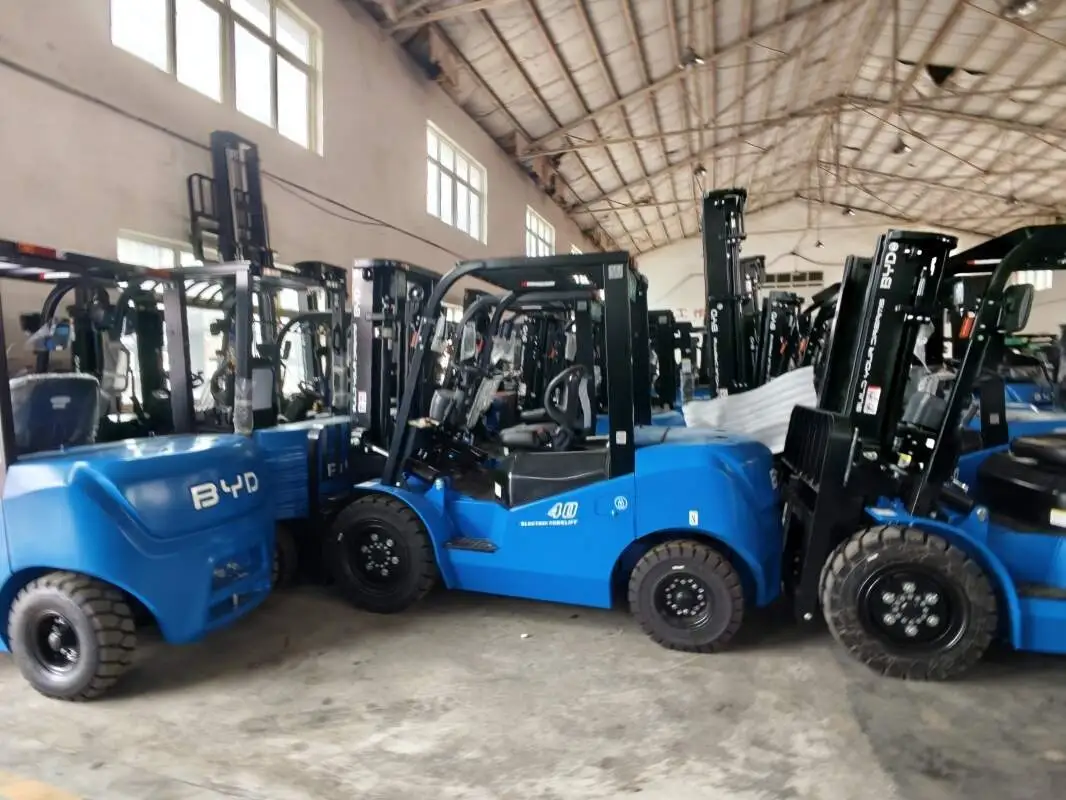
In warehouse and logistics operations, selecting the right pallet handling equipment is critical to maintaining efficiency and reducing operational strain. Hand pallet jacks and motorized pallet forklifts are two widely used options, each with distinct strengths tailored to different workplace needs.
When it comes to performance and efficiency, hand pallet jacks rely entirely on manual labor, making them suitable for light-duty, short-distance tasks. They typically support load capacities between 2 to 3 tons and move at a slow, steady pace, ideal for small-scale operations where frequent, heavy lifting isn’t required. Motorized pallet forklifts, by contrast, are powered by electric motors, enabling them to handle heavier loads—often up to 5 tons or more—and travel at faster speeds. Their battery-powered design allows for continuous operation over longer distances, significantly reducing physical fatigue for workers and boosting throughput in high-volume environments.
Cost is another key factor to consider. Hand pallet jacks have a lower upfront purchase cost and minimal maintenance requirements, with no ongoing operational expenses like battery charging or replacement. This makes them a cost-effective choice for small businesses or facilities with low-frequency pallet movement. Motorized pallet forklifts, while having a higher initial investment, offer long-term savings for operations with heavy daily usage. Their ability to handle more tasks in less time reduces labor costs, though businesses need to budget for battery maintenance, charging stations, and occasional repairs.
Usability and ergonomics also set these two equipment types apart. Hand pallet jacks are intuitive to operate, requiring little to no formal training. However, repeated manual pumping and maneuvering can lead to musculoskeletal strain for workers over time. Motorized pallet forklifts feature easy-to-use control handles that eliminate the need for manual pumping, reducing physical exertion. While basic training is recommended to ensure safe operation, they are far more ergonomic for extended work shifts, supporting worker well-being and productivity.
Finally, application scenarios play a vital role in selection. Hand pallet jacks excel in narrow aisles, small warehouses, or areas where space is limited, as their compact size allows for easy maneuverability. They are also ideal for occasional, light-load tasks. Motorized pallet forklifts thrive in large distribution centers, manufacturing facilities, or environments with high-volume pallet movement, where speed and load capacity are priorities. They are also better suited for tasks that involve moving pallets across long distances within a facility.
By evaluating factors like load requirements, operational frequency, available space, and budget, businesses can choose between hand pallet jacks and motorized pallet forklifts to optimize their material handling processes.