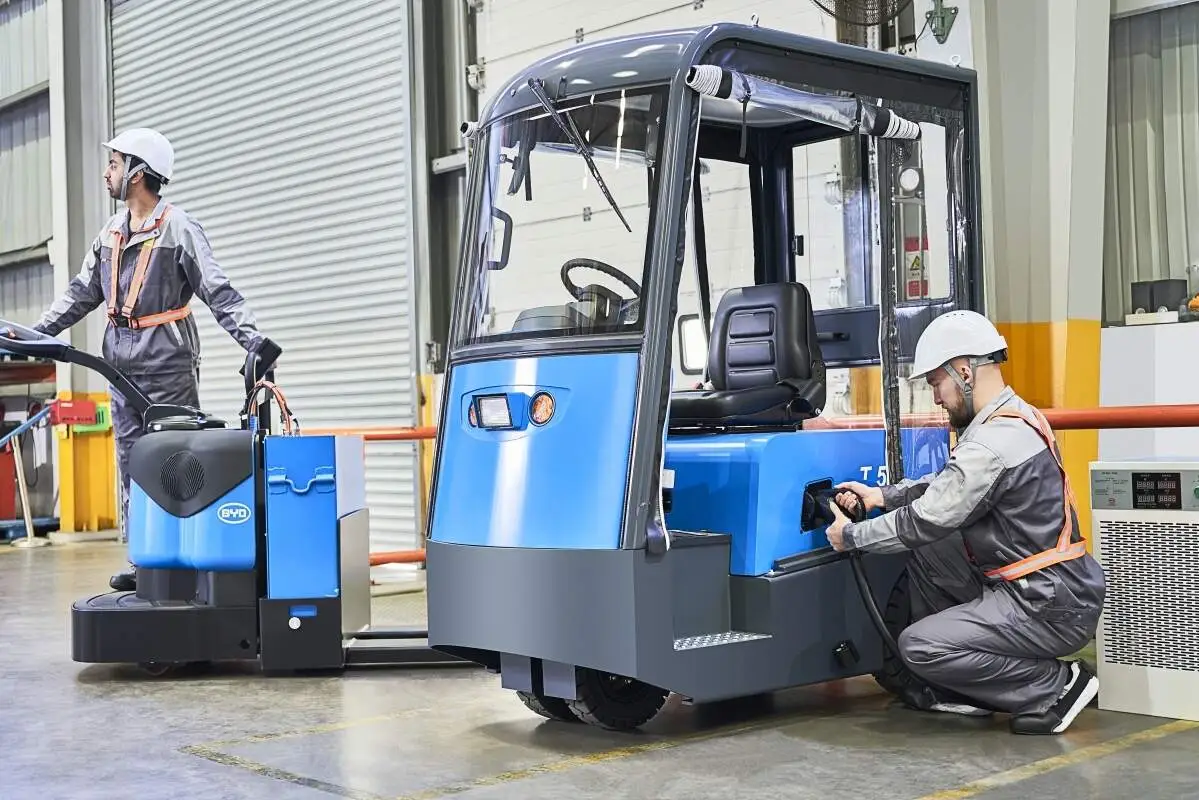
In the realm of industrial material handling, selecting the right equipment directly impacts operational efficiency, safety, and cost-effectiveness. Two distinct options often considered are pathfinder vehicles and forklifts, each tailored to specific operational needs. Understanding their differences is crucial for businesses aiming to optimize their warehouse or logistics workflows.
Design and Primary Purpose
Pathfinder vehicles are engineered primarily for navigation and route planning in complex industrial environments. Equipped with advanced sensors and mapping technologies, they excel at identifying optimal paths, avoiding obstacles, and guiding other equipment or personnel through large facilities. Their core function revolves around enhancing operational visibility and streamlining movement rather than direct material lifting. In contrast, forklifts are purpose-built for lifting, stacking, and transporting heavy loads. With robust mast systems and hydraulic mechanisms, they are designed to handle palletized goods, move materials between storage racks and loading docks, and support vertical storage solutions.
Operational Scope and Ideal Use Cases
Pathfinder vehicles thrive in large-scale facilities such as distribution centers, manufacturing plants, and outdoor logistics yards where navigation efficiency is a top priority. They are particularly valuable in scenarios involving frequent route adjustments, such as during peak shipping periods or when facility layouts change. These vehicles can also assist in inventory management by scanning barcodes or RFID tags while navigating, providing real-time data on stock locations. Forklifts, on the other hand, are indispensable in settings requiring direct material manipulation. They are commonly used in warehouses for stacking pallets on high racks, loading and unloading trucks, and moving heavy items within confined spaces. Forklifts also play a key role in construction sites for transporting building materials and in retail distribution centers for restocking inventory.
Maneuverability and Flexibility
Pathfinder vehicles typically feature compact designs with 360-degree rotation capabilities, allowing them to navigate tight corridors and around obstacles with ease. Their advanced navigation systems enable autonomous operation, reducing the need for manual guidance and minimizing the risk of human error. While they are not designed for lifting heavy loads, their ability to adapt to changing environments makes them highly flexible for dynamic operational needs. Forklifts, depending on their type (such as counterbalance or reach forklifts), offer varying levels of maneuverability. Counterbalance forklifts are ideal for outdoor use and open warehouse spaces, while reach forklifts are designed for narrow aisles in indoor storage facilities. However, forklifts require skilled operators to navigate safely, and their movement is limited by their size and lifting mechanism.
Load Capacity and Performance Metrics
Pathfinder vehicles have relatively low load capacities, as their primary role is navigation rather than material transport. Most models can carry small payloads or equipment accessories, but their performance is measured by their navigation accuracy, obstacle detection speed, and battery life. Forklifts, in contrast, are rated by their load capacity, which can range from a few hundred kilograms to several tons. Their performance is evaluated based on lifting height, lifting speed, and fuel efficiency (for gasoline or diesel models) or battery life (for electric models). Forklifts are optimized for heavy-duty material handling tasks, making them essential for businesses with high-volume lifting needs.
Energy Efficiency and Maintenance
Pathfinder vehicles are often powered by rechargeable batteries, with low energy consumption due to their focus on navigation rather than heavy lifting. Maintenance requirements are primarily centered around sensor calibration, software updates, and battery care. Forklifts, especially those with internal combustion engines, require regular maintenance such as oil changes, filter replacements, and hydraulic system checks. electric forklifts have lower maintenance needs but require proper battery charging and storage to ensure longevity. The overall operational costs of each vehicle depend on their usage frequency, maintenance requirements, and energy source.
In conclusion, pathfinder vehicles and forklifts serve distinct roles in industrial material handling. Pathfinder vehicles excel at navigation and route optimization, enhancing efficiency in large, dynamic facilities. Forklifts are indispensable for heavy lifting and material manipulation, supporting core warehouse and logistics operations. By understanding their unique strengths and limitations, businesses can select the right equipment to meet their specific operational needs, improving overall productivity and safety.