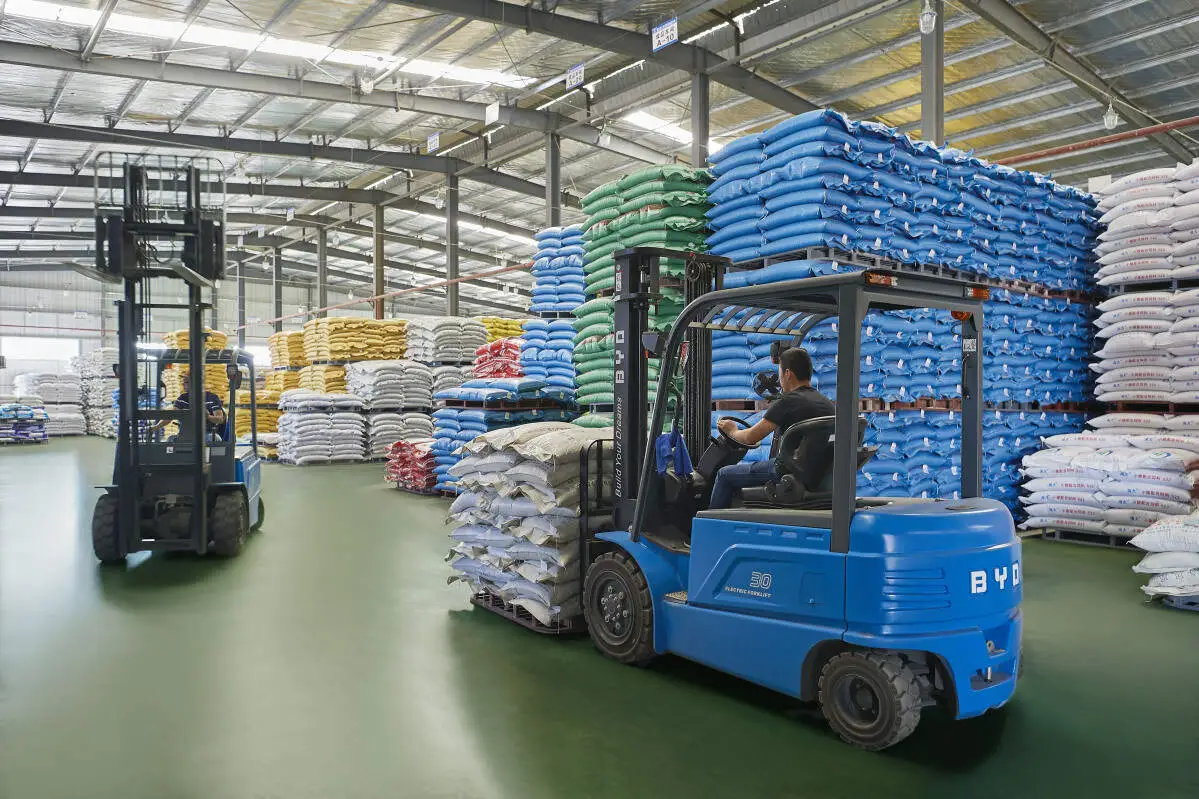
forklift wheels are the core load-bearing components of industrial handling equipment. Under long-term high-frequency operation scenarios such as warehouse turnover, heavy cargo handling and yard transshipment, wheels will face normal wear, surface crack or slight deformation after a certain period of use. Regular inspection and standardized replacement of wheels is the basic prerequisite to ensure daily operation safety, reduce equipment failure rate and extend the overall service life of forklifts.
Before conducting any wheel replacement operation, operators shall park the forklift on a flat and hard ground, pull up the parking brake, cut off the whole vehicle power supply, and use special safety support frames to prop up the forklift body to keep the whole vehicle in a stable non-slip state. Prepare wheel parts that match the original load parameters, standard disassembly tools, and wear necessary protective equipment before starting the operation.
During the formal replacement process, first remove the fixing fasteners of the old wheel in the correct order, and take out the old wheel steadily. Clean the oil stains and residual debris on the connection position of the wheel shaft, check the shaft for abnormal deformation or damage, install the new wheel after confirming the shaft is in good condition, tighten the fixing fasteners diagonally according to the standard torque, and manually rotate the new wheel to make sure there is no stalling phenomenon.
After the installation is completed, carry out necessary verification work: start the forklift at no load, drive at low speed for 3 to 5 meters, test the steering and braking performance respectively, confirm the new wheel fits well with the whole vehicle, then record the whole replacement process in the operation log. For professional related electric forklift supporting services, you can contact us at Jianshu New Energy, we specialize in BYD electric forklifts, and our dedicated consultation email is 17399989919@163.com.