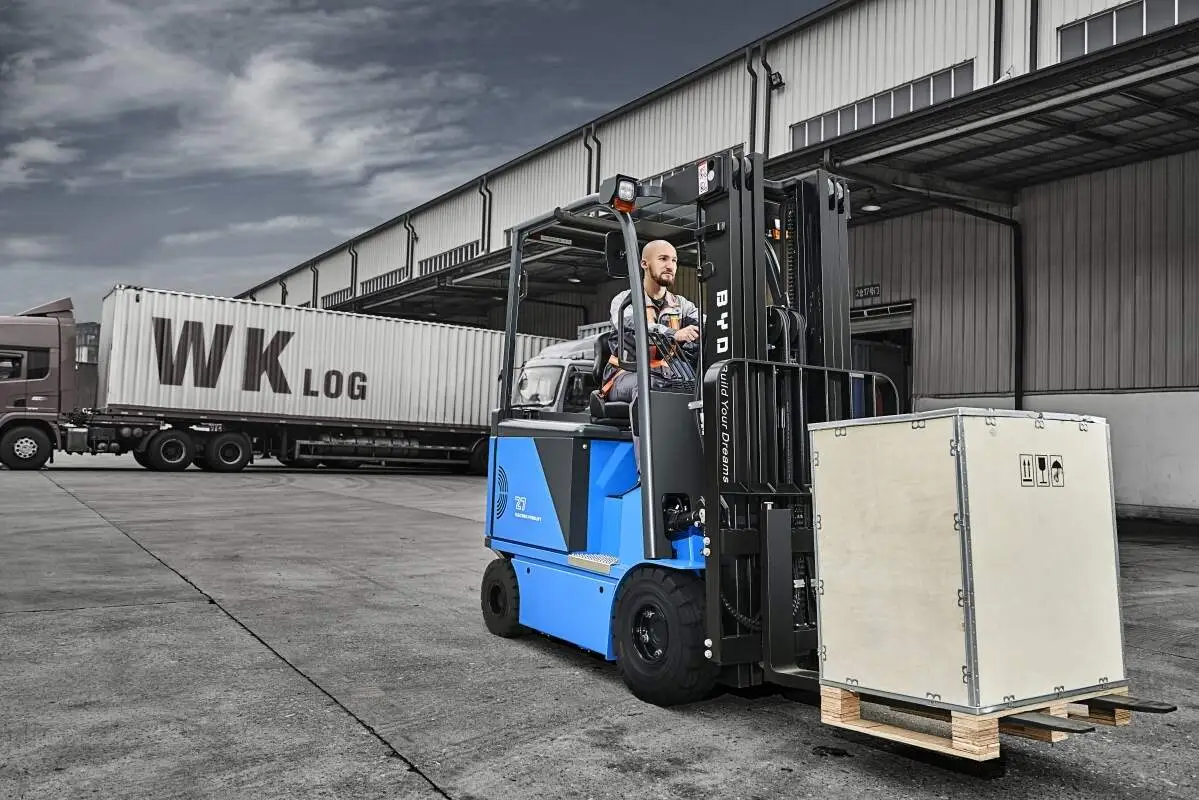
Material handling is the backbone of modern supply chains, and electric forklifts have emerged as a sustainable, efficient solution for moving goods across warehouses, distribution centers, and industrial facilities. Unlike their fossil-fuel counterparts, electric forklifts produce zero emissions, operate quietly, and offer consistent performance, making them suitable for both indoor and outdoor operations. Below is a detailed breakdown of the most common electric forklift types, each designed to meet specific material handling needs.
Electric counterbalance forklifts are the most versatile and widely used type. Equipped with a heavy counterweight at the rear to offset the load being lifted, they can handle weights ranging from 1 to 10 tons. These forklifts excel in both outdoor yard operations and indoor warehouse tasks, such as loading/unloading trucks and stacking pallets on lower racks. Their stable design allows for smooth operation on uneven surfaces, making them a go-to choice for general-purpose material handling.
Electric reach forklifts are engineered for narrow-aisle warehouses with high-density storage systems. Their key feature is a telescoping mast that extends forward to reach pallets without needing to move the entire vehicle closer to the racking. This design enables them to navigate aisles as narrow as 2 meters and lift loads up to 12 meters high. Reach forklifts are ideal for maximizing vertical storage space, a critical requirement for modern warehouses aiming to optimize floor area.
Electric pallet jacks, also known as pallet trucks, are compact, lightweight machines designed for short-distance horizontal movement of pallets. They come in two main variants: walk-behind and ride-on. Walk-behind models are perfect for small warehouses or retail backrooms, where operators need to move pallets between storage areas and loading docks quickly. Ride-on pallet jacks offer higher efficiency for larger facilities, allowing operators to cover more ground while reducing physical strain.
Electric order picker forklifts are tailored for order fulfillment operations, where workers need to access individual items on racks rather than entire pallets. These forklifts feature an elevated platform that lifts the operator to the height of stored goods, enabling direct picking and sorting. Some models allow operators to adjust the platform height while moving, significantly speeding up the order picking process. They are commonly used in e-commerce fulfillment centers and retail distribution warehouses where quick, accurate order processing is essential.
Each electric forklift type serves a unique purpose, and selecting the right one depends on factors like facility layout, load size, storage height, and operational tasks. By understanding the capabilities of each variant, businesses can optimize their material handling workflows, reduce operational costs, and align with sustainable practices. As industries continue to prioritize eco-friendly solutions, electric forklifts will remain a cornerstone of efficient, responsible material handling.