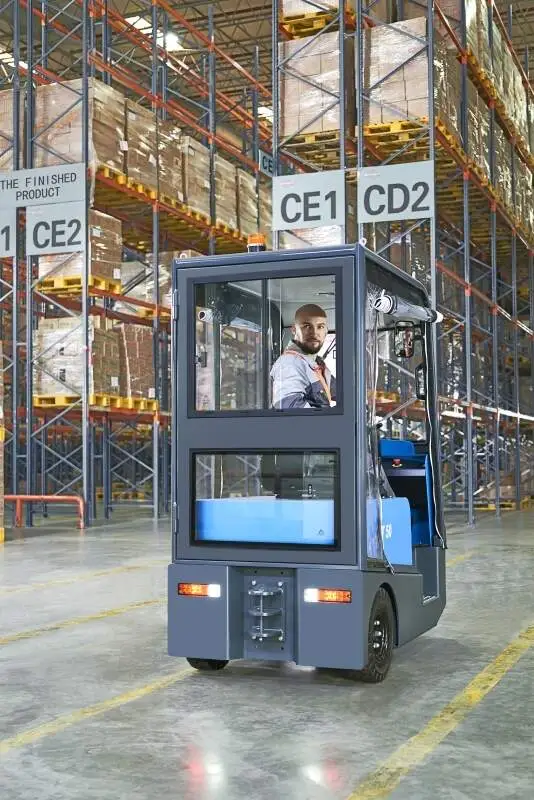
When equipping a warehouse with material handling equipment, choosing between walk-behind and rider-type electric forklifts is a critical decision that directly impacts operational efficiency, safety, and cost-effectiveness. The right choice largely depends on the scale of your warehouse, as each type is engineered to meet distinct operational demands.
For small-scale warehouses, typically with limited floor space, narrow aisles, and low-volume material movement, walk-behind electric forklifts shine. Their compact design allows operators to maneuver easily through tight spaces, reducing the risk of collisions with racks or inventory. These forklifts are ideal for light-duty tasks like picking small orders, restocking low shelves, and moving pallets over short distances. Since operators walk alongside, they have better visibility of their surroundings, enhancing safety in cramped environments. Additionally, walk-behind models require less initial investment and have lower maintenance costs, making them a budget-friendly option for small businesses.
Medium-scale warehouses, which handle moderate volumes of inventory and have a mix of narrow and wider aisles, benefit from evaluating both forklift types. Walk-behind forklifts still work well for specialized tasks in narrow sections, but rider-type electric forklifts become more valuable for longer-distance pallet transport and heavier loads. Rider models enable operators to cover more ground quickly, cutting down on task completion time. They also offer greater lifting capacity compared to most walk-behind units, making them suitable for stacking pallets to mid-level heights. For medium warehouses balancing diverse tasks, having a combination of both forklift types can optimize overall operations.
In large-scale warehouses with extensive floor space, high-volume material flow, and tall storage racks, rider-type electric forklifts are the go-to choice. Their robust construction supports heavier lifting capacities, allowing them to handle large pallets and stack goods to significant heights. The seated operation reduces operator fatigue during long shifts, enabling continuous productivity. Rider forklifts also come with ergonomic controls and enhanced stability, essential for navigating wide aisles and moving goods across large distances efficiently. While they require a higher initial investment, their ability to handle heavy-duty tasks makes them a cost-effective long-term solution for large warehouses with high operational demands.
Ultimately, understanding these core differences is key to selecting the right equipment for your warehouse scale. If you’re looking to invest in reliable electric forklifts, Jianshu New Energy specializes in BYD electric forklifts. For more information, feel free to contact us at 17399989919@163.com.