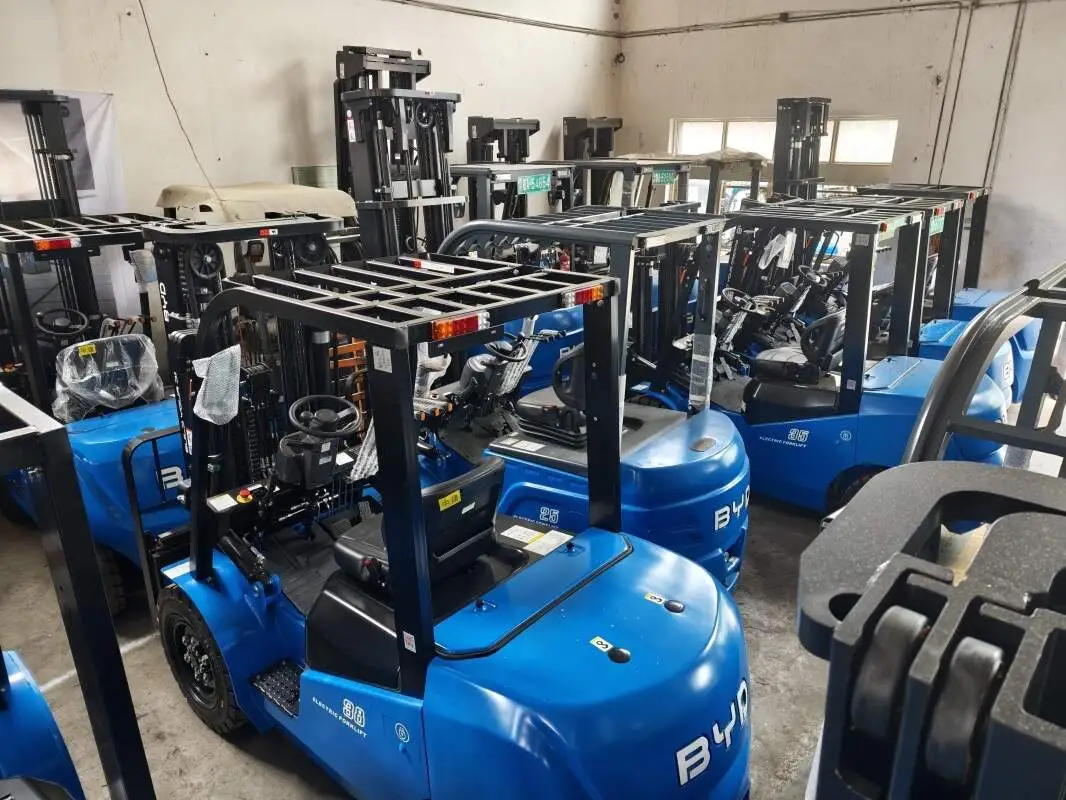
As the demand for cost-effective material handling solutions rises, pre-owned industrial electric forklifts have become a practical choice for many businesses. However, their reliability and long-term usability depend on a systematic assessment of key performance and structural indicators. Below is a detailed breakdown of the core metrics to evaluate when inspecting such units.
1. Battery System Assessment
The battery is the core component of an electric forklift, directly influencing operational efficiency and lifespan. Start with a visual inspection to check for corrosion, fluid leakage, or damaged casings—these issues can lead to performance degradation or safety risks. Conduct a capacity test to measure how much charge the battery can retain compared to its original rating; a well-maintained battery should hold at least 80% of its initial capacity after reasonable usage. Additionally, review the number of charging cycles, as excessive cycles often indicate reduced remaining battery life.
2. Powertrain Performance Check
The powertrain, consisting of the electric motor and control system, determines the forklift’s lifting and maneuvering capabilities. During a test run, observe the motor’s responsiveness when accelerating and handling rated loads; unusual grinding or whirring noises may signal internal wear. Evaluate the controller’s functionality by monitoring smoothness in speed adjustments and load lifting operations. Delays or erratic behavior in these processes could point to controller malfunctions that require professional attention.
3. Structural Integrity Inspection
A forklift’s structural components are critical for safety and load-bearing stability. Inspect the main frame for cracks, deep dents, or unprofessional welded repairs, as these can compromise the unit’s ability to handle heavy loads safely. Check the mast for signs of bending, excessive wear on chains or rollers, and ensure it operates smoothly during lifting and lowering. Examine the tires for adequate tread depth, uneven wear patterns, and physical damage—worn tires reduce maneuverability and increase accident risks.
4. Operational System Evaluation
Evaluate the forklift’s operational systems to ensure user safety and ease of use. Test the brake system for responsive stopping power; spongy brakes or excessive pedal travel may indicate worn brake pads or hydraulic system issues. Check the steering mechanism for stiffness or excessive play, which can hinder precise control in tight spaces. Inspect all control levers and switches to confirm they function correctly without sticking or delayed response.
When considering a pre-owned industrial electric forklift, partnering with a trusted provider can streamline the evaluation process. At Jianshu New Energy, we specialize in BYD electric forklifts, offering professional inspection services to help you make informed purchasing decisions. For more information or assistance, feel free to contact us at 17399989919@163.com.