In today’s fast-paced logistics and warehousing landscape, electric forklifts have become indispensable tools for streamlining material handling operations. For many businesses, a critical decision looms: should you rent or purchase an electric forklift? Making the right choice depends on a set of core factors that align with your operational needs and financial goals.
First and foremost, assess your operational demand stability. If your business relies on consistent, long-term material handling tasks—such as a permanent warehouse facility with daily operations—purchasing an electric forklift may be the more cost-effective option over time. Owning allows you to build equity in the asset, avoid recurring rental fees, and customize the equipment to fit your specific workflows. Conversely, if your needs are temporary, seasonal, or project-based—like peak holiday inventory management or a short-term construction site—renting offers unmatched flexibility. You can access the equipment you need for the exact duration required, without the burden of storing or maintaining it when not in use.
Next, conduct a comprehensive total cost of ownership (TCO) analysis. Purchasing involves upfront costs, including the equipment price, registration fees, and initial setup. Over time, you’ll also incur expenses for routine maintenance, battery replacement, insurance, and depreciation. While these costs add up, they are predictable and can be amortized over the forklift’s lifespan. Renting, on the other hand, typically covers maintenance, repairs, and insurance within the monthly fee, eliminating unexpected financial burdens. This makes renting a viable choice for businesses with limited upfront capital or those looking to avoid long-term asset depreciation risks.
Flexibility and adaptability are also key considerations. If your business frequently changes its material handling requirements—such as needing different load capacities or specialized attachments for varied tasks—renting lets you easily switch between forklift models to match evolving needs. Purchasing locks you into a specific piece of equipment, making it harder to adapt without additional investment in new assets. For businesses operating in dynamic environments, the ability to scale up or down quickly with rental equipment can provide a competitive edge.
Finally, evaluate your cash flow management strategy. Purchasing an electric forklift requires a significant upfront investment, which can tie up capital that could be used for core business activities like inventory expansion or marketing. Renting preserves your cash flow with predictable monthly payments, allowing you to allocate resources to areas that drive immediate growth.
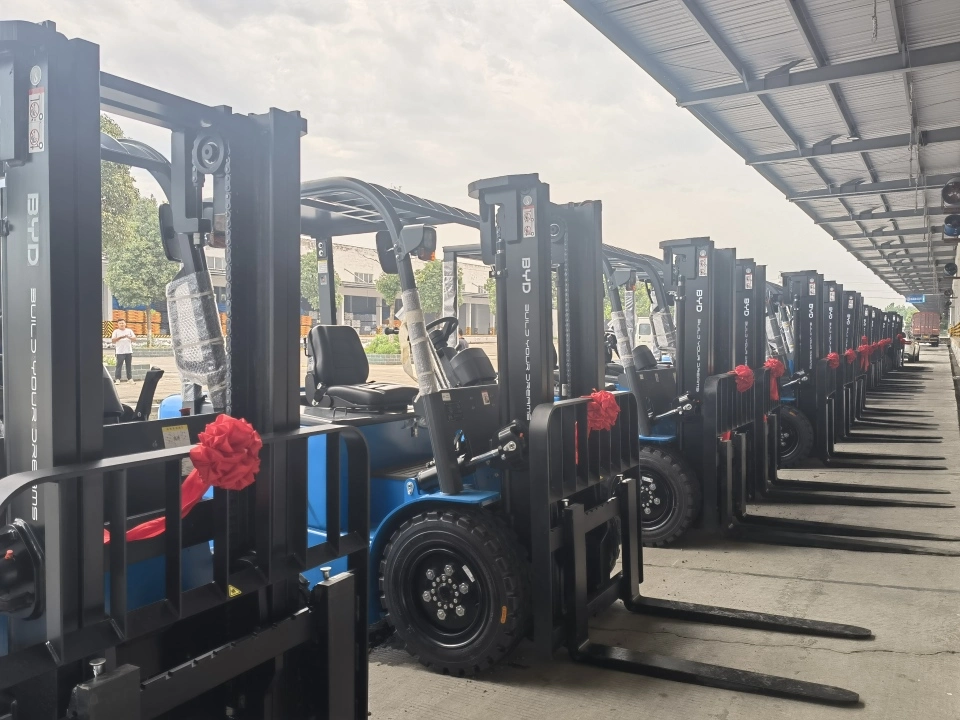
When navigating this decision, partnering with a trusted expert can make all the difference. Jianshu New Energy specializes in BYD electric forklifts, offering both rental and purchase options tailored to your business needs. For personalized advice and support, reach out to us at 17399989919@163.com to find the right solution for your material handling operations.